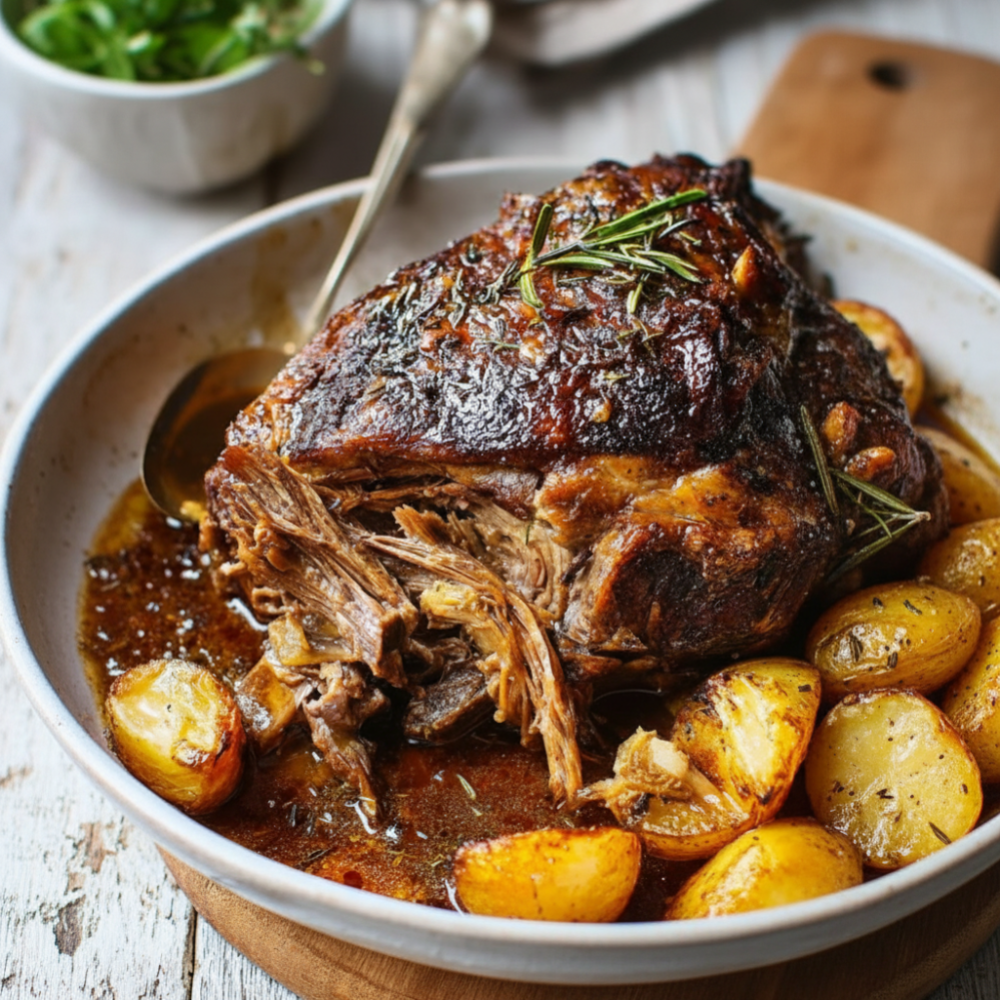
Slow Cooked Lamb Shoulder with Potatoes and Rosemary
There are some dishes that just speak to the soul, and for me, a beautifully prepared slow cooked lamb shoulder is at the top of that list. Imagine a centerpiece for your Sunday roast dinner that’s so tender it practically melts off the bone, filling your home with an aroma that promises pure comfort. This isn’t just a meal; it’s an experience, a ritual of gathering, and a testament to the magic of patient cooking.
Forget dry, tough roasts. With a little time and the right technique, you can achieve a truly spectacular, fall apart lamb that will have everyone asking for seconds. And when it’s nestled amongst perfectly crispy baby potatoes, infused with fragrant rosemary and garlic lamb notes, it’s an unbeatable combination.
Why Slow Cooked Lamb Shoulder is the Ultimate Sunday Roast
Lamb shoulder, often overlooked in favour of more “glamorous” cuts, is a true hidden gem, especially for slow cooking. Its marbling and connective tissues, which can make it tough if cooked quickly, transform into succulent, flavour-packed goodness when given ample time in the oven. This long, gentle cooking process breaks down those tougher fibres, rendering them into gelatinous richness that keeps the meat incredibly moist and tender. The result is a profoundly flavourful roast lamb shoulder that practically carves itself.
Beyond the texture, slow roasting lamb shoulder allows the deep, savoury flavours to intensify, permeating every fiber of the meat. It’s also a wonderfully hands-off approach to entertaining. Once it’s in the oven, you’re free to relax, enjoy your guests, or simply put your feet up while your oven does all the hard work. It truly makes for a stress-free yet impressive Sunday roast dinner.
Bone-In vs. Boneless Lamb Shoulder: Which is Better?
When selecting your lamb shoulder, you’ll often have the choice between bone-in and boneless. While a boneless cut might seem more convenient, I am a firm advocate for the bone-in lamb roast. Here’s why:
- Flavour: The bone itself contributes immensely to the depth of flavour. As it cooks, it releases marrow and other compounds that infuse the surrounding meat and pan juices with a richer, more complex taste.
- Moisture: The bone helps to conduct heat more evenly and slowly, which can prevent the meat from drying out during the long cooking process. It acts as a natural heat sink.
- Structure: The bone helps the shoulder hold its shape better during cooking, which can be beneficial, especially for larger cuts.
While boneless lamb shoulder can still yield delicious results, especially if tied well, for that truly authentic, rich, and deeply satisfying slow roasted lamb experience, I always recommend going for a bone-in lamb roast. It’s worth the minimal extra effort for the superior outcome.
Essential Ingredients for a Flavorful Roast
The beauty of this lamb shoulder recipe lies in its simplicity. A few key ingredients are all you need to create something truly spectacular.
- Lamb Shoulder: A 2-2.5kg (4-5lb) bone-in lamb shoulder is ideal.
- Baby Potatoes: About 1kg (2lb) – choose small, firm ones that will roast beautifully alongside the lamb.
- Onions: 2-3 medium onions, quartered.
- Garlic: At least one whole head, cloves separated but not necessarily peeled.
- Fresh Rosemary: Several sprigs are essential for that classic flavour.
- Olive Oil: Good quality, for searing and coating.
- Red Wine: About 250ml (1 cup) – a dry red wine works best.
- Chicken or Beef Broth: About 500ml (2 cups).
- Salt and Freshly Ground Black Pepper: Generous amounts are key.
- Flour or Cornstarch: For the gravy.
The Aromatics: Rosemary and Garlic
The combination of rosemary and garlic lamb is a match made in culinary heaven. Rosemary provides a piney, peppery, almost minty fragrance that complements the richness of the lamb beautifully. Garlic, with its pungent, sweet, and earthy notes, deepens the savoury profile. Don’t be shy with either; the long cooking time mellows their intensity, leaving behind a wonderfully nuanced flavour.
The Roasting Base: Baby Potatoes and Onions
Using baby potatoes and onions as your roasting base serves multiple purposes. Firstly, they absorb all the incredible lamb juices, turning into incredibly flavourful side dishes. Secondly, they lift the lamb slightly off the bottom of the roasting pan, preventing it from sticking and allowing better air circulation. The onions caramelize beautifully, adding sweetness and depth to the pan juices, which are vital for your gravy. And who doesn’t love crispy baby potatoes that have been roasting alongside a magnificent piece of lamb?
How to Prep Your Lamb Shoulder for Slow Roasting
Proper preparation is crucial for an exceptional roast. A little effort here goes a long way.
- Bring to Room Temperature: At least an hour before cooking, take the lamb shoulder out of the fridge. This ensures more even cooking.
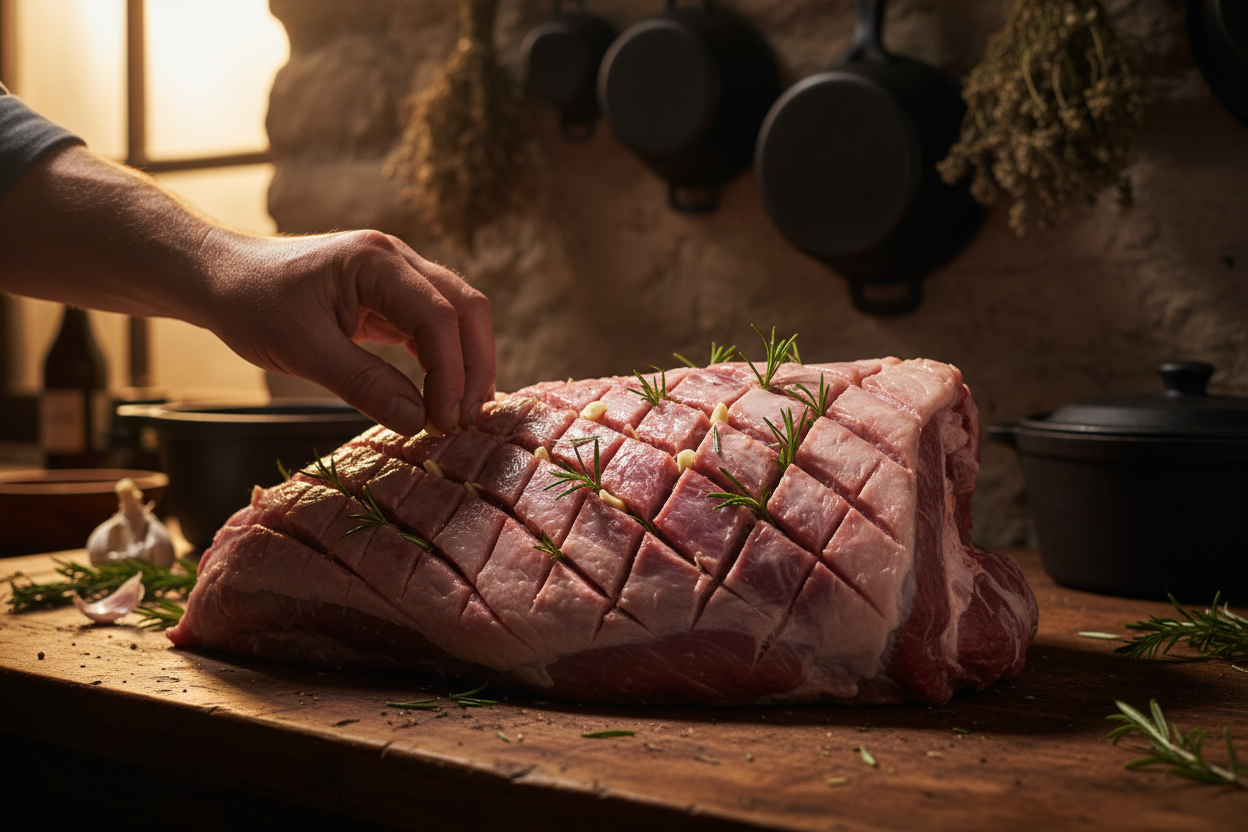
- Score the Fat: Using a sharp knife, score the fatty cap of the lamb in a crosshatch pattern. Be careful not to cut too deeply into the meat. This helps the fat render and crisp up, and allows your seasonings to penetrate.
- Season Generously: This is not the time for timid seasoning! Rub the entire lamb shoulder generously with a good amount of coarse sea salt and freshly ground black pepper. Don’t forget the underside.
- Garlic & Rosemary Insertion: Make small incisions all over the lamb with the tip of your knife. Push slivers of garlic and small sprigs of rosemary deep into these pockets. This infuses the lamb from within.
Step-by-Step Cooking Instructions
Here’s how to bring this glorious lamb shoulder recipe to life:
- Preheat Oven & Sear Lamb: Preheat your oven to 160°C (325°F). Heat a large, heavy-bottomed, oven-safe pan or Dutch oven over medium-high heat. Add a tablespoon of olive oil. Once hot, sear the lamb shoulder, fat side down, for 5-7 minutes until golden brown and crispy. Flip and sear on all other sides for 2-3 minutes each. This step adds incredible flavour and colour.
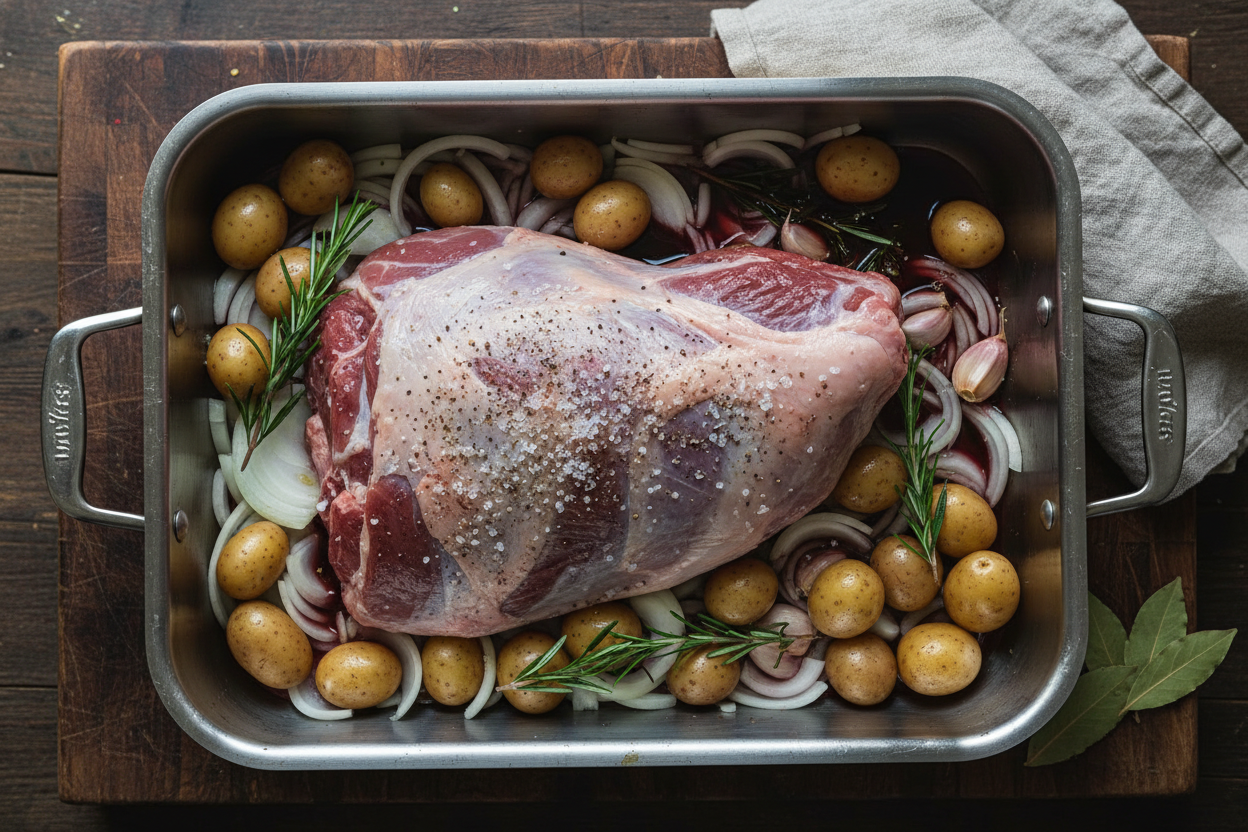
- Prepare Roasting Base: Remove the lamb from the pan and set aside. Add the quartered onions, whole garlic cloves, and baby potatoes to the same pan. Drizzle with a little more olive oil, season with salt and pepper, and toss to coat. Arrange them in an even layer.
- Deglaze & Add Liquids: Pour the red wine into the hot pan, scraping up any delicious browned bits from the bottom. Let it simmer for a minute, then add the chicken or beef broth. Place the fresh rosemary sprigs amongst the potatoes.
- Roast the Lamb: Place the seared lamb shoulder directly on top of the bed of vegetables. Cover the pan tightly with its lid or a double layer of aluminum foil.
- Slow Cook: Transfer the covered pan to the preheated oven. Roast for 3.5 to 4 hours. After 3.5 hours, check for tenderness. The lamb should be incredibly tender and easily pierced with a fork. If not, continue cooking, checking every 30 minutes, until it reaches that perfect fall apart lamb stage.
- Crisp the Skin (Optional): For extra crispy skin, remove the lid or foil for the last 30-45 minutes of cooking. You can also increase the oven temperature to 200°C (400°F) for the final 15-20 minutes, keeping a close eye to prevent burning.
- Rest the Lamb: Once cooked, carefully remove the lamb shoulder from the pan and transfer it to a large cutting board. Tent loosely with foil and let it rest for at least 20-30 minutes. This is crucial for the juices to redistribute, ensuring maximum tenderness and moisture.
How to Achieve the Perfect Pan-Juice Gravy
The pan juices from your slow roasted lamb are liquid gold and form the foundation of an exquisite lamb gravy. Don’t let them go to waste!
- Separate Fat: While the lamb rests, carefully skim off any excess fat from the pan juices. You can use a fat separator or simply spoon it off the top.
- Strain Juices: Pour the remaining pan juices (including the cooked onions and garlic, if desired, or strain them out for a smoother gravy) into a saucepan. You can lightly mash some of the soft garlic cloves and onions into the liquid for extra flavour.
- Thicken Gravy: Bring the juices to a simmer over medium heat. In a small bowl, whisk together a tablespoon of flour or cornstarch with a few tablespoons of cold water to create a slurry. Slowly whisk this into the simmering pan juices, stirring constantly until the gravy thickens to your desired consistency.
- Season and Serve: Taste and adjust seasoning with salt and pepper. If it’s a little too thick, add a splash more broth or water. Serve your rich, flavourful lamb gravy alongside the carved lamb.
Pro Tips for Fall-Apart Tender Lamb
“Patience is your best friend when slow roasting lamb shoulder. Low and slow is the mantra for achieving that ultimate fall-apart tenderness and deep, concentrated flavour.”
- Don’t Rush the Sear: A good sear creates a flavourful crust and caramelization that adds depth to the overall dish.
- Keep it Covered: For most of the cooking time, keep the lamb tightly covered. This traps the moisture and creates a steamy environment that tenderizes the meat.
- Don’t Overcrowd: Ensure your roasting pan is large enough to comfortably hold the lamb, potatoes, and onions in a single layer. Overcrowding will steam, not roast, your vegetables.
- Resting is Non-Negotiable: Always, always rest your meat. This allows the muscle fibers to relax and reabsorb juices, making for a much more succulent and tender final product.
- Embrace the Bone: As mentioned, the bone adds so much. Don’t be afraid of it!
Perfect Side Dishes for Roast Lamb
While the crispy baby potatoes cooked with the lamb are a star, a few extra sides can complete your Sunday roast dinner:
- Green Beans with Toasted Almonds: A simple, fresh counterpoint.
- Glazed Carrots: Sweet and vibrant.
- Mint Sauce or Jelly: The classic accompaniment to lamb.
- Yorkshire Puddings: For those who love a traditional roast.
- Steamed Asparagus: Light and elegant.
Frequently Asked Questions (FAQs)
Do I need to sear the lamb first?
While technically you *can* skip the searing step, I highly recommend against it. Searing creates a beautiful browned crust, locking in moisture and developing complex, rich flavours through the Maillard reaction. It’s a fundamental step for truly delicious slow roasted lamb.
How do I know when the lamb is done?
For fall apart lamb shoulder, you’re not really looking for a specific internal temperature as much as you are for tenderness. After about 3.5-4 hours, the meat should be incredibly tender, easily pierced with a fork, and practically falling away from the bone. If you lift the bone, the meat should feel like it’s about to separate. Trust your instincts and the feel of the meat more than a thermometer for this cut.
Can I substitute the red wine?
Absolutely! If you prefer not to use red wine, you can substitute it with an equal amount of additional chicken or beef broth. While the red wine adds a wonderful depth and acidity that balances the richness of the lamb, the dish will still be delicious and flavourful with just broth.
There you have it – the ultimate guide to creating a show-stopping slow cooked lamb shoulder that promises tenderness, flavour, and an unforgettable dining experience. It’s more than just a recipe; it’s an invitation to savour the simple, profound joy of cooking for those you love.
For more mouth-watering recipes and behind-the-scenes glimpses, follow our Facebook page at https://www.facebook.com/profile.php?id=61568538666337!
Slow Cooked Lamb Shoulder with Baby Potatoes and Rosemary
Ingredients
- 4.5 lbs bone-in lamb shoulder Brought to room temperature before roasting
- 2 tbsp olive oil
- 6 cloves garlic Peeled and cut into thin slivers
- 4 sprigs fresh rosemary Cut into small pieces
- 1.5 lbs baby potatoes Halved if large
- 1 large onion Roughly chopped
- 2 cups beef stock Or lamb stock
- 0.5 cup red wine Optional, for deglazing and gravy
- 1 tsp salt
- 1 tsp black pepper Freshly ground
Instructions
- Preheat the oven to 325°F (160°C).
- Using a sharp paring knife, make 10-15 small, deep slits all over the surface of the lamb shoulder.
- Stuff each slit with a sliver of garlic and a small piece of fresh rosemary.
- Rub the entire lamb shoulder evenly with olive oil, salt, and freshly ground black pepper.
- Scatter the chopped onion and baby potatoes evenly across the bottom of a large roasting pan.
- Pour the beef stock and red wine into the bottom of the roasting pan, ensuring it does not wash the seasoning off the lamb.
- Place the seasoned lamb shoulder directly on top of the vegetables.
- Cover the roasting pan tightly with a sheet of parchment paper, followed by a double layer of aluminum foil to seal in the steam.
- Roast in the preheated oven for 4 hours until the meat is fork-tender and pulls away from the bone easily.
- Remove the pan from the oven and carefully take off the foil and parchment paper. Increase the oven temperature to 400°F (200°C).
- Return the uncovered lamb to the oven and roast for an additional 20-30 minutes until the exterior is deeply browned and crispy.
- Transfer the lamb and potatoes to a serving platter, cover loosely with foil, and let rest for 20 minutes before pulling the meat apart to serve.
For more daily recipes and tips, follow us on Facebook!
Click here to join our community!