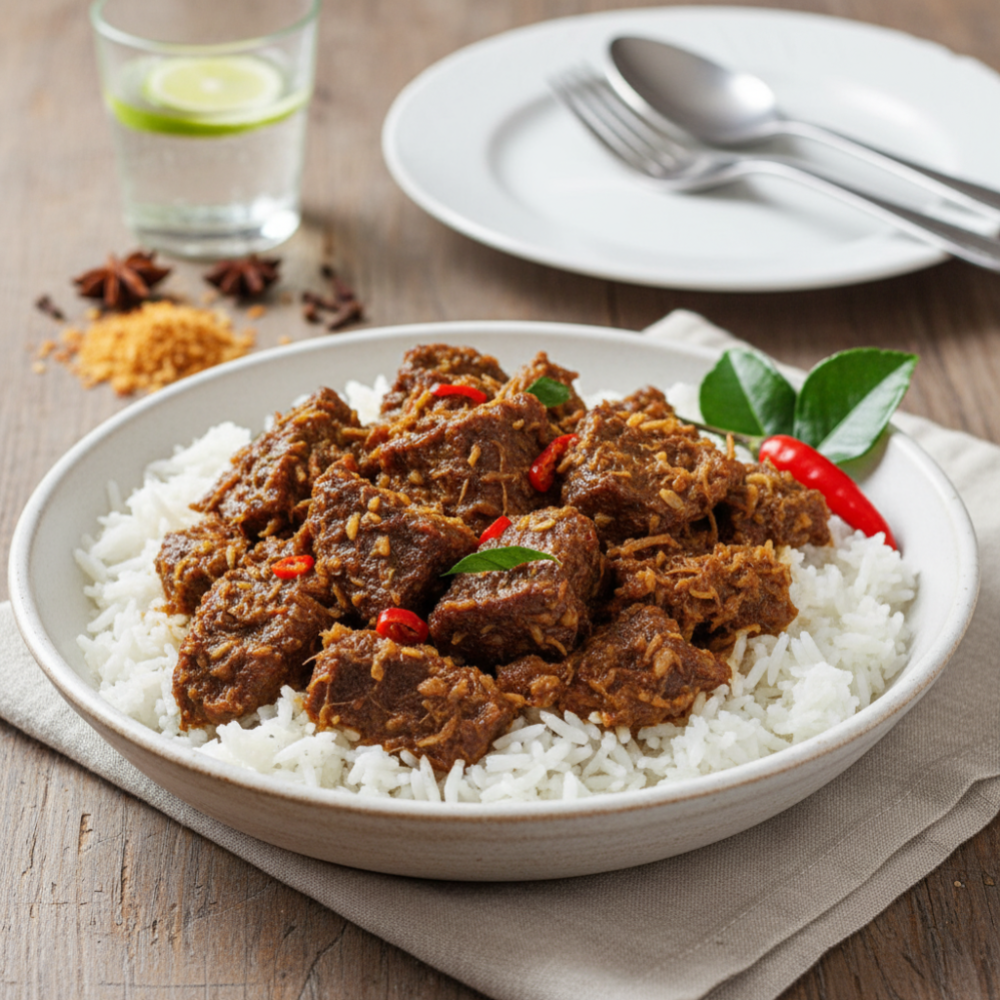
Welcome, fellow food enthusiasts, to a culinary journey into the heart of Southeast Asia! Today, we’re unraveling the rich, complex tapestry of one of the world’s most revered dishes: Beef Rendang. This isn’t just a meal; it’s a testament to patience, tradition, and an explosion of aromatic flavors that will captivate your senses. Prepare to transform your kitchen into a fragrant haven as we dive into crafting an authentic rendition of this beloved classic.
What is Beef Rendang?
Often described as an Indonesian beef stew, this iconic dish is actually far more intricate than a typical curry. Imagine tender pieces of beef, slow-cooked in a rich, spicy coconut milk base until almost all the liquid has evaporated, leaving behind a thick, intensely flavorful reduction that clings to every morsel. The result is a dry, caramelized dish with layers of taste that evolve with every bite. It’s a labor of love, a symphony of spices, and a true culinary masterpiece that stands apart from the saucier, gravy-like curries you might be familiar with.
The Origins in Minangkabau Culture
To truly appreciate this dish, we must journey to West Sumatra, Indonesia, the birthplace of rendang. Its origins lie deep within the Minangkabau culture, a vibrant ethnic group renowned for their distinctive architecture, matrilineal society, and, of course, their incredible cuisine. Rendang was traditionally prepared for ceremonial occasions and to preserve meat in a hot, humid climate, as the extensive cooking process reduces moisture and allows the dish to last for weeks without refrigeration. While it is intrinsically linked to Indonesian heritage, its popularity has spread throughout Southeast Asia, becoming a cherished part of traditional Malaysian food culture as well, often enjoyed during festive periods like Hari Raya.
Why You Will Love This Authentic Beef Rendang Recipe
If you cherish bold flavors and the rewarding experience of creating something truly special, you’re in for a treat. This recipe promises a rendang that is deeply aromatic, exquisitely tender, and bursting with a harmonious blend of sweet, spicy, and savory notes. The extended cooking time allows the beef to become incredibly succulent, practically melting in your mouth, while the spice paste caramelizes, creating a depth of flavor that is simply unparalleled. It’s a dish that demands patience but rewards it tenfold with a taste that lingers long after the last bite. The rich, almost earthy aroma filling your home as this slow-cooked beef curry simmers is an experience in itself.
Key Ingredients for Authentic Rendang
The magic of rendang lies in the quality and freshness of its ingredients. Each component plays a vital role in building the dish’s signature complexity.
Choosing the Right Cut of Beef
For a truly exceptional rendang, selecting the correct cut of beef is paramount. You need meat that can withstand a long, slow braise without drying out and that will eventually become fork-tender. Cuts like **beef chuck**, **brisket**, or even **short ribs** are ideal. These cuts have a good amount of connective tissue and marbling, which break down during cooking, releasing collagen and moisture that contribute to the dish’s incredibly rich texture and flavor. Cut the beef into relatively large, uniform cubes (about 1.5-2 inches) to prevent them from disintegrating during the long cooking process.
Essential Spices and Aromatics
The heart and soul of rendang is its potent spice paste, known as rendang rempah. This aromatic blend is what gives the dish its distinctive flavor profile. While recipes vary slightly, common ingredients for a authentic beef rendang spice paste include:
- Shallots and Garlic: The pungent base.
- Ginger and Galangal: Essential aromatics; galangal offers a more citrusy, piney note than regular ginger.
- Turmeric: For color and earthy notes.
- Lemongrass: Adds a bright, citrusy fragrance.
- Red Chilies: For heat and vibrant color (adjust to your preference).
- Candlenuts: A thickener and richness enhancer.
- Kaffir Lime Leaves: For their distinct aromatic citrus notes.
- Other whole spices: Star anise, cardamom, cloves, and cinnamon sticks are often added to the braise for an extra layer of warmth.
Using fresh ingredients for your rempah is non-negotiable for the best flavor.
The Secret Ingredient: Kerisik (Toasted Coconut Paste)
No discussion of authentic rendang is complete without mentioning kerisik. This “secret ingredient” is what truly elevates rendang, giving it an unmistakable depth, nutty flavor, and a uniquely rich texture that sets it apart from other curries. Kerisik is essentially toasted grated coconut, pounded or blended into a thick paste. As the coconut is toasted, its natural oils are released and caramelized, intensifying its flavor. When added to the rendang, it acts as a natural thickener and contributes to the dish’s signature slightly dry, clingy texture and profound coconut aroma.
Making how to make kerisik at home is straightforward: simply toast unsweetened grated coconut in a dry pan over medium heat, stirring constantly, until golden brown and fragrant. Be careful not to burn it! Once toasted, transfer it to a mortar and pestle or food processor and pound/blend until it forms an oily, dark brown paste. This step, while seemingly small, makes a monumental difference in the final dish.
Step-by-Step Cooking Guide
Now, let’s get to the heart of the matter – cooking this incredible dish. Patience and attention to detail are your best allies here.
1. Preparing the Spice Paste (Rempah)
Begin by roughly chopping all your fresh spice paste ingredients (shallots, garlic, ginger, galangal, turmeric, lemongrass, chilies, candlenuts). Transfer them to a food processor or blender with a splash of water or oil and process until you have a fine, smooth paste. If using a mortar and pestle, pound them in batches until a smooth consistency is achieved. This potent rendang rempah is the aromatic foundation of our dish.
2. Searing the Beef
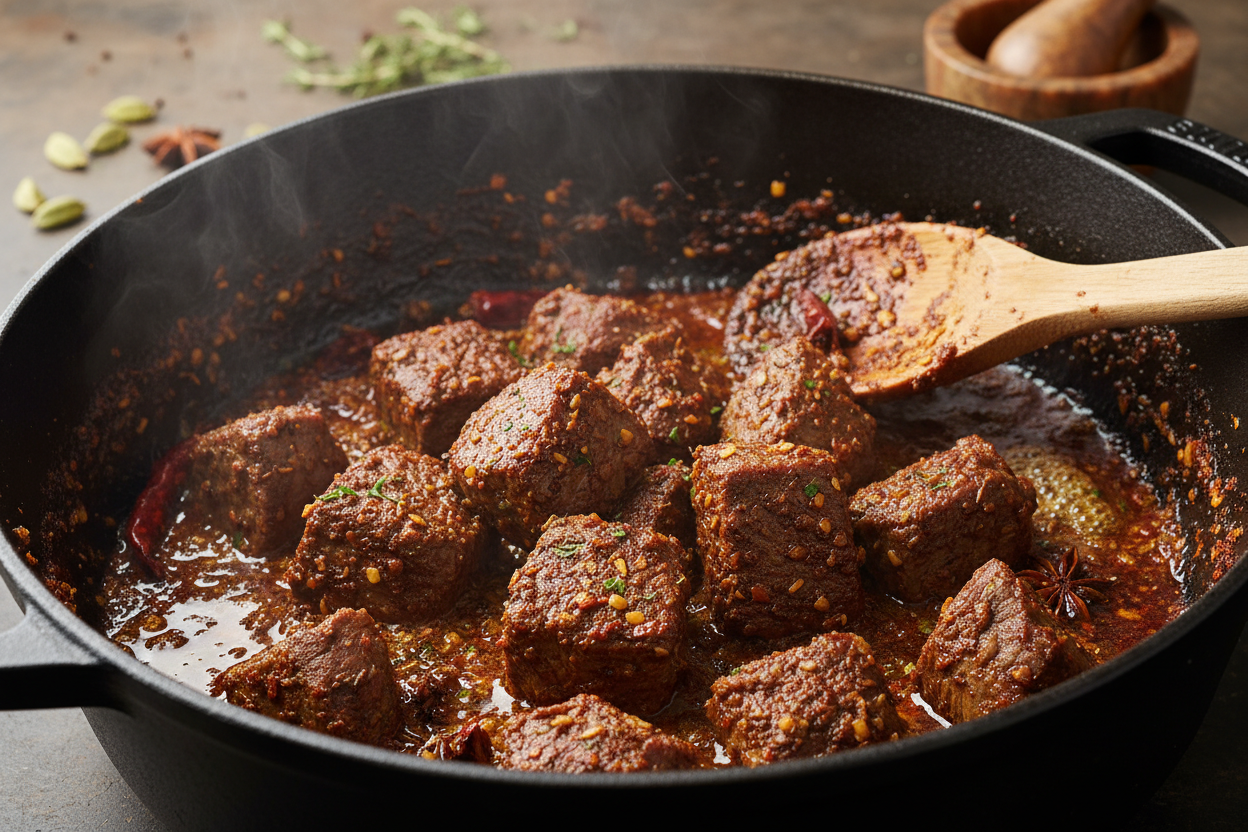
In a large, heavy-bottomed pot or Dutch oven, heat a few tablespoons of oil over medium-high heat. Season your beef cubes generously with salt and pepper. Working in batches, sear the beef on all sides until beautifully browned. This step is crucial for developing deep, savory flavors. Remove the seared beef from the pot and set aside.
3. The Low and Slow Braise
Reduce the heat to medium. Add a little more oil to the pot if necessary, then add your prepared spice paste. Sauté the paste, stirring frequently, for about 10-15 minutes until it is very fragrant, slightly darkened, and the oil begins to separate. This process, known as ‘breaking the oil,’ is essential for deepening the flavors of the rempah.
Next, return the seared beef to the pot. Add the thick coconut milk (often labeled as full-fat or ‘cream’), along with tamarind paste (or a squeezed tamarind pulp), kaffir lime leaves, and any whole spices like star anise, cardamom pods, or cinnamon sticks. Stir everything well to combine, ensuring the beef is fully coated in the aromatic sauce. Bring the mixture to a gentle simmer.
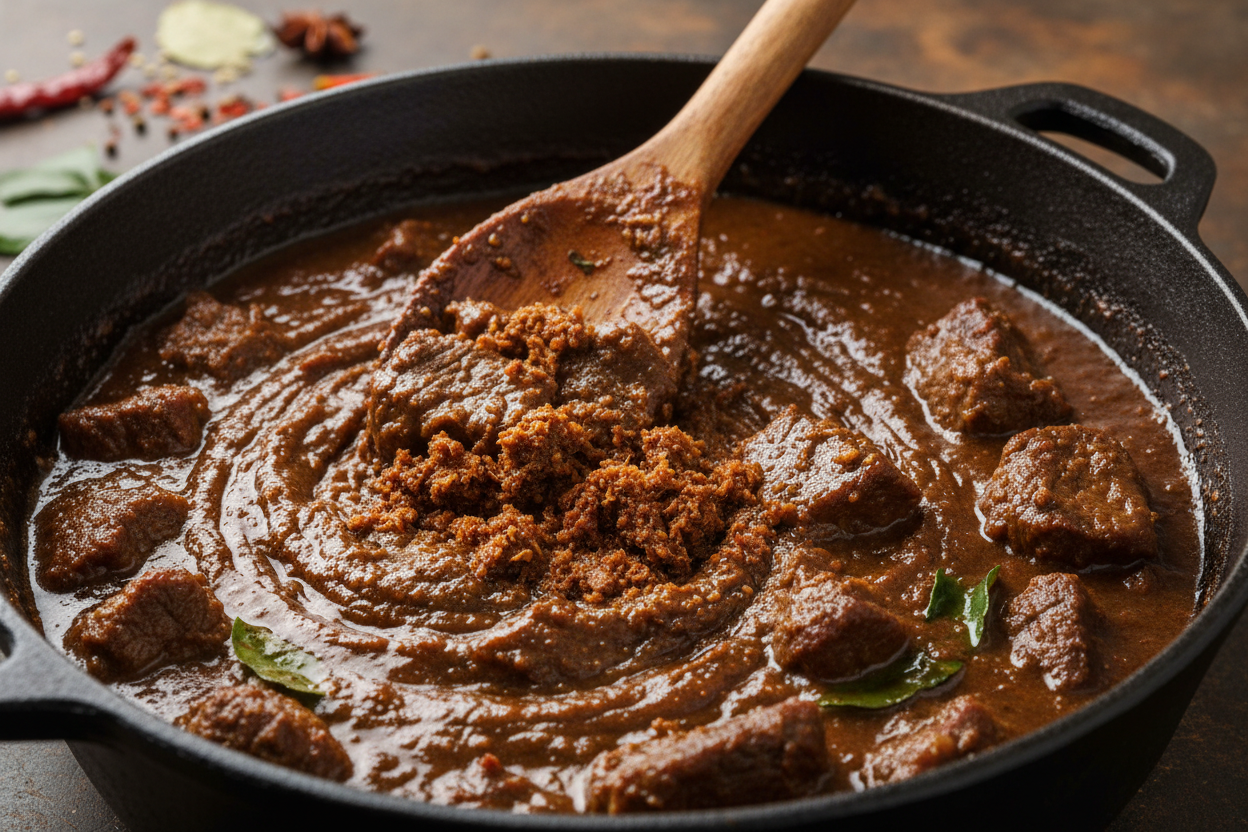
Once simmering, reduce the heat to low, cover the pot, and let it cook for at least 1.5 to 2 hours, stirring occasionally to prevent sticking. During this time, the beef will tenderize beautifully, and the flavors will meld. After this initial braise, remove the lid and continue to simmer uncovered, stirring more frequently. This is where the magic happens as the liquid slowly reduces, and the coconut milk beef stew transforms into a rich, almost dry rendang. The oil will separate from the sauce, and the beef will become deeply caramelized.
Towards the final 30-45 minutes of cooking, stir in your freshly made kerisik. Continue to cook, stirring constantly, until the sauce is very thick, clinging to the beef, and has taken on a beautiful dark brown, almost reddish hue. The entire braising process can take anywhere from 3 to 4 hours, or even longer, depending on your pot and heat level. Trust your eyes and nose; the rendang is ready when it reaches that perfect, dry, rich consistency.
Expert Tips for the Best Beef Rendang
- Patience is a Virtue: The most important tip for rendang is to not rush the process. The long, slow cooking is what develops its signature depth of flavor and tender texture.
- Taste and Adjust: Always taste your rendang as it cooks. Adjust salt, sugar, or tamarind to achieve a perfect balance of flavors.
- Fresh Ingredients: The freshness of your aromatics and spices truly makes a difference. Use fresh galangal, lemongrass, and kaffir lime leaves if at all possible.
- Watch the Heat: Keep the heat low and consistent during the long braise to prevent scorching. Stir regularly, especially in the later stages.
- Don’t Be Afraid of Fat: The oil that separates from the rendang is a crucial part of its character and flavor. Don’t skim it off prematurely; it contributes to the richness and preservation.
“Rendang isn’t just cooked; it’s coaxed. Every stir, every hour on the heat, adds a layer of story to its flavor.” – An Expert Rendang Chef
Storing, Reheating, and Make-Ahead Tips
One of the many wonders of rendang is that it often tastes even better the next day, after the flavors have had a chance to fully meld. Store leftover rendang in an airtight container in the refrigerator for up to 3-4 days. For longer storage, rendang freezes exceptionally well for up to 2-3 months. Thaw overnight in the refrigerator and reheat gently on the stovetop over low heat, adding a splash of water or coconut milk if it appears too dry. This makes it an excellent make-ahead dish for entertaining or busy weeknights.
What to Serve with Beef Rendang
Rendang is a robust dish, and it pairs beautifully with simple accompaniments that allow its complex flavors to shine. Here are a few traditional suggestions:
- Steamed White Rice: The classic pairing. The fluffy rice soaks up all the delicious oils and flavors.
- Nasi Lemak: Coconut milk rice served with sambal, fried anchovies, peanuts, and a hard-boiled egg – a truly authentic Malaysian experience.
- Roti Canai or Paratha: Flaky, buttery flatbreads are perfect for scooping up every last bit of rendang.
- Fresh Cucumber Slices: A refreshing palate cleanser to balance the richness.
- Simple Vegetables: Blanched green beans or a side of stir-fried greens can provide a nice textural contrast.
Crafting authentic rendang is a rewarding culinary adventure that brings the vibrant flavors of Southeast Asia right into your home. It’s a dish that embodies history, culture, and the pure joy of slow cooking. So, gather your ingredients, clear your schedule, and prepare to create a truly unforgettable meal.
If you loved this recipe and want to discover more incredible dishes and cooking tips, make sure to follow us on Facebook! You can find our page at: https://www.facebook.com/profile.php?id=61568538666337. We’d love to connect with you there!
Authentic Beef Rendang
Ingredients
- 2 lbs Beef chuck cut into 1.5-inch cubes
- 1 14-oz can Full-fat coconut milk
- 1/2 cup Unsweetened desiccated coconut for making kerisik
- 5 whole Shallots roughly chopped
- 4 cloves Garlic
- 5 whole Dried red chilies soaked in hot water
- 1 inch Ginger peeled and sliced
- 1 inch Galangal peeled and sliced
- 2 stalks Lemongrass white part only, chopped
- 4 whole Kaffir lime leaves bruised
- 2 pods Star anise
- 4 whole Cloves
- 1 tbsp Palm sugar
- 1 tbsp Tamarind paste
- 2 cups White rice for serving
Instructions
- Toast the desiccated coconut in a dry skillet over medium-low heat until dark brown. Transfer to a mortar and pestle or food processor and grind into an oily paste to create the kerisik. Set aside.
- Blend the soaked red chilies, shallots, garlic, ginger, galangal, and chopped lemongrass in a food processor with a splash of water until a smooth spice paste forms.
- Heat two tablespoons of neutral oil in a heavy-bottomed pot or Dutch oven over medium heat. Add the blended spice paste, star anise, and cloves. Sauté for 5 to 7 minutes until fragrant and the oil begins to separate.
- Add the cubed beef chuck to the pot and stir constantly to coat the meat in the spice paste. Sear the beef for about 5 minutes.
- Pour in the coconut milk, then add the kaffir lime leaves, palm sugar, and tamarind paste. Bring the mixture to a gentle boil.
- Reduce the heat to the lowest setting and simmer uncovered for 2 to 3 hours, stirring every 20-30 minutes.
- Once the liquid has significantly reduced and thickened, stir in the prepared kerisik. Continue to cook, stirring frequently, until the sauce turns dark brown, oil separates, and the mixture thickly coats the fork-tender beef.
- Remove from heat and serve hot over freshly steamed white rice.
For more daily recipes and tips, follow us on Facebook!
Click here to join our community!