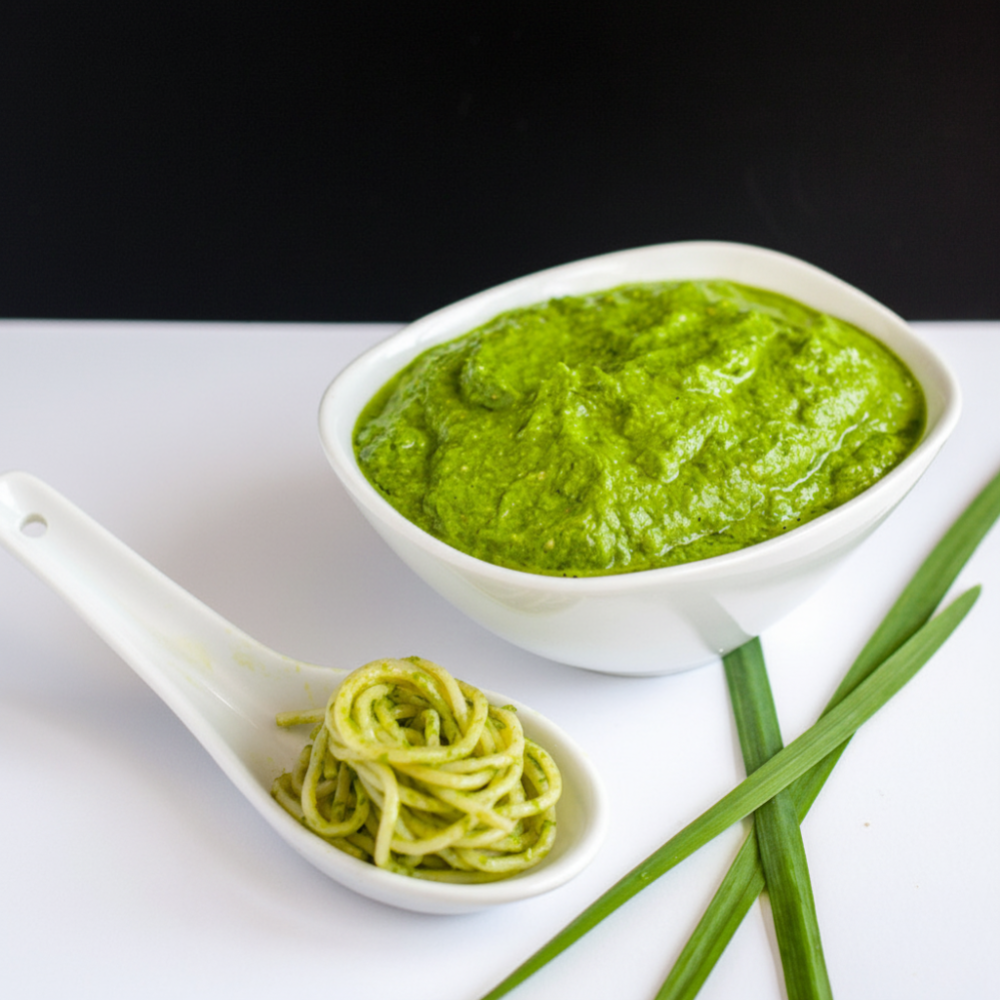
The arrival of spring brings an abundance of fresh growth, and for many home gardeners, that includes a profusion of vibrant herbs. While basil often gets the spotlight for pesto, sometimes the garden offers other treasures in overwhelming quantities. This is where a basil-free pesto truly shines. When your patch of garlic chives explodes with tender green stalks, it is the perfect signal to create a unique and flavorful sauce.
This recipe for Garlic Chive Pesto is not only a fantastic way to utilize a generous spring herb harvest, but it also transforms into a complete meal in just about 15 minutes, using straightforward pantry staples. It offers a fresh, garlicky flavor profile that is distinct from traditional basil pesto, making it an excellent herb pasta sauce for a quick weeknight pasta dinner. Get ready to turn those beautiful green shoots into a bright, savory condiment.
Ingredient Breakdown
Crafting the perfect garlic chive pesto begins with understanding each component and its role in building flavor and texture.
Choosing the Right Herbs
For this garden chive recipe, we are specifically looking for garlic chives. While standard onion chives offer a milder, oniony flavor, garlic chives—botanically known as Allium tuberosum—provide a distinct, delicate garlic essence without being overpowering. Their flat leaves are easily distinguishable from the hollow, rounded leaves of onion chives. You will need 2 cups of chopped greens, packed loosely, to ensure a vibrant, herbaceous base for your pesto.
The Nut and Cheese Base
A good pesto relies on a solid foundation of nuts and cheese. We use 1/3 cup of pine nuts in this recipe. Pine nuts offer a buttery, subtle flavor that complements the garlic chives without competing. If pine nuts are unavailable, walnuts make an excellent alternative, providing a slightly earthier note. The nuts contribute to the sauce’s body and richness. For the cheese component, 1/2 cup of grated Parmesan cheese is essential. Parmesan adds a crucial salty, umami depth and helps to emulsify the sauce, binding the other ingredients into a cohesive, creamy texture. Together, they form a delightful nut and cheese herb blend.
Acid and Seasoning
Balancing the richness of the nuts and cheese and the pungency of the chives requires a touch of acid and precise seasoning. 1 tablespoon of fresh lemon juice brightens the entire sauce, cutting through the richness and enhancing the fresh herb flavor. For seasoning, 1/2 teaspoon of fine sea salt and 1/4 teaspoon of freshly ground black pepper are the starting points. Always taste and adjust as needed, as the saltiness of your Parmesan can vary.
Best Pasta Shapes
The choice of pasta can significantly impact the eating experience. For this homemade green sauce, you will need 16 ounces of pasta. Shapes like linguine, fusilli, or penne are ideal. Their surfaces or crevices are perfectly designed to cling to the robust, chunky texture of the pesto, ensuring every bite is coated in the delicious garlicky pasta dish. Avoid overly delicate pastas that might get lost in the sauce, or very smooth shapes that the pesto might slide off of.
Step-by-Step Instructions
Making this pesto is a straightforward process, primarily relying on your food processor to do the heavy lifting.
1. Cooking the Pasta
Bring a large pot of water to a rolling boil. Add a generous amount of salt to the water; it should taste like the ocean. Once boiling, add 16 ounces of your chosen pasta (linguine, fusilli, or penne). Cook according to package directions until al dente, tender but still firm to the bite. Before draining the pasta, this is a crucial step: reserve 1/2 cup of the starchy pasta water. This water contains starch that helps to emulsify the pesto later, creating a silky sauce that clings beautifully to the pasta. Drain the remaining water and set the pasta aside.
2. Processing the Dry Base
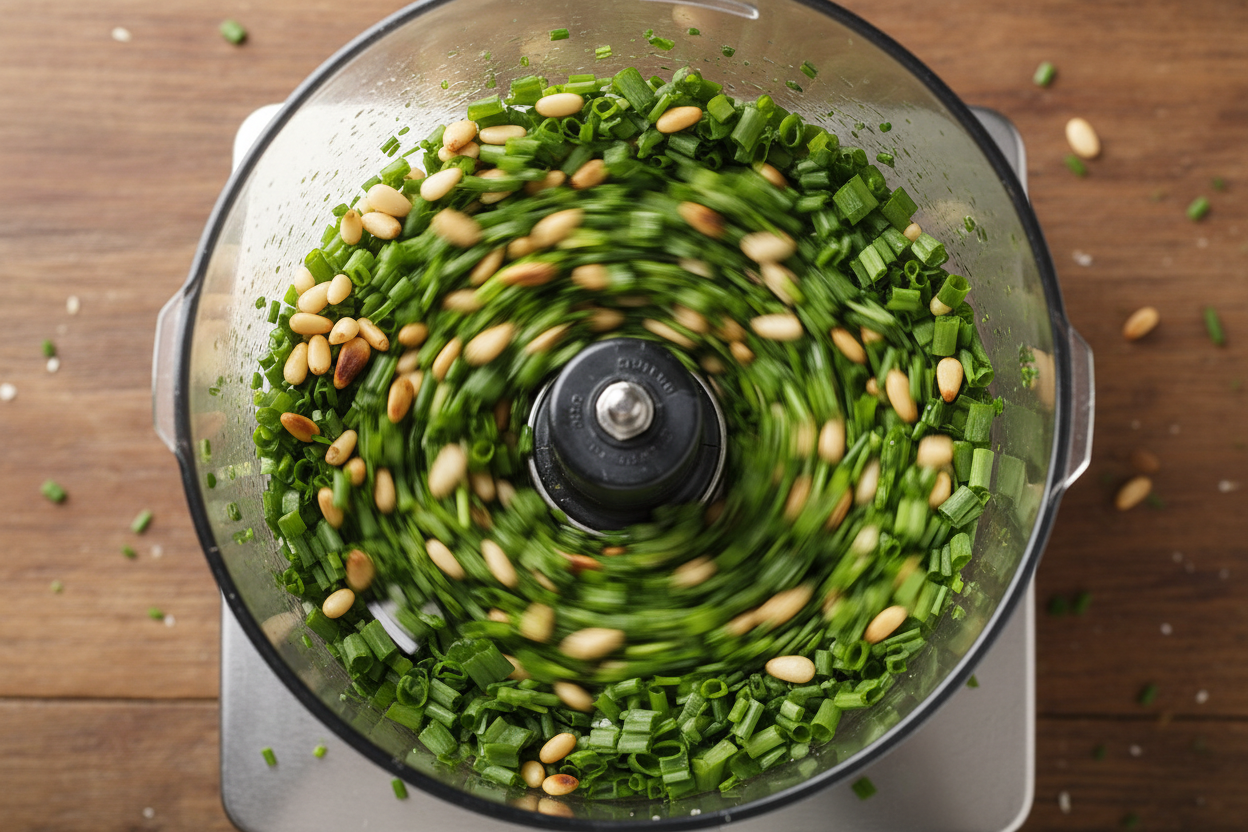
In the bowl of a food processor, combine the 2 cups of coarsely chopped garlic chives and the 1/3 cup of pine nuts. Secure the lid. Pulse the mixture several times until the chives and nuts are coarsely ground. You want some texture here, not a fine paste yet. Scrape down the sides of the bowl as needed to ensure even processing.
3. Adding Cheese and Seasonings
To the coarsely ground chives and nuts, add the 1/2 cup of grated Parmesan cheese, 1 tablespoon of fresh lemon juice, 1/2 teaspoon of salt, and 1/4 teaspoon of black pepper. Pulse again until these ingredients are well distributed and the mixture begins to form a paste. The consistency will still be quite thick at this stage.
4. Emulsifying the Oil
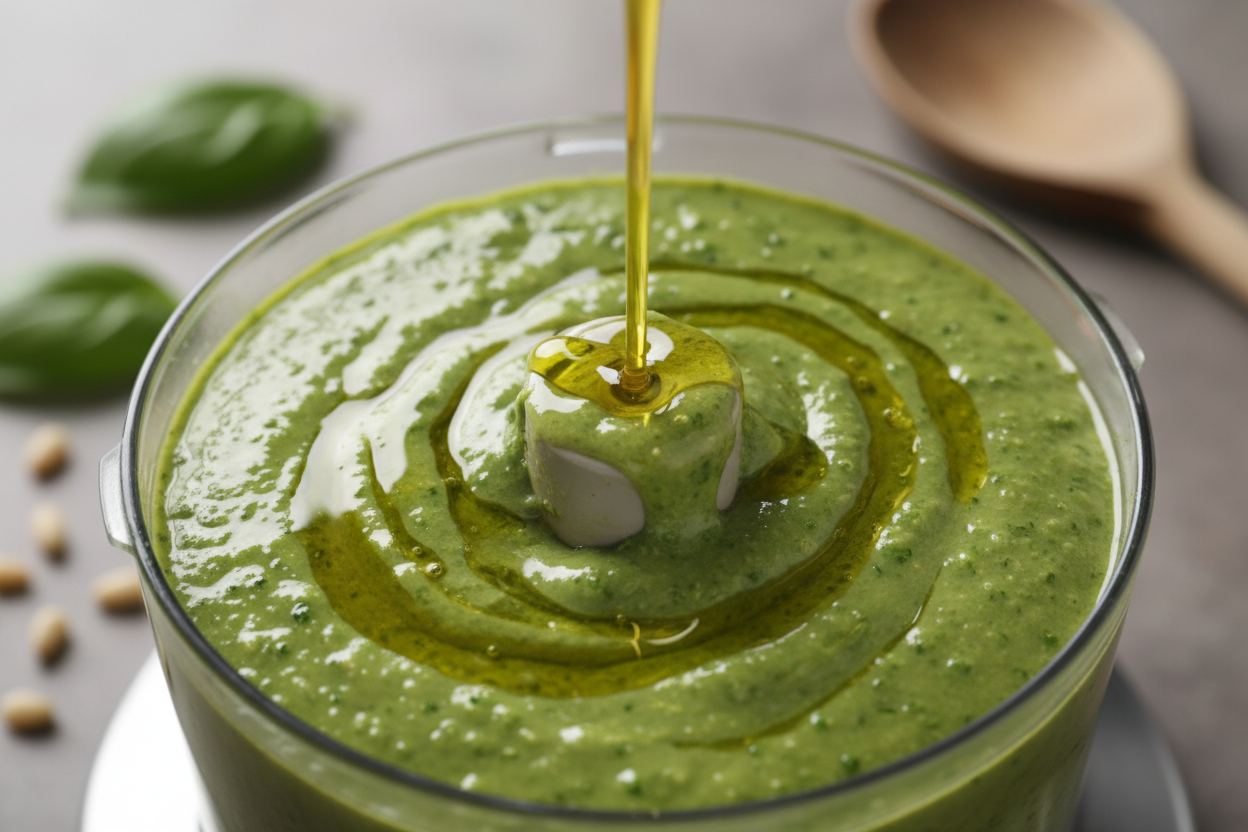
With the food processor motor running on low, slowly drizzle in 1/2 cup of olive oil through the feed tube. The key is a slow, steady stream. This gradual addition allows the oil to emulsify with the other ingredients, creating a smooth, unified, and creamy sauce. Continue processing until the pesto reaches your desired consistency – smooth but still with a hint of texture from the chives and nuts. Avoid over-processing, which can warm the pesto too much and dull its fresh flavor.
5. Tossing and Serving
Transfer the cooked pasta to a large serving bowl. Add the freshly made garlic chive pesto. Begin tossing the pasta with the sauce, ensuring every strand or piece is well coated. The pesto might seem thick at first. This is where the reserved pasta water comes in handy. Add the starchy pasta water 1 tablespoon at a time, tossing thoroughly after each addition, until the sauce reaches your desired consistency. It should be creamy and coat the pasta without being watery. Serve immediately, perhaps with an extra sprinkle of Parmesan.
Expert Tips for the Best Consistency
Achieving the perfect pesto consistency is key to a delightful dish.
- Preventing Separation or Oiliness: The slow addition of olive oil is paramount. Drizzling it too quickly can cause the oil to separate from the other ingredients, resulting in an oily, less cohesive sauce. Ensure your food processor is running continuously as you add the oil.
- Proper Food Processor Techniques: Use the pulse function initially to control the texture. Over-processing can generate too much heat, which can oxidize the delicate herbs and nuts, potentially leading to a slightly bitter flavor. Blend just until desired consistency is achieved. If the mixture is too dry initially, a tiny splash of olive oil or lemon juice can help it come together before adding the main oil portion.
Storage and Freezing Guidelines
This garlic chive pesto is so good, you will want to make extra.
- Refrigeration: Store any leftover pesto in an airtight container in the fridge for up to 3 days. To prevent browning and keep it fresh, pour a thin layer of olive oil over the surface of the pesto before sealing. This creates a barrier against air.
- Freezing: For long-term use, pesto freezes beautifully. Spoon the sauce into ice cube trays and freeze until solid. Once frozen, pop the pesto cubes out and transfer them to a freezer-safe bag or container. It will keep well for up to 3 months. When ready to use, simply thaw the desired number of cubes in the refrigerator or add directly to warm pasta or soups.
Variations and Dietary Modifications
This versatile pesto recipe can be easily adapted to suit different tastes and dietary needs.
- Nut-Free: If you have nut allergies or simply prefer not to use nuts, substitute the 1/3 cup of pine nuts with an equal amount of pepitas (pumpkin seeds) or sunflower seeds. These seeds provide a similar texture and richness without the nuts.
- Vegan: To make this pesto entirely vegan, swap the 1/2 cup of grated Parmesan cheese for 1/4 cup of nutritional yeast. Nutritional yeast provides a savory, cheesy flavor profile that works wonderfully in plant-based pestos.
- Protein Additions: For a more substantial meal, consider adding cooked protein to your pesto pasta. Grilled chicken, pan-seared shrimp, or even roasted chickpeas make excellent additions. Simply toss them in with the pasta and pesto for a complete dish.
Frequently Asked Questions
Here are some common questions about making garlic chive pesto:
- Can I use regular chives instead? While you can use regular chives, the flavor profile will be significantly different. Regular chives (onion chives) have a milder, more onion-like taste, whereas garlic chives offer a distinct garlicky pungency. For the true essence of this recipe, garlic chives are recommended.
- Why is my sauce bitter? Bitterness in pesto can often be attributed to several factors: over-processing (which can heat the herbs and nuts too much), using old or rancid nuts, or sometimes, using a very strong or bitter olive oil. Ensure your ingredients are fresh and avoid blending for too long.
- Do I have to use lemon juice? Lemon juice plays a vital role in brightening the flavors and balancing the richness of the pesto. While you could omit it, the sauce might taste flatter and less vibrant. A small amount of lemon juice makes a big difference.
Recipe Summary
This Garlic Chive Pesto provides a fresh, vibrant, and incredibly easy solution for a quick meal or a versatile sauce. It harnesses the unique flavor of garlic chives to create a delightful homemade green sauce that stands apart from traditional basil varieties. With simple ingredients and a food processor, you can create a truly satisfying and flavorful garlicky pasta dish that is perfect for any day of the week.
For more delicious recipes and kitchen tips, be sure to follow our Facebook page.
Fresh Chive and Herb Pasta
Ingredients
- 16 oz Pasta Linguine or fusilli preferred
- 2 cup Garlic chives Roughly chopped
- 1/3 cup Pine nuts Toasted
- 1/2 cup Parmesan cheese Freshly grated
- 1 tbsp Lemon juice Freshly squeezed
- 1/2 tsp Salt Kosher salt
- 1/4 tsp Black pepper Freshly ground
- 1/2 cup Olive oil Extra virgin
Instructions
- Boil a large pot of salted water and cook the pasta according to package directions. Reserve 1/2 cup of the starchy pasta water before draining.
- In a food processor, pulse the chopped chives and pine nuts until coarsely ground.
- Add the Parmesan cheese, lemon juice, salt, and black pepper to the food processor. Pulse a few times to combine.
- With the food processor motor running, slowly drizzle in the olive oil until the mixture forms a smooth, emulsified green paste.
- In a large bowl, toss the cooked pasta with the freshly made sauce. Add the reserved pasta water 1 tablespoon at a time until the sauce reaches your desired consistency and coats the noodles evenly.
For more daily recipes and tips, follow us on Facebook!
Click here to join our community!