
Thai Crab Fried Rice (Khao Pad Pu): Master the Art of Authentic Thai Street Food at Home
There are few culinary delights as comforting and utterly satisfying as a plate of perfectly executed Thai Crab Fried Rice, known in Thailand as Khao Pad Pu. Imagine fragrant jasmine rice, kissed by the searing heat of a wok, studded with sweet, succulent lumps of crab meat, and brightened by the delicate dance of soy sauce, fish sauce, and a hint of white pepper. This isn’t just any fried rice; it’s an authentic Thai fried rice experience, a true taste of Bangkok’s bustling street food scene, now entirely achievable in your own kitchen.
Forget soggy, bland imitations. We’re diving deep into the secrets of creating a restaurant-quality Khao Pad Pu that boasts incredible flavor, irresistible texture, and that elusive ‘wok hei’ char. Whether you’re a seasoned chef or a home cook looking to expand your repertoire of Thai street food dishes, this guide will empower you to craft a dish that will transport your taste buds straight to the heart of Thailand.
Why You’ll Love This Authentic Khao Pad Pu
Restaurant Quality at Home
The magic of Thai Crab Fried Rice lies in its deceptive simplicity. With just a few key ingredients and a fundamental understanding of high-heat cooking, you can replicate the nuanced flavors and textures of your favorite Thai restaurant or street stall. What often takes hours to master, we’ll condense into a dish that’s surprisingly achievable in under 15 minutes of active cooking once your ingredients are prepped. This recipe is your passport to gourmet Thai dining without leaving your home.
Texture Contrast: Fluffy Rice Meets Succulent Lumps of Sweet Crab
The hallmark of an exceptional Khao Pad Pu is the interplay of textures. Each grain of rice should be distinct, lightly toasted, and infused with smoky flavor, never clumpy or greasy. This fluffy foundation provides the perfect counterpoint to generous, tender flakes of sweet crab meat. The scramble of eggs adds soft ribbons, while a sprinkle of green onions introduces a fresh, crisp bite, creating a symphony of textures that keeps every mouthful exciting.
Versatile: Perfect for Utilizing Leftover Jasmine Rice
One of the best qualities of this dish, beyond its incredible taste, is its inherent resourcefulness. Thai Crab Fried Rice is a champion of leftover jasmine rice recipes. In fact, day-old, chilled rice is not just recommended; it’s absolutely essential for achieving the perfect texture. This makes it an ideal weeknight meal solution, transforming yesterday’s plain rice into a vibrant, flavorful culinary masterpiece. It’s an economical and incredibly delicious way to prevent food waste.
Ingredients for Perfect Thai Fried Rice
Crafting the perfect Khao Pad Pu begins with understanding the role each ingredient plays. Quality and preparation are paramount to achieving that authentic taste and texture.
The Rice: Why Day-Old, Cold Jasmine Rice Is Non-Negotiable for Texture
This is arguably the most critical component. Freshly cooked rice is too moist and will inevitably lead to a soggy, clumpy fried rice. Day-old, cold jasmine rice, on the other hand, has had time to dry out and firm up. This allows individual grains to separate beautifully in the wok, preventing stickiness and enabling them to absorb the rich flavors and develop that coveted toasted exterior. Cook your jasmine rice a day in advance, spread it on a tray to cool, then refrigerate until thoroughly chilled.
The Crab: Lump Crab Meat vs. Claw Meat (and Why Lump Wins)
For an authentic and luxurious Thai Crab Fried Rice, we strongly advocate for using high-quality lump crab meat. Lump crab meat comes from the body of the crab and consists of large, tender, and intensely sweet chunks. It holds its shape well during stir-frying, providing substantial bites of crab throughout the dish. While claw meat offers good flavor and is more economical, its smaller, shreddier texture can get lost amidst the rice. For truly exceptional lump crab meat recipes like this one, investing in lump crab meat is well worth it. Fresh or pasteurized crab meat (found in the refrigerated seafood section) is best.
The Seasoning: The Balance of Fish Sauce, Soy Sauce, and White Pepper
The soul of Thai fried rice lies in its delicate yet profound seasoning. It’s a masterful balance of salty, savory, and subtly sweet notes.
- Fish Sauce (Nam Pla): This fermented anchovy sauce is the backbone of Thai cuisine, providing a deep, umami-rich saltiness that’s incomparable. Don’t be shy; quality fish sauce is key.
- Light Soy Sauce: Adds another layer of savory depth and a touch of color without overpowering the fish sauce.
- Oyster Sauce (Optional but Recommended): A spoonful adds a glossy finish and a complex, slightly sweet, and savory richness.
- White Pepper: Rather than black pepper, white pepper offers a milder, more aromatic heat that’s characteristic of Thai cooking.
- Sugar: Just a pinch to balance the saltiness and enhance the sweetness of the crab.
- Garlic and Shallots: These aromatics are essential for building the initial flavor base, providing a fragrant foundation for the entire dish.
How to Make Thai Crab Fried Rice
Executing this dish requires speed and confidence, but with proper prep, it’s incredibly rewarding. Gather all your ingredients within arm’s reach before you even turn on the heat.
-
Step 1: The Prep
First, gently break up any large clumps of your day-old jasmine rice with your hands. This ensures each grain can toast evenly. Mince your garlic and thinly slice your shallots. Prepare your seasoning sauce by combining fish sauce, soy sauce, a pinch of sugar, and white pepper in a small bowl. If using, prepare your Prik Nam Pla sauce (see below) in advance.
-
Step 2: The Egg
Heat your wok or large skillet over high heat until it’s smoking. Add a tablespoon of neutral oil and swirl to coat. Crack two eggs directly into the hot oil and scramble them quickly, breaking them into small, fluffy ribbons. This should take no more than 30 seconds. Remove the cooked egg from the wok and set aside.
-
Step 3: The Stir-Fry
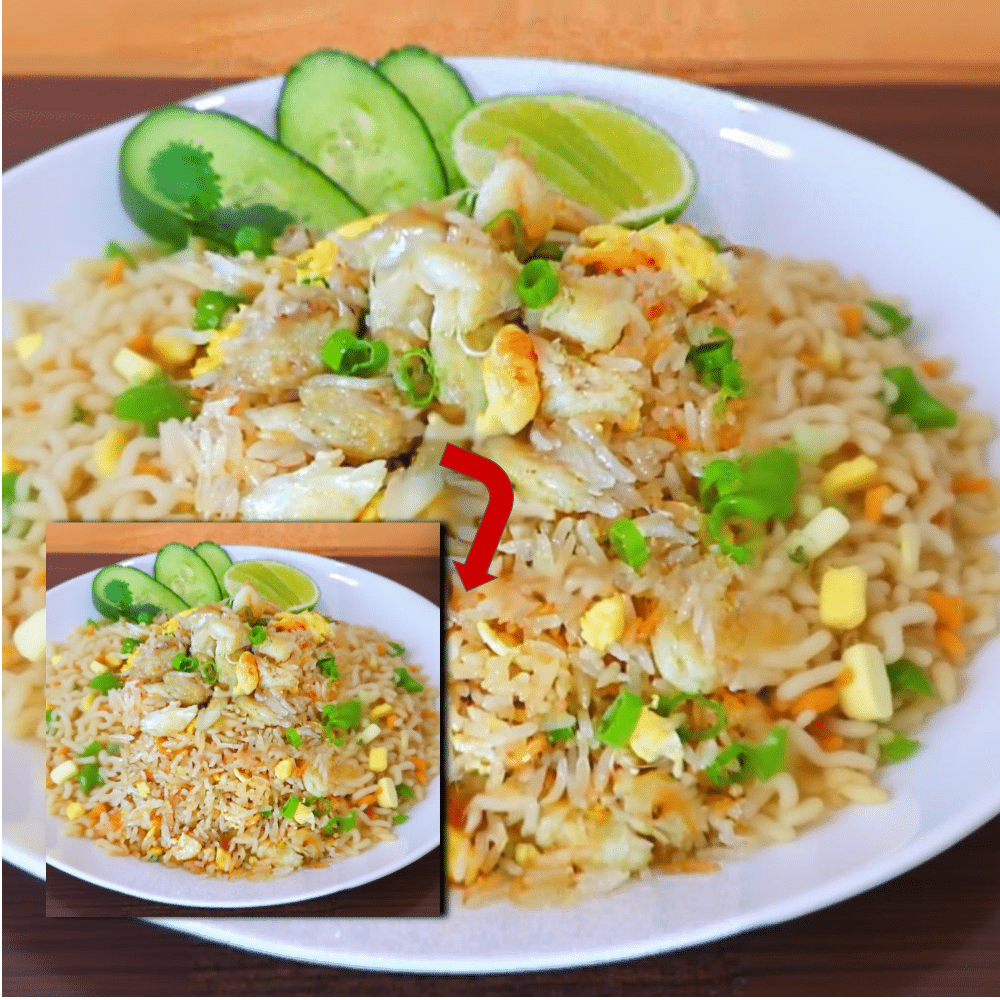
Add another tablespoon of oil to the hot wok. Add the minced garlic and sliced shallots, stirring rapidly for about 15-20 seconds until fragrant and lightly golden. Be careful not to burn them. Immediately add your prepared cold jasmine rice. Spread the rice out in a single layer as much as possible, pressing it down slightly onto the hot surface of the wok. Let it sit for about 30 seconds to get some char, then begin to stir-fry vigorously, tossing and folding the rice to ensure even cooking and distribution of flavor. This high-heat technique is crucial for developing wok hei cooking tips – that smoky, charred aroma that defines authentic stir-fries. Continue to stir-fry for 2-3 minutes until the rice looks slightly toasted and individual grains are separated. Pour the pre-mixed seasoning sauce over the rice and continue to stir-fry for another minute, ensuring the rice is evenly coated and glistening.
-
Step 4: The Fold
Return the scrambled egg to the wok. Now, gently add your fresh lump crab meat. The key here is to add the crab last to preserve its delicate texture and ensure it doesn’t break down into tiny pieces. Fold the crab and egg into the rice carefully, just until heated through, about 30 seconds to a minute. Avoid over-stirring. Stir in sliced green onions for a fresh burst of color and flavor. Remove from heat immediately and serve piping hot.
Essential Condiment: Prik Nam Pla
No plate of Thai Crab Fried Rice is complete without its iconic accompaniment: Prik Nam Pla sauce. This simple yet transformative condiment offers a bright, spicy, and tangy kick that cuts through the richness of the fried rice, elevating every bite. It’s incredibly easy to make and shouldn’t be skipped.
How to Make Classic Prik Nam Pla: Finely slice 2-3 bird’s eye chilies (or serrano chilies for less heat) into thin rounds. Place them in a small bowl. Add 3-4 tablespoons of good quality fish sauce, the juice of half a lime, and a small pinch of sugar (optional, to balance the acidity). Stir to combine. Let it sit for a few minutes for the flavors to meld. Serve alongside your Khao Pad Pu, allowing each diner to customize their spice level.
Expert Tips for Success
Avoiding Soggy Rice
The primary culprit for soggy fried rice is too much moisture. Always use day-old, cold jasmine rice. If your cooked rice still feels very wet, you can spread it on a baking sheet and let it air dry in the refrigerator for a few hours before cooking. When stir-frying, ensure your wok or pan is searing hot, and don’t overcrowd it. Cook in batches if necessary, though a proper home wok setup should handle a single portion well.
Managing Wok Heat for ‘Wok Hei’
Achieving ‘wok hei’ – the breath of the wok – is about intense, sustained heat. Get your wok smoking hot before adding oil, and maintain that heat throughout the stir-frying process. Don’t be afraid of high flame. If your stove struggles, consider cooking smaller portions. The aim is to quickly sear the ingredients, imparting a subtle smokiness and preventing them from steaming. A carbon steel wok is ideal for this, as it heats up quickly and distributes heat efficiently.
Gluten-Free Adaptations
For those seeking delicious gluten-free Thai recipes, Khao Pad Pu is easily adaptable. The main ingredients (rice, crab, egg, fresh aromatics) are naturally gluten-free. The key is to swap out traditional soy sauce for a certified gluten-free tamari or a gluten-free soy sauce alternative. Ensure your fish sauce is also gluten-free (most are, but always check the label, especially for added flavorings). Oyster sauce, if used, also needs to be a gluten-free variety. With these simple substitutions, you can enjoy an authentic and flavorful gluten-free Thai Crab Fried Rice without compromise.
FAQ
Can I use frozen crab meat?
- Yes, you can use frozen crab meat, but it requires proper preparation. Thaw it completely in the refrigerator overnight or under cold running water. Once thawed, gently squeeze out any excess moisture with paper towels to prevent adding water to your fried rice, which could make it soggy.
What if I don’t have a wok?
- While a wok is ideal for achieving maximum heat and ‘wok hei’, you can still make excellent Thai Crab Fried Rice in a large, heavy-bottomed skillet or a cast-iron pan. Ensure your pan is preheated until very hot before adding oil and ingredients. Avoid overcrowding the pan; cook in smaller batches if necessary to maintain high heat and achieve that desired toasted texture on the rice.
How to store and reheat leftovers?
- Store leftover Thai Crab Fried Rice in an airtight container in the refrigerator for up to 2-3 days. To reheat, gently warm it in a microwave, stirring occasionally, or for best results, stir-fry it in a hot pan with a tiny bit of oil until heated through. Be careful not to overcook the crab, which can dry out.
There you have it – all the knowledge and tips you need to create a truly exceptional Thai Crab Fried Rice (Khao Pad Pu) in your very own kitchen. Get ready to impress your family and friends with this vibrant and authentic Thai classic.
Want to explore more delicious Thai recipes and culinary adventures? Follow our journey and connect with us on Facebook for daily inspiration, tips, and behind-the-scenes glimpses! Find us at https://www.facebook.com/profile.php?id=61568538666337.
Thai Crab Fried Rice (Khao Pad Pu)
Ingredients
- 3 cups cooked jasmine rice cold, preferably overnight/day-old
- 1/2 lb lump crab meat fresh or pasteurized, checked for shells
- 2 tbsp cooking oil vegetable or canola
- 2 cloves garlic minced
- 2 large eggs beaten
- 1 tbsp soy sauce Thai light soy sauce preferred
- 1 tbsp fish sauce for the rice
- 1 pinch sugar white sugar
- 3 stalks scallions chopped
- 1/4 tsp white pepper ground (optional but recommended)
- 3 tbsp fish sauce for Prik Nam Pla sauce
- 1 tbsp lime juice freshly squeezed, for Prik Nam Pla sauce
- 1 tsp sugar for Prik Nam Pla sauce
- 2 whole Thai bird's eye chilies sliced, for Prik Nam Pla sauce
- 1 clove garlic minced, for Prik Nam Pla sauce
- 1 wedge lime for garnish
- 3 slices cucumber for garnish
- 1 spring cilantro for garnish
Instructions
- Prepare the Prik Nam Pla (Chili Fish Sauce) by mixing 3 tablespoons fish sauce, lime juice, 1 teaspoon sugar, sliced chilies, and 1 minced garlic clove in a small bowl. Stir until sugar dissolves. Set aside.
- Break up the cold, cooked jasmine rice with wet hands or a fork to remove any clumps.
- Heat the cooking oil in a wok or large skillet over medium-high heat. Add the 2 cloves of minced garlic and sauté until fragrant and lightly golden (about 30 seconds).
- Push the garlic to one side of the pan. Pour the beaten eggs into the empty side. Scramble them quickly until mostly set but still soft.
- Add the rice to the wok. Turn the heat to high. Stir-fry vigorously for 2-3 minutes, tossing the rice with the eggs and garlic to ensure even coating.
- Drizzle the soy sauce and 1 tablespoon fish sauce around the perimeter of the wok (to sear the sauce). Add the pinch of sugar and white pepper. Toss to combine thoroughly.
- Gently fold in the lump crab meat and chopped scallions. Stir-fry for another 30-60 seconds, being careful not to break up the crab chunks, just until heated through.
- Transfer to a serving plate. Garnish with cucumber slices, cilantro, and a wedge of lime.
- Serve immediately with the prepared Prik Nam Pla on the side.
For more daily recipes and tips, follow us on Facebook!
Click here to join our community!