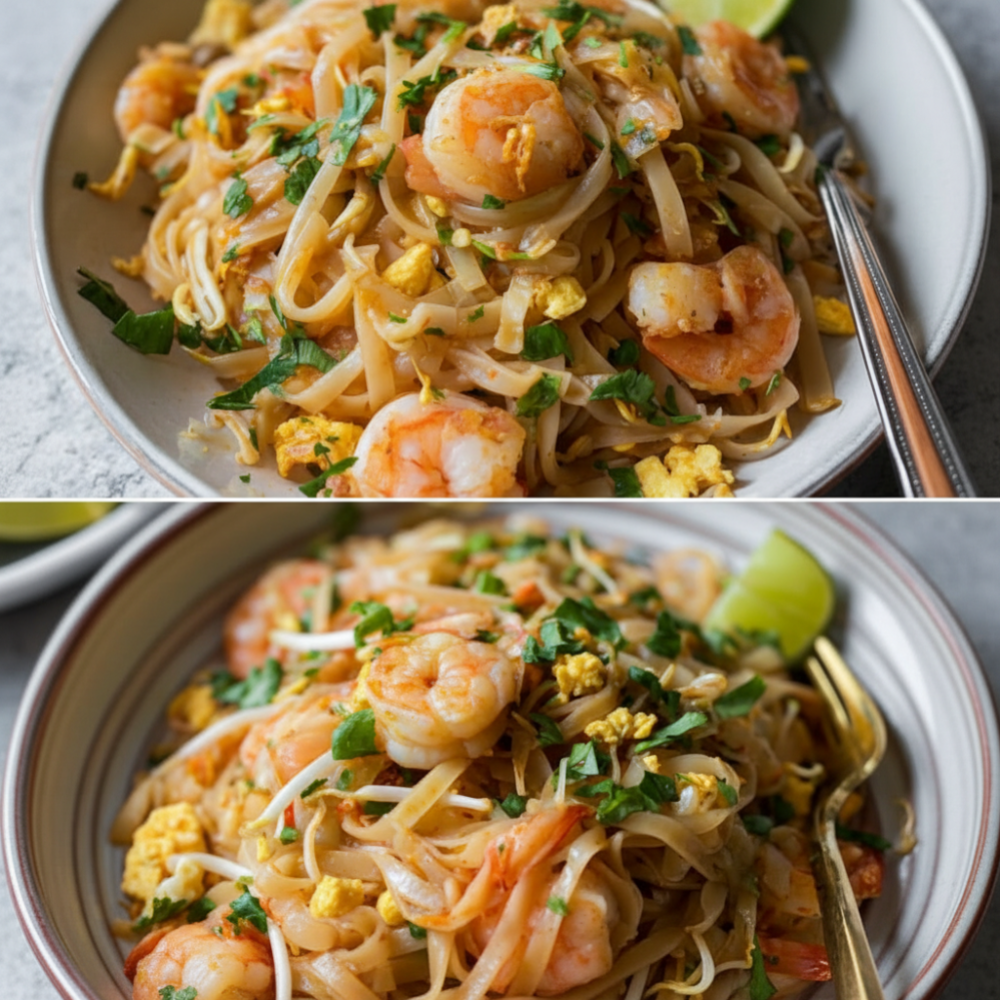
Bringing vibrant street food flavors to your kitchen is achievable with this comprehensive guide to authentic Thai noodle preparation. This article breaks down the techniques for achieving the perfect balance of sweet, sour, and savory notes inherent in a classic Shrimp Pad Thai. Mastering this dish at home means understanding its core components and precise cooking steps, allowing you to recreate a beloved culinary experience without leaving your kitchen.
The Origins of Thai Seafood Noodles
The history of Pad Thai is deeply intertwined with Thailand’s cultural identity and culinary evolution. This beloved stir-fry traces its roots to the mid-20th century, emerging as a dish promoted during a period of national economic development and cultural unity. Originally known as “Kway Teow Pad Thai,” it quickly became a staple among street vendors, offering a hearty, flavorful, and affordable meal. Its popularity surged, transforming it from a simple local dish to a national symbol of Thai cuisine. The adaptable nature of Pad Thai, often featuring `prawn noodles` or other proteins, made it a favorite. From its humble beginnings as a strategic culinary initiative, Pad Thai, particularly the shrimp variation, has captivated palates worldwide. Today, it stands as one of the most recognizable and cherished dishes of `Thai street food`, celebrated for its complex yet harmonious flavor profile and satisfying texture.
Essential Ingredients for the Perfect Prawn Rice Noodle Stir-Fry
Gathering the correct components is crucial for achieving authentic flavor in your Shrimp Pad Thai. Each ingredient plays a vital role in building the dish’s characteristic taste and texture. Starting with high-quality ingredients ensures a superior final product.
- Sourcing Rice Noodles: The foundation of Shrimp Pad Thai lies in the noodles. For the best results, use flat, dry rice noodles. These noodles are ideal because their texture holds up well to `wok stir-frying` without becoming mushy. When prepared correctly, they achieve a tender yet slightly chewy consistency that absorbs the rich sauce flavors effectively. Avoid fresh, pre-cooked noodles, which often lack the necessary firmness.
- Selecting Seafood: For an authentic `prawn noodles` experience, choose high-quality raw shrimp. Look for firm, translucent shrimp with a mild, fresh scent. Whether shelled or unshelled, ensure they are properly cleaned and deveined. Using fresh shrimp contributes significantly to the dish’s overall succulence and flavor. The recipe calls for 8 oz of raw shrimp.
- The Flavor Base: The distinct sweet, sour, and savory balance of Pad Thai comes from its unique sauce. This sauce is a blend of three non-negotiable ingredients:
- `Tamarind paste` provides the essential sour note, offering a fruity tang that is distinct from lime or vinegar.
- `Fish sauce` delivers the umami depth and savory saltiness, crucial for a truly authentic Thai flavor.
- `Palm sugar` introduces a nuanced sweetness, balancing the sour and savory elements. Unlike granulated sugar, palm sugar has a caramel-like richness that adds complexity.
Together, these three ingredients create the characteristic heart of the Pad Thai flavor profile.
Step-by-Step Cooking Guide
Follow these exact measurements and steps for a flawless Shrimp Pad Thai dish. Precision in each stage ensures the classic balance of flavors and textures.
- Soak 8 oz `flat rice noodles` in hot water for 10 minutes until pliable but firm. Drain thoroughly and set aside. This ensures the noodles are ready to absorb the sauce without overcooking in the wok.
- In a small bowl, whisk together 3 tbsp `tamarind paste`, 2 tbsp `fish sauce`, and 2 tbsp `palm sugar` until the sugar completely dissolves. This creates your harmonious Pad Thai sauce base.
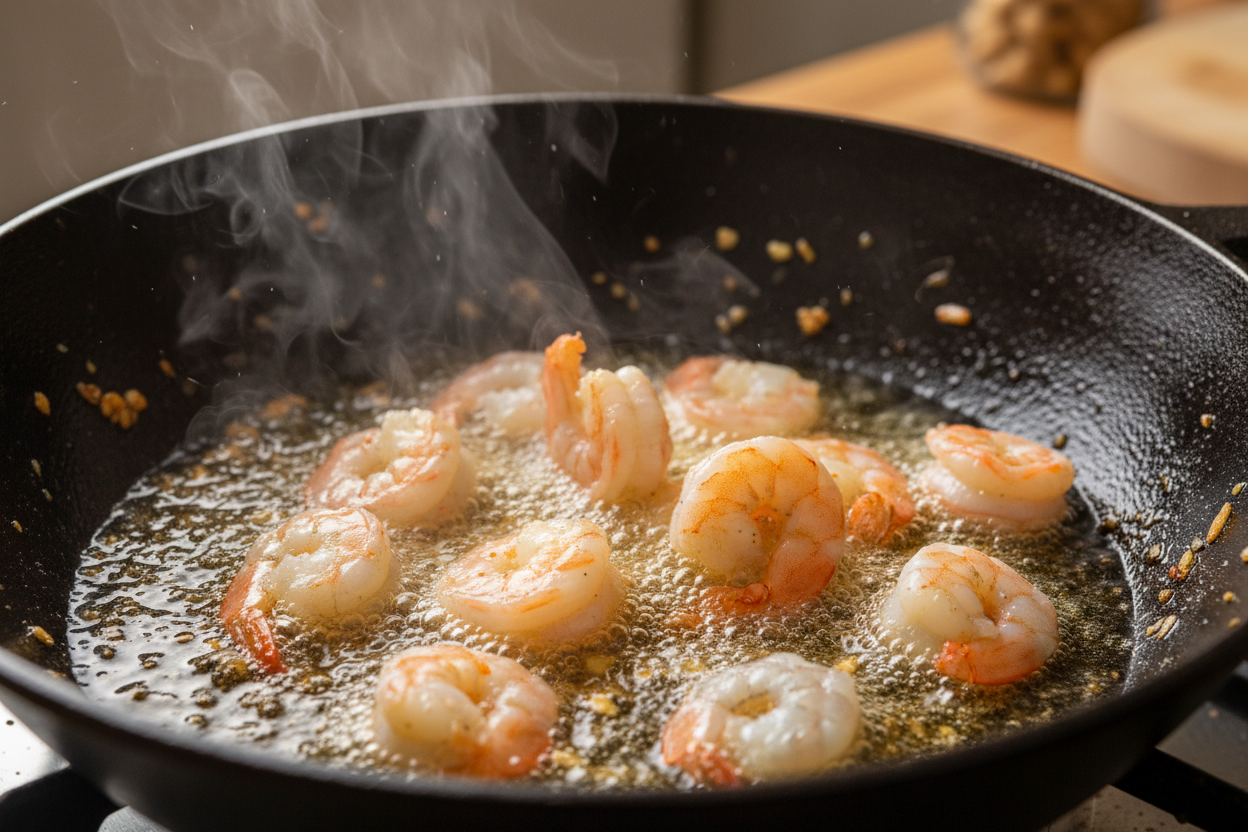
- Heat a `wok` or large skillet over medium-high heat. Add 1 tbsp peanut oil and cook 8 oz `raw shrimp` for 2 minutes, or until they turn pink and opaque. Remove the cooked shrimp from the wok and set them aside. This prevents the shrimp from overcooking.
- Add the remaining 1 tbsp peanut oil to the pan. Stir in 1 tbsp minced garlic and cook for 30 seconds until fragrant. Do not let the garlic brown.
- Push the garlic to the side of the wok, pour in 2 whole large eggs, and scramble them for 1 minute until just set. Break the eggs into smaller pieces.
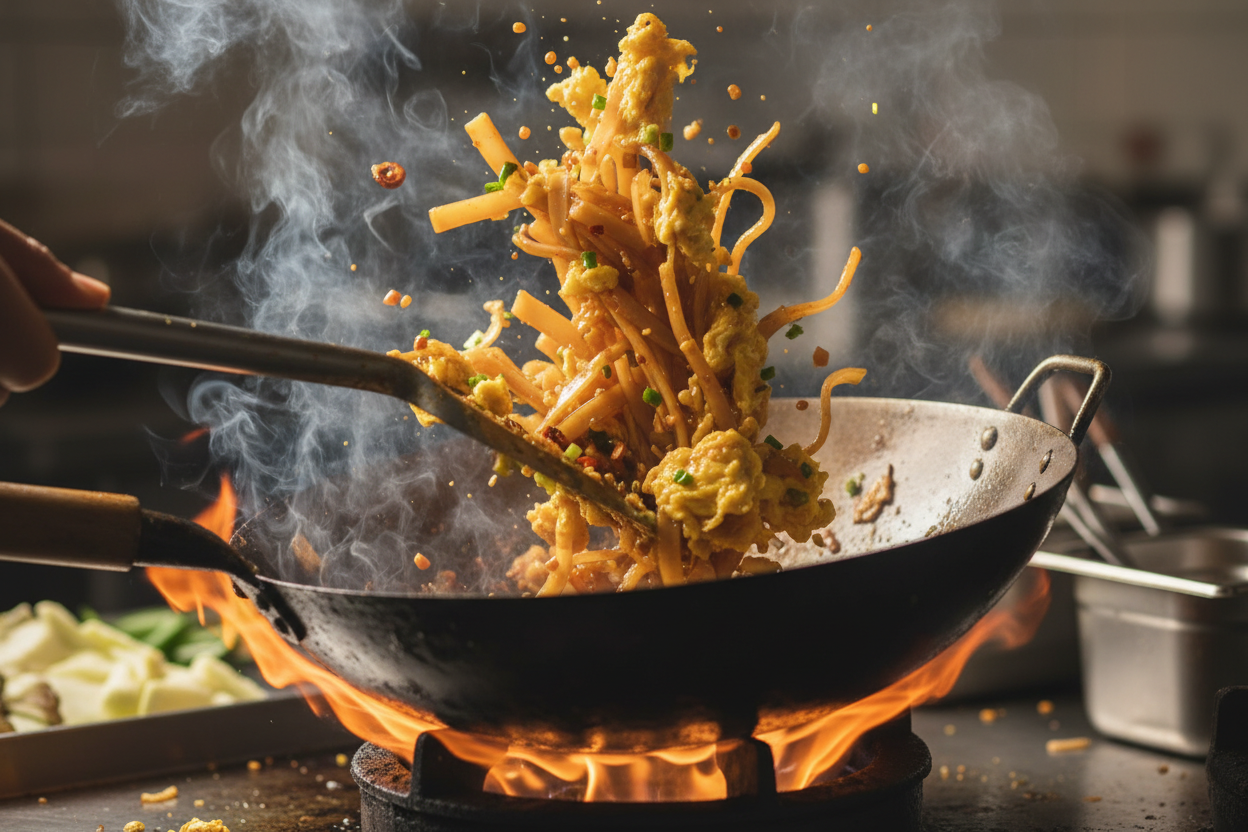
- Add the drained `flat rice noodles` and the prepared sauce mixture to the wok. Toss continuously with tongs or a spatula for 3 minutes. Ensure the noodles are evenly coated and become tender, absorbing the sauce.
- Return the cooked shrimp to the wok along with 1 cup fresh `bean sprouts`. Toss gently for 1 minute to combine and heat through the ingredients. The `bean sprouts` should remain crisp.
- Remove the Shrimp Pad Thai from the heat immediately. Garnish generously with 1/4 cup unsalted peanuts and 1/4 cup fresh cilantro. Serve the dish with wedges from 1 whole lime, allowing each person to squeeze fresh lime juice over their portion for an added bright finish.
Pro Tips for Wok Stir-Frying
Mastering the `wok stir-frying` technique is key to achieving the desired texture and flavor for your Shrimp Pad Thai. These tips will help you cook like a seasoned `Thai street food` chef.
Controlling the Heat
Maintaining high heat is paramount when `wok stir-frying`. A properly heated wok or skillet ensures that ingredients sear quickly, developing a slight char and deeper flavor. High heat also prevents ingredients, especially the `flat rice noodles`, from steaming and becoming mushy. When the pan is hot enough, moisture evaporates rapidly, leading to distinct, firm textures rather than a soggy outcome. Avoid overcrowding the wok, as this drops the temperature and compromises the stir-frying process. Cook in batches if necessary to maintain optimal heat.
Soaking vs. Boiling Noodles
For `Pad Thai` noodles, the soaking method is preferred over boiling. Soaking 8 oz `flat rice noodles` in hot water for 10 minutes, as instructed, allows them to become pliable without fully cooking. This partial rehydration is critical. When the noodles are subsequently added to the hot wok with the sauce, they finish cooking, absorbing the flavors and achieving an al dente bite. Boiling noodles often makes them too soft and prone to breaking during vigorous `wok stir-frying`, leading to a less desirable, mushy texture. Soaking gives you greater control over the final noodle consistency.
Customizations and Variations
While the classic Shrimp Pad Thai recipe offers a perfect balance, you can adjust certain elements to personal preference while adhering to the authentic ingredient list.
Adding Extra Vegetables
This recipe features 1 cup of fresh `bean sprouts` and 1 tbsp of minced garlic, alongside fresh cilantro for garnish. For those who enjoy a greater fresh crunch and vegetable presence, consider increasing the amount of `bean sprouts` used to 1.5 or even 2 cups, adding them in the final minute of cooking. This boosts texture without altering the dish’s fundamental flavor profile or moisture balance. Similarly, a larger garnish of 1/2 cup fresh cilantro can enhance the herbaceous freshness.
Adjusting the Flavor Profile
The Shrimp Pad Thai sauce, with its 3 tbsp `tamarind paste`, 2 tbsp `fish sauce`, and 2 tbsp `palm sugar`, provides a perfectly balanced sweet, sour, and savory experience. For a more pronounced sourness, you can increase the squeeze of fresh lime juice from the 1 whole lime served with the dish. If you prefer a richer sweetness, a slightly larger measure of `palm sugar` (up to 2.5 tbsp) can be incorporated into the sauce mixture. Remember, these adjustments should be subtle to maintain the integrity of the dish’s traditional flavor. This recipe is crafted to deliver the classic, non-spicy profile of authentic Shrimp Pad Thai.
Frequently Asked Questions
- What is the best pan to use?
For authentic `wok stir-frying` results, a carbon steel wok is highly recommended. Its high heat retention and unique shape facilitate efficient tossing and even cooking, which are crucial for dishes like Shrimp Pad Thai. If a wok is not available, a large, heavy-bottomed cast-iron skillet can serve as a suitable alternative. Ensure your chosen pan is large enough to accommodate all ingredients without overcrowding, allowing for proper heat distribution and preventing steaming. - Can I make the sauce ahead of time?
Yes, the `Pad Thai` sauce can be prepared in advance. Whisking together the 3 tbsp `tamarind paste`, 2 tbsp `fish sauce`, and 2 tbsp `palm sugar` to dissolve the sugar can be done hours or even a day before cooking. Store the prepared sauce in an airtight container in the refrigerator. This advance preparation makes `Shrimp Pad Thai` a quicker option for weeknight meals, allowing you to focus on the `wok stir-frying` steps when it’s time to cook. Ensure the sauce is at room temperature before adding to the hot noodles.
Experience the delightful complexities of this classic `Thai street food` dish. For more authentic recipes and culinary insights, `Follow our Facebook page`. We share new dishes and cooking tips regularly.
Classic Prawn Pad Thai
Ingredients
- 8 oz flat rice noodles dry
- 8 oz raw shrimp peeled and deveined
- 2 tbsp peanut oil divided
- 1 tbsp garlic minced
- 2 whole large eggs lightly beaten
- 1 cup fresh bean sprouts rinsed
- 1/4 cup unsalted peanuts crushed
- 1/4 cup fresh cilantro chopped
- 1 whole lime cut into wedges
- 3 tbsp tamarind paste for the sauce
- 2 tbsp fish sauce for the sauce
- 2 tbsp palm sugar or brown sugar
Instructions
- Soak 8 oz flat rice noodles in hot water for 10 minutes until pliable but firm. Drain and set aside.
- In a small bowl, whisk 3 tbsp tamarind paste, 2 tbsp fish sauce, and 2 tbsp palm sugar until the sugar dissolves.
- Heat a wok over medium-high heat. Add 1 tbsp peanut oil and cook 8 oz raw shrimp for 2 minutes until pink. Remove and set aside.
- Add the remaining 1 tbsp peanut oil to the pan. Stir in 1 tbsp minced garlic and cook for 30 seconds.
- Push the garlic to the side, pour in 2 whole large eggs, and scramble for 1 minute.
- Add the drained rice noodles and the sauce to the wok. Toss continuously for 3 minutes until the noodles are tender.
- Return the shrimp to the wok along with 1 cup fresh bean sprouts. Toss for 1 minute.
- Remove from heat. Garnish with 1/4 cup unsalted peanuts and 1/4 cup fresh cilantro. Serve with wedges from 1 whole lime.
For more daily recipes and tips, follow us on Facebook!
Click here to join our community!