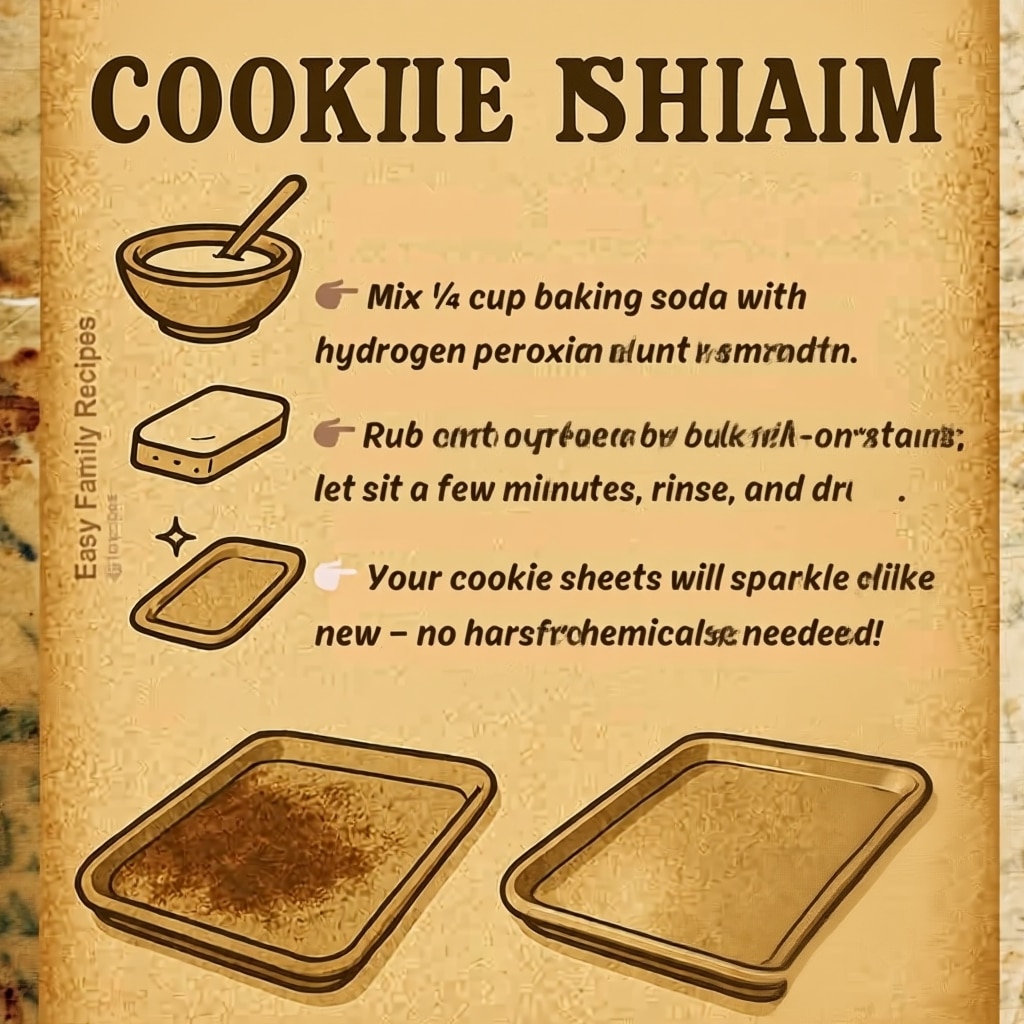
There’s a special kind of kitchen heartbreak that only home bakers understand: reaching for your trusty cookie sheet, only to find it stained, browned, and encrusted with years of baked-on grease. It’s frustrating, isn’t it? Those once-shiny surfaces now look like relics from a culinary warzone, and you might be tempted to toss them in the bin. But hold on a minute! Before you say goodbye to your beloved bakeware, let me share a secret. You can absolutely restore cookie sheets to a gleaming, near-new condition with a simple, powerful, and incredibly satisfying method. Forget harsh chemicals and endless scrubbing; we’re diving into a clever hack that will make your old baking sheets look fantastic again.
This isn’t just about aesthetics; a clean baking sheet conducts heat more evenly, leading to better results for your cookies, roasted veggies, and sheet pan dinners. While stubborn stains often make us think our pans are beyond saving, a little baking soda and hydrogen peroxide can work wonders. Get ready to transform those grimy pans!
Why Cookie Sheets Turn Brown
Before we embark on our cleaning journey, let’s understand why our cookie sheets take on that unappealing brown and black hue in the first place. It’s not just dirt; it’s a phenomenon known as polymerized oil and grease buildup. Every time you bake, fats and oils from your food, especially if using cooking sprays or high-fat ingredients, are exposed to high heat. Over time, these residues bake onto the pan’s surface, creating a tough, sticky, and often dark layer that becomes incredibly difficult to remove.
The type of pan also plays a role in how this discoloration manifests. Cleaning aluminum baking sheets often reveals a dulling or darkening over time due to oxidation and baked-on oil, while non-stick sheets might show similar dark spots, though their surface composition is different. Once this polymerized layer forms, regular soap and water simply aren’t enough to break it down. You’re essentially dealing with a plastic-like film of baked-on carbon and oil, which needs a more potent approach than your average dish soap and sponge.
The Magic Method: Baking Soda & Peroxide
This dynamic duo is your secret weapon for battling the toughest baked-on grime. The baking soda and peroxide hack is celebrated for its effectiveness and its relatively gentle impact on most bakeware surfaces, making it an excellent choice for those looking to remove burnt grease from pans without resorting to harsh abrasives that can damage the pan.
Materials Needed
- Baking Soda (Sodium Bicarbonate): The mild abrasive and alkali that will help lift stubborn stains.
- Hydrogen Peroxide (3%): The oxidizing agent that breaks down organic compounds like polymerized oil.
- Scouring pad or sponge: For scrubbing; choose one appropriate for your pan material (e.g., non-scratch for non-stick).
- Paper towels or old cloth (optional, for preparation).
Why This Combination Works
The science behind this method is fascinating and incredibly effective. When baking soda (an alkali) is combined with hydrogen peroxide (an oxidizer), a gentle but powerful chemical reaction occurs. The baking soda acts as a mild abrasive, helping to physically scrub away grime, but its primary role here is to create an alkaline environment. Hydrogen peroxide, a bleaching agent, works by releasing oxygen radicals that break down the molecular bonds of the baked-on fats and carbon deposits. This oxidation process effectively lifts and loosens the tough, polymerized oils that have become fused to your pan’s surface. It’s a non-toxic powerhouse that helps remove baked-on oil without harming the underlying metal, making it one of the best cookie sheet cleaner methods out there.
Step-by-Step: How to Restore Cookie Sheets
Ready to bring your cookie sheets back to life? Follow these simple steps for a sparkling transformation. This process is designed to effectively restore cookie sheets and refurbish old baking pans with minimal effort, thanks to the power of baking soda and peroxide.
- Preparation: Setting up your workspace.
Choose a well-ventilated area, preferably near a sink. Lay down some old towels or newspaper to protect your counter from any mess. Make sure your cookie sheet is dry and free of any loose crumbs. Give it a quick rinse and wipe if needed.
- The Sprinkle: Applying the baking soda base.
Generously sprinkle a thick, even layer of baking soda over the entire surface of your discolored cookie sheet. Don’t be shy; you want full coverage, especially on the heavily stained areas. Think of it as creating a white blanket over the grime.
- The Pour: Adding peroxide to create a paste.
Carefully pour hydrogen peroxide over the baking soda. You’ll notice it start to bubble and fizz slightly. Use just enough peroxide to create a thick, spreadable paste. You can gently spread the paste with your fingers (wearing gloves is recommended, especially for sensitive skin) or the back of a spoon to ensure all stained areas are coated.
- The Wait: Letting the mixture sit (the most crucial step).
This is where the magic happens! Let the paste sit on the cookie sheet for at least 2-4 hours, or even overnight for extremely stubborn stains. The longer it sits, the more time the chemical reaction has to break down and lift the polymerized grease and carbon. You’ll often see the paste turn brownish as it absorbs the grime.
- The Scrub: Removing the loosened grime.
Once the paste has done its work, grab your chosen scouring pad or sponge. With moderate pressure, begin scrubbing the surface of the pan. You’ll be amazed at how easily the baked-on grease and stains start to lift away. For particularly tough spots, you might need a little extra elbow grease, but for the most part, the grime should come off without excessive force.
- The Rinse: Washing and drying for a spotless finish.
Thoroughly rinse your cookie sheet under warm running water, scrubbing away any remaining paste and loosened gunk. Repeat rinsing until all residue is gone. Finally, dry your beautifully restored cookie sheet completely with a clean towel to prevent water spots.
Alternative Cleaning Methods
While the baking soda and peroxide method is a champion for stubborn stains, there are other effective techniques for cleaning baking sheets depending on the type of stain and pan. Having a few tricks up your sleeve ensures you always have the best cookie sheet cleaner for the job.
1. The Vinegar & Baking Soda Method
For lighter stains, general maintenance, or if you don’t have hydrogen peroxide on hand, the classic vinegar and baking soda combination works well. Sprinkle baking soda generously on the pan, then spray or pour white vinegar over it. It will fizz vigorously! Let it sit for 15-30 minutes before scrubbing with a sponge and rinsing. This is fantastic for regular upkeep and preventing heavy buildup, and it’s particularly good for keeping your pans looking neat without constant deep cleaning.
2. The Ketchup Trick
Believe it or not, ketchup can be a surprisingly effective cleaner for certain types of discoloration, especially the reddish or coppery tints that can appear on aluminum bakeware. The mild acidity in ketchup helps to break down oxidation and light mineral stains. Simply spread a thin layer of ketchup over the affected areas, let it sit for about 15-20 minutes, then wipe it away with a soft cloth and rinse. This is a gentler approach that can brighten up slightly tarnished aluminum surfaces.
3. Commercial Cleaners
Sometimes, the grime is so severe that it warrants a bit more power. Products like Bar Keepers Friend, with its oxalic acid, are excellent for cleaning aluminum baking sheets and can tackle rust spots and heavy discoloration. For truly industrial-strength baked-on grease, some brave souls turn to oven cleaner. If using oven cleaner, always do so in a very well-ventilated area, wear gloves and eye protection, and follow the product instructions meticulously. It’s a strong chemical, so caution is paramount, especially when cleaning non-stick cookie sheets where it might damage the coating.
4. The Ammonia Bag Method
This is a heavy-duty solution for extreme grime, best reserved for very stained pans and used with extreme caution. Place the heavily soiled cookie sheet inside a large, heavy-duty garbage bag. Pour about 1/4 to 1/2 cup of ammonia (not ammonia-based cleaner, but pure ammonia) into a small, open bowl or dish, and place it inside the bag with the pan. Seal the bag tightly, ensuring no ammonia fumes can escape. Leave it outdoors or in a garage for several hours or overnight. The ammonia fumes will work to loosen and dissolve the baked-on carbon. When opening, do so outdoors, away from your face, and immediately scrub and rinse the pan thoroughly. Always wear gloves. This method is incredibly effective but demands strict safety precautions.
When to Replace vs. Restore
While we love to restore cookie sheets and give them a new lease on life, there comes a time when replacement is the wiser choice. Knowing when to let go can save you time, effort, and potentially impact your health and baking results. Here are the signs your pan might be beyond saving:
- Significant Rust: If your pan has developed widespread rust that can’t be scrubbed away, especially on aluminum pans, it’s time to replace it. Rust can contaminate food and is a sign of severe material degradation.
- Peeling Non-Stick Coating: For cleaning non-stick cookie sheets, if the non-stick surface is scratched, flaking, or peeling, dispose of it immediately. Ingesting these flakes is not advisable, and the pan’s performance will be compromised.
- Severe Warping: A slightly warped pan might still be usable, but if your cookie sheet is heavily bent or distorted, it won’t conduct heat evenly, leading to burnt edges and uncooked centers. It’s frustrating and impacts your baking success.
- Deep Pitting or Corrosion: Beyond surface stains, if the metal itself shows signs of deep pitting or corrosion that could harbor bacteria, it’s safer to replace.
Damaged non-stick surfaces, in particular, raise health implications as worn coatings can release chemicals when heated. Prioritize your health and baking quality by knowing when it’s time to invest in new bakeware.
Prevention and Maintenance
An ounce of prevention is worth a pound of cure, especially when it comes to keeping your baking sheets in pristine condition. Regular care can drastically reduce the need for intensive deep cleaning and help your bakeware last longer. Here are some simple habits to adopt:
- Use Parchment Paper or Silicone Baking Mats: This is arguably the most effective way to prevent baked-on messes. Parchment paper and silicone mats create a barrier between your food and the pan, catching drips and preventing oils from adhering. They also make cleanup a breeze!
- Wash Immediately After Use: Don’t let food residue sit and harden. As soon as the pan is cool enough to handle, wash it with warm, soapy water. The sooner you tackle spills, the less chance they have to bake on and become permanent stains. This proactive approach significantly reduces the need to remove burnt grease from pans later.
- Avoid Cooking Sprays That Leave Sticky Residue: Many aerosol cooking sprays contain propellants and additives that can leave a gummy, sticky film on your pans over time. This film rapidly polymerizes with heat and becomes incredibly difficult to remove. Opt for brushing on a thin layer of oil or using a non-aerosol spray if you prefer to grease your pans directly.
- Hand Wash Whenever Possible: While some pans are dishwasher safe, frequent dishwashing, especially with harsh detergents and high heat, can degrade the finish of certain bakeware, particularly non-stick coatings and aluminum. Hand washing is often gentler and prolongs the life of your sheets.
Frequently Asked Questions (FAQ)
Can I use this on non-stick pans?
Yes, the baking soda and peroxide method can be used on most non-stick pans, but with caution. Avoid aggressive scrubbing with abrasive pads that could damage the non-stick coating. Use a soft sponge or a non-scratch scouring pad, and gently rub to lift the grime. If your non-stick coating is already peeling or scratched, it’s best to replace the pan rather than clean it.
Will this method scratch my aluminum sheets?
When performed correctly, the baking soda and peroxide method is generally safe for cleaning aluminum baking sheets and should not cause scratches. Baking soda is a mild abrasive, but its effectiveness in this context comes more from the chemical reaction than from harsh scrubbing. Always use a soft sponge or a non-scratch scouring pad. Avoid steel wool or extremely abrasive scrubbers, which can scratch aluminum.
How often should I deep clean my bakeware?
The frequency depends on how often you use your bakeware and what you cook. For everyday bakers, a deep clean to restore cookie sheets every 1-3 months might be sufficient. If you use your pans daily for high-fat roasting or sticky foods, you might find yourself needing to deep clean more often. Conversely, if you consistently use parchment paper or silicone mats, you might only need a deep clean a few times a year. Listen to your bakeware – when it starts to look visibly dull or stained after regular washing, it’s time for a deeper treatment.
With these tips and tricks, you’re well-equipped to tackle even the most stubborn baked-on grime and extend the life of your kitchen essentials. Happy baking!
For more kitchen hacks, recipes, and culinary inspiration, be sure to follow us on Facebook at https://www.facebook.com/profile.php?id=61568538666337!
DIY Cookie Sheet Restoration Paste
Ingredients
- 1/4 cup Baking Soda Sodium bicarbonate, acts as the abrasive base.
- 2 tbsp Hydrogen Peroxide Standard 3% solution found in first aid kits.
- 1 sheet Dirty Cookie Sheet The item to be cleaned.
Instructions
- Place the dirty cookie sheet in a sink or on a towel-lined counter.
- Sprinkle the baking soda generously over the entire surface of the pan, focusing on the dark, burnt areas.
- Pour the hydrogen peroxide over the baking soda. It should dampen the powder enough to create a paste-like consistency.
- Spread the paste evenly across the pan to ensure full coverage.
- Let the mixture sit undisturbed for 1 to 2 hours. For severe buildup, let it sit overnight.
- Use a scouring pad or sponge to scrub the pan in circular motions. The grease should lift away easily.
- Rinse the sheet thoroughly with warm water and dish soap, then dry completely.
For more daily recipes and tips, follow us on Facebook!
Click here to join our community!