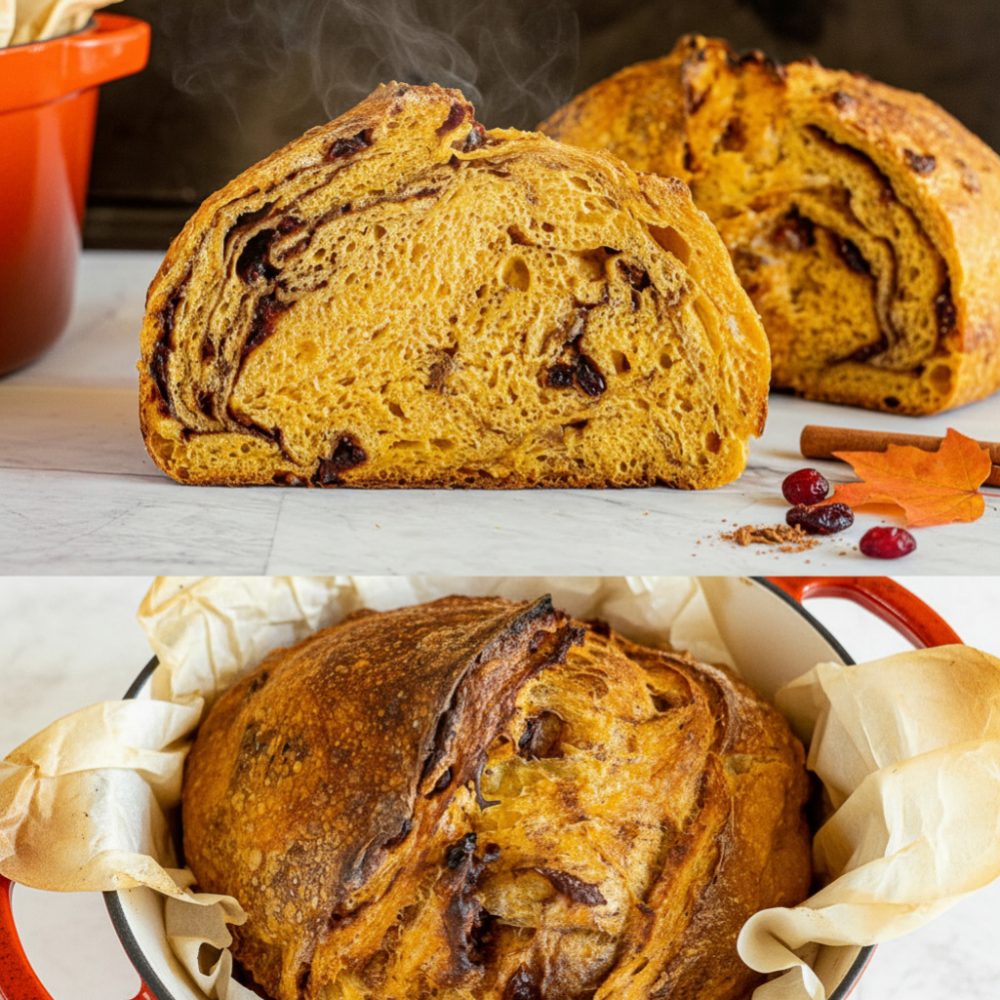
Baking a beautiful loaf at home brings warmth, especially with seasonal flavors. This pumpkin cranberry swirl bread uses a wild yeast starter for a slow, flavorful rise. It combines earthy sweetness of squash with tart dried fruit. Mastering pumpkin sourdough bread elevates your home baking to an artisan level. This guide helps create a perfectly spiced, golden-crusted loaf. It is ideal for artisan fall baking. An active sourdough starter develops complex flavors and an airy, open crumb, a hallmark of craft baking.
Why Bake with Real Pumpkin Purée?
Pumpkin puree choice significantly impacts dough. Use canned pumpkin puree, unsweetened, for consistent texture and moisture. Avoid canned pumpkin pie filling; its added sugars and spices disrupt fermentation. Homemade purees vary in moisture; canned puree offers reliability. Pumpkin adds delicate sweetness and a beautiful golden hue to the crumb. It also introduces moisture, affecting dough structure. This extra hydration requires careful observation during mixing and bulk fermentation. Pumpkin starches contribute to a softer, tender crumb. Understanding puree moisture is key to adjusting water, ensuring optimal gluten development.
Essential Equipment for Artisan Loaves
Achieving professional-quality pumpkin sourdough bread at home relies on specific equipment for superior results.
The Importance of a Dutch Oven
Dutch oven baking is indispensable for artisan sourdough crust. A heavy cast-iron pot, preheated high, creates steam. This steam prevents crust setting too quickly, allowing full dough expansion. This leads to better oven spring and an open crumb. Removing the lid finishes baking with dry heat. This results in a blistered, golden-brown crust, both crisp and chewy. Preheat the Dutch oven for 1 hour at 450F (230C) for ideal temperature.
Banneton Baskets and Scoring Tools
A banneton basket gives shaped dough structure during overnight proofing. Its floured surface prevents sticking and imparts a beautiful spiral pattern. A floured bowl with a floured tea towel can serve the same purpose. Scoring the dough just before baking controls expansion. Use a sharp razor blade or lame. Clean, deep scores allow gases to escape controllably, directing oven spring and preventing tearing. Scoring adds a personal touch.
Ingredient Breakdown
Crafting perfect pumpkin sourdough bread requires precise measurements and quality ingredients.
- Bread Flour: 500g (4 cups) of high-protein bread flour is crucial. It develops strong gluten networks to trap gases from the wild yeast starter, leading to a lofty, open crumb.
- Active Sourdough Starter: 100g (0.5 cup) of a fed and bubbly active sourdough starter provides leavening. Ensure it’s fed 4-8 hours prior, at peak activity with bubbles and a slightly sour aroma.
- Pumpkin Puree: 200g (0.75 cup) of unsweetened canned pumpkin puree adds moisture, flavor, and color. It must be plain puree, not pie filling.
- Water: 150g (0.66 cup) of lukewarm water hydrates flour and starter. Adjust slightly based on puree consistency and humidity.
- Salt: 10g (2 tsp) of fine sea salt enhances flavor and regulates fermentation. Do not omit; it is vital for dough structure and taste.
- Mix-ins:
- 75g (0.5 cup) dried cranberries add tart bursts, complementing pumpkin sweetness.
- 5g (1 tbsp) ground cinnamon provides warm, aromatic spice, evoking artisan fall baking.
- 25g (2 tbsp) brown sugar adds sweetness and a molasses note, enriching this cinnamon swirl loaf.
Step-by-Step Instructions
Creating your own pumpkin sourdough bread is rewarding. Follow these detailed steps for a successful bake.
1. Mixing the Dough
In a large bowl, combine 100g active sourdough starter, 150g lukewarm water, and 200g unsweetened canned pumpkin puree. Mix gently until combined. Add 500g bread flour and 10g salt. Mix thoroughly until no dry spots remain, forming a shaggy dough. Do not knead. Cover with a damp cloth or plastic wrap. Rest for 30 minutes. This autolyse hydrates flour and starts gluten development.
2. Stretch and Folds & Adding the Swirl
After 30 minutes, begin stretch and folds. Dampen your hands. Gently grab dough, stretch up, and fold over the center. Rotate the bowl and repeat three more times. This completes one set.
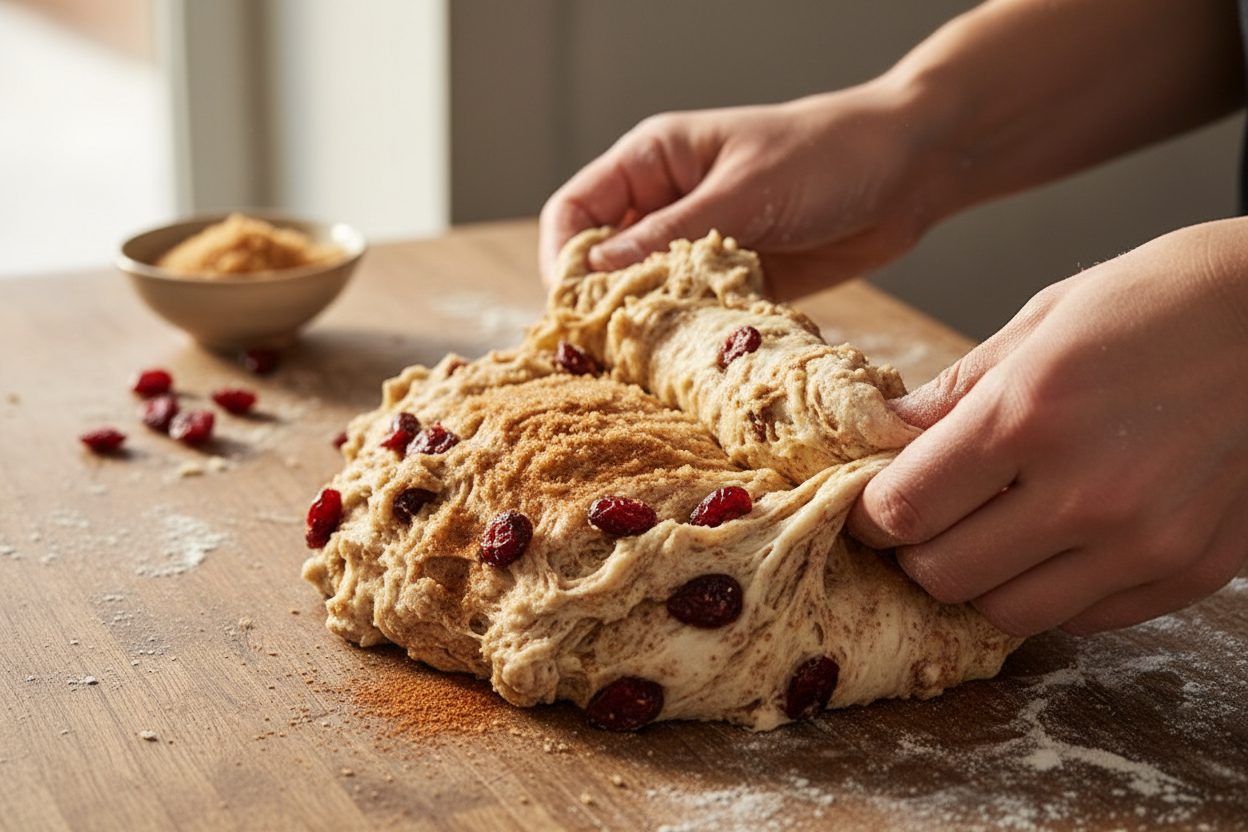
Perform four sets of stretch and folds, spaced 30 minutes apart. During the second set, distribute 75g dried cranberries, 5g ground cinnamon, and 25g brown sugar over the dough. Gently incorporate mix-ins during folds for even distribution without tearing dough. This creates a beautiful cinnamon swirl loaf effect.
3. Bulk Fermentation
After all folds and mix-ins, cover the bowl. Allow bulk fermentation at room temperature for 4 to 6 hours. Time varies with kitchen temperature and starter activity. Dough should noticeably increase in size, becoming bubbly and lighter. It should double in volume. Look for air pockets and a distinct rise. Let the dough develop strength and gas.
4. Shaping and Overnight Cold Retard
Lightly flour your work surface. Gently turn the fermented dough out. Pre-shape into a loose round or rectangle. Rest uncovered for 20-30 minutes for gluten relaxation. Final shape. For a round boule, fold dough edges towards the center, creating surface tension. Flip seam-side down. Cup and rotate against the counter, forming a tight, smooth ball. Lightly flour a banneton basket. Place shaped dough, seam-side up, into the banneton. Cover with a plastic bag or damp cloth.
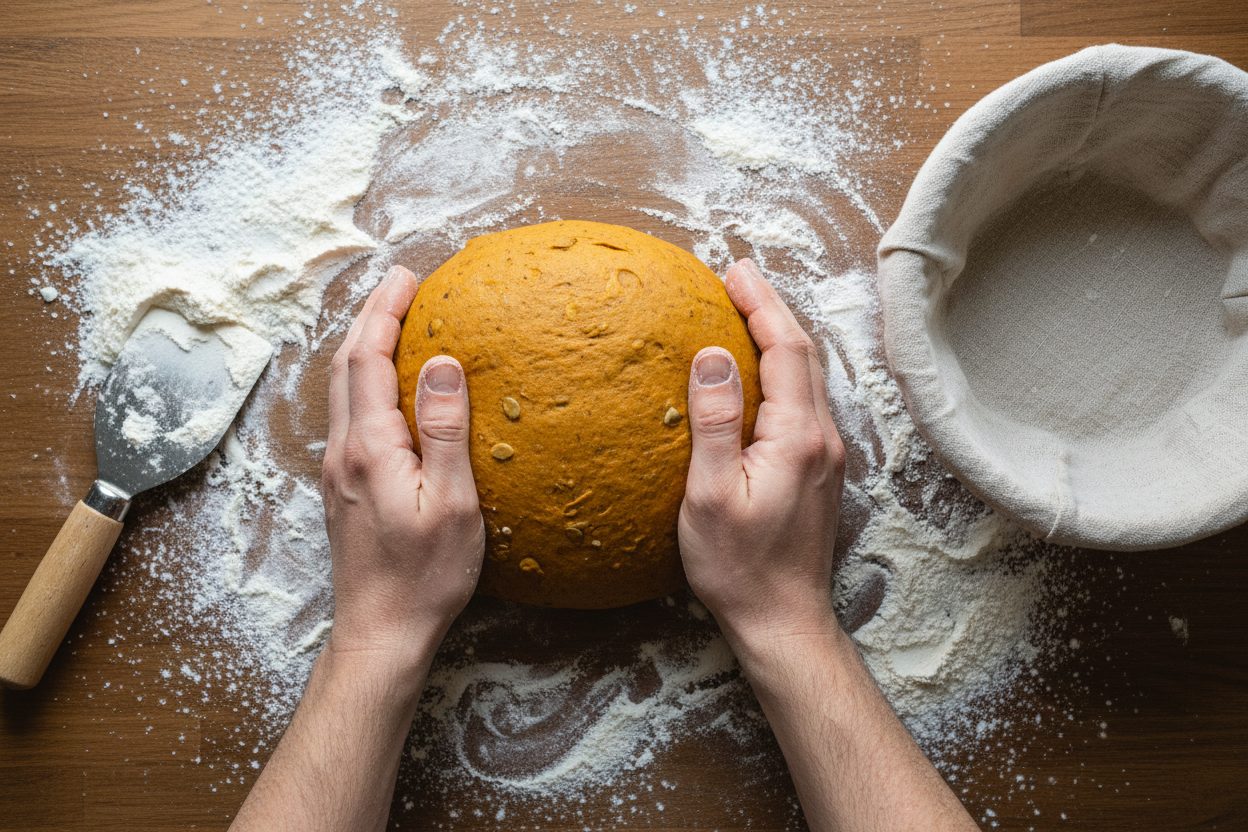
Transfer to the refrigerator for an overnight cold retard (12 to 16 hours). This slow, cold proof develops complex flavors and makes dough easier to handle and score. This extended overnight proofing significantly contributes to the final taste and texture of your pumpkin sourdough bread.
5. Baking in the Dutch Oven
Preheat oven to 450F (230C) with Dutch oven inside for 1 hour. This ensures uniform heat for oven spring and crust. Carefully remove hot Dutch oven. Invert cold dough from banneton into the pot. Score dough top with a sharp lame or razor. A deep cut or cross is effective. Replace lid. Bake covered for 20 minutes. Remove lid. Continue baking uncovered for 20 to 25 minutes. Bake until crust is deep golden brown and sounds hollow. Internal temperature should be 200-210F (93-99C). Remove loaf from Dutch oven. Transfer to wire rack. Cool completely for at least 2 hours before slicing. Slicing too early results in a gummy texture.
Baker’s Tips for a Perfect Crumb
Achieving an open, airy crumb and fantastic flavor in your pumpkin sourdough bread involves critical considerations.
- Monitoring Dough Temperature: Sourdough fermentation is temperature-sensitive. Aim for 75-80F (24-27C) during bulk fermentation. Use lukewarm water and a warm kitchen spot. A kitchen thermometer helps.
- Adjusting Water Based on the Squash Puree’s Moisture: Canned pumpkin puree varies. If thick, add 5-10g more water. If thin, use slightly less. Dough should be hydrated but manageable.
- Knowing When Bulk Fermentation is Complete: This is crucial. Dough should increase significantly (50-100%). Look for bubbles on surface, a domed top, and jiggly texture. Poke test: if indentation slowly springs back, it’s ready.
How to Store and Reheat Your Loaf
Proper storage maintains pumpkin sourdough bread quality. Cool completely on a wire rack before storing. Store at room temperature. For crispness, store cut-side down, covered with a tea towel, for up to two days. For longer storage, wrap tightly in plastic or an airtight bread bag. Stays fresh for 3-4 days.
Sourdough freezes well. Slice cooled loaf. Place slices in a freezer-safe bag. Or wrap whole loaf tightly in plastic then foil. Frozen sourdough lasts up to three months. To enjoy, thaw slices at room temperature or reheat in a toaster. Thaw a whole frozen loaf at room temperature, then refresh in a 350F (175C) oven for 10-15 minutes to restore crust and warmth.
Frequently Asked Questions
Addressing common queries builds baker confidence.
Can I use whole wheat flour?
Yes, substitute a portion of bread flour. This affects hydration and texture. Whole wheat absorbs more water. Substitute 100-150g of bread flour with whole wheat. Be ready to add 10-20g more water if dough is stiff. Whole wheat results in a denser crumb and nuttier flavor. For first-timers, stick to primary bread flour recipes.
What if my starter isn’t very active?
An active sourdough starter is paramount for a good rise. If sluggish, feed it a few times (every 8-12 hours). Feed until it reliably doubles or triples in size within 4-6 hours. Use a 1:1:1 ratio (starter:water:flour by weight). Keep it in a warm environment (75-80F or 24-27C). An inactive starter leads to a dense, under-proofed loaf.
Can I substitute the dried fruit?
Absolutely. Dried cranberries offer tartness. Experiment with chopped dried apricots, raisins, or finely diced dried apples. Chop finely if large for even distribution. Other spices like nutmeg or ginger can enhance fall flavors. Keep total mix-in weight similar to 75g. Avoid overfilling, which hinders dough structure.
This pumpkin sourdough bread is an exploration into artisan fall baking. It offers a rewarding experience for home bakers. The rich pumpkin flavor, tart cranberries, and warm cinnamon create an unforgettable loaf. Slow fermentation, guided by your wild yeast starter, yields exceptional depth and texture. Enjoy the process and delicious results.
For more delicious bread flour recipes and sourdough tips, follow our community on Facebook: Follow our Facebook page here. Join us for daily baking inspiration and connect with fellow enthusiasts.
Spiced Pumpkin Cranberry Sourdough
Ingredients
- 500 g Bread flour High protein content preferred
- 100 g Active sourdough starter Recently fed and bubbly
- 200 g Pumpkin puree Unsweetened, not pie filling
- 150 g Water Lukewarm
- 10 g Salt Fine sea salt
- 75 g Dried cranberries
- 5 g Ground cinnamon
- 25 g Brown sugar For the swirl
Instructions
- Mix the active starter, water, and pumpkin puree in a large bowl until smooth. Add the bread flour and salt, mixing until a shaggy dough forms. Let rest for 30 minutes.
- Perform four sets of stretch and folds spaced 30 minutes apart. During the second stretch and fold, incorporate the dried cranberries, ground cinnamon, and brown sugar evenly throughout the dough.
- Cover the bowl and let the dough bulk ferment at room temperature for 4 to 6 hours, until it has doubled in size and appears bubbly.
- Turn the dough onto a lightly floured surface, shape it into a round boule, and place it seam-side up in a floured banneton basket. Cover and refrigerate overnight (12 to 16 hours) for cold retard.
- Place an empty Dutch oven inside your oven and preheat to 450F (230C) for 1 hour. Carefully transfer the cold dough to a piece of parchment paper, score the top with a lame or sharp knife, and lower it into the hot Dutch oven. Bake covered for 20 minutes, then remove the lid and bake for an additional 20 to 25 minutes until the crust is a deep golden brown. Cool completely on a wire rack before slicing.
For more daily recipes and tips, follow us on Facebook!
Click here to join our community!