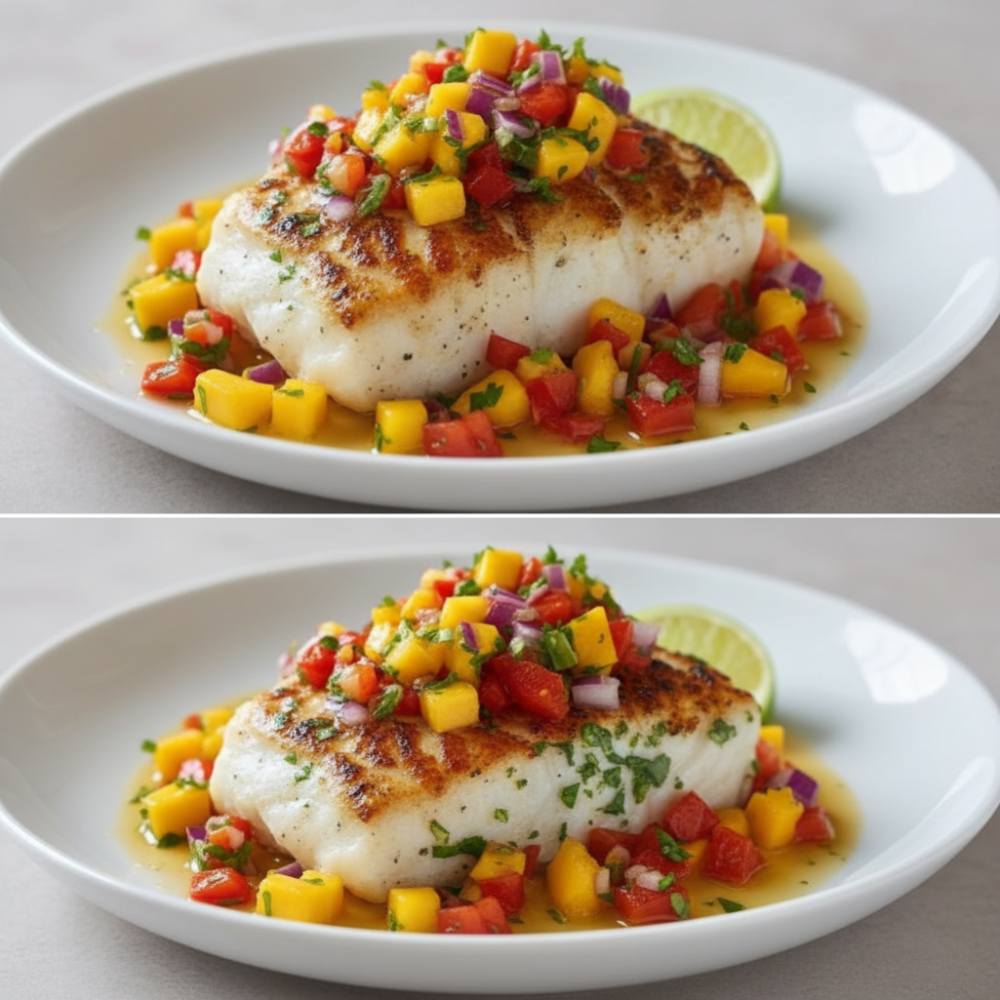
Embrace the vibrant flavors of the season with a dish that combines the best of land and sea. This recipe for grilled halibut mango salsa offers a bright, refreshing experience, pairing tender, flaky white fish with a sweet and tangy fruit topping. It is a healthy fish dinner option, quick enough for a weeknight meal and impressive enough for weekend gatherings. This summer seafood recipe elevates your grilling repertoire, bringing tropical notes to your table with minimal effort.
Ingredient List
Crafting this vibrant dish begins with a concise list of high-quality ingredients, ensuring every bite is fresh and flavorful. Pay attention to the freshness of your produce and the quality of your halibut for the best results.
- Fish: 4 (6 oz each) halibut fillets. Look for firm, white flesh without any strong odor.
- Oil: 2 tbsp olive oil, for seasoning the fish and preventing sticking.
- Seasonings: 1 tsp salt and 0.5 tsp black pepper, essential for enhancing the natural flavors of the halibut.
- Salsa Base: 1.5 cups diced mango and 0.5 cup diced tomato. Choose ripe mangoes for optimal sweetness and texture.
- Salsa Aromatics: 0.25 cup finely chopped red onion, 0.25 cup chopped cilantro, and 1 tbsp minced jalapeno. These provide a crucial balance of sharpness, herbaceous notes, and a gentle kick.
- Acid: 2 tbsp lime juice, freshly squeezed for that bright, essential tang in your tropical fruit salsa.
Step-by-Step Cooking Instructions
Achieving perfectly charbroiled halibut paired with a lively mango tomato relish is straightforward. Follow these steps for a balanced, flavorful meal that highlights simple, fresh ingredients.
1. Prepare the Mango Tomato Relish
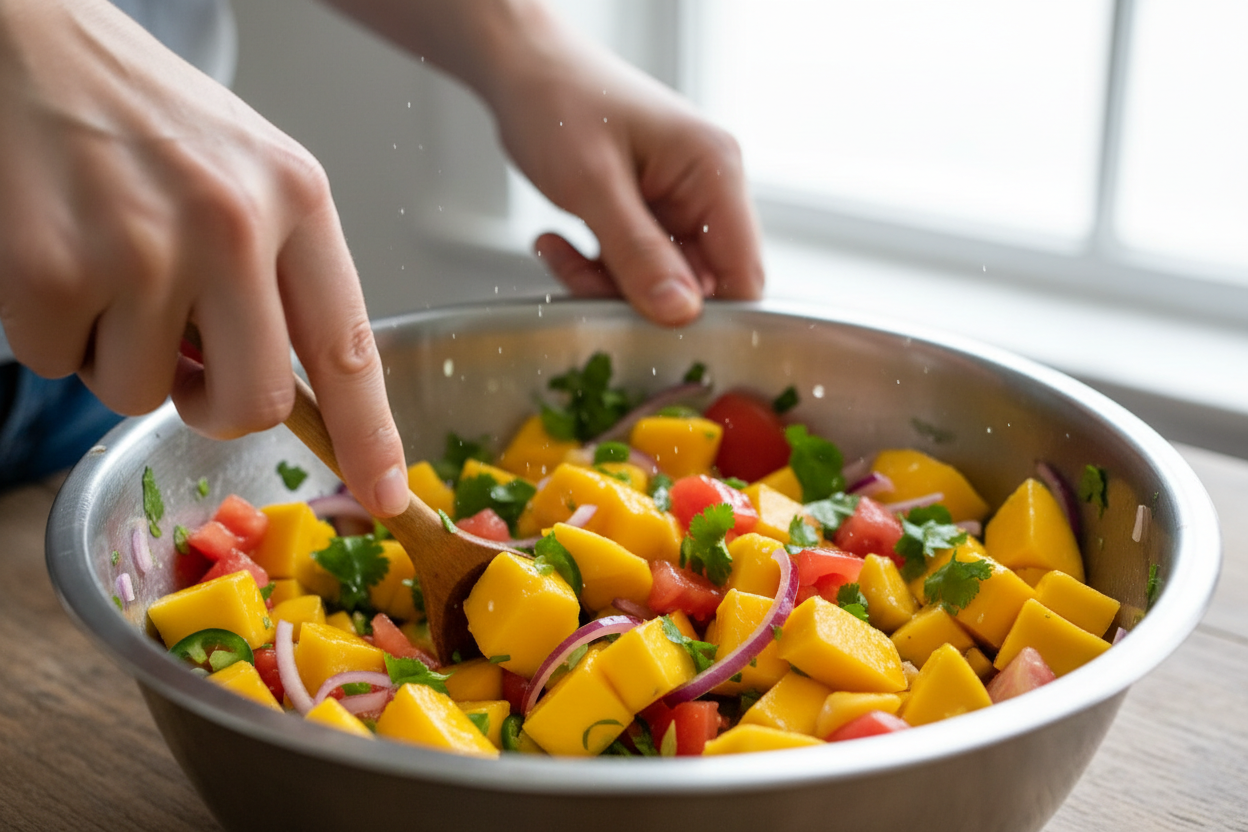
Begin by assembling your fresh mango tomato relish. In a medium-sized bowl, combine the 1.5 cups of diced mango, 0.5 cup of diced tomato, 0.25 cup of finely chopped red onion, and 0.25 cup of chopped cilantro. Add the 2 tbsp of fresh lime juice and 1 tbsp of minced jalapeno. Gently stir these ingredients together until well combined. Allow this tropical fruit salsa mixture to rest for at least 15 minutes. This crucial resting period permits the flavors to meld and deepen, creating a more cohesive and aromatic topping for your fish.
2. Heat and Oil the Grill
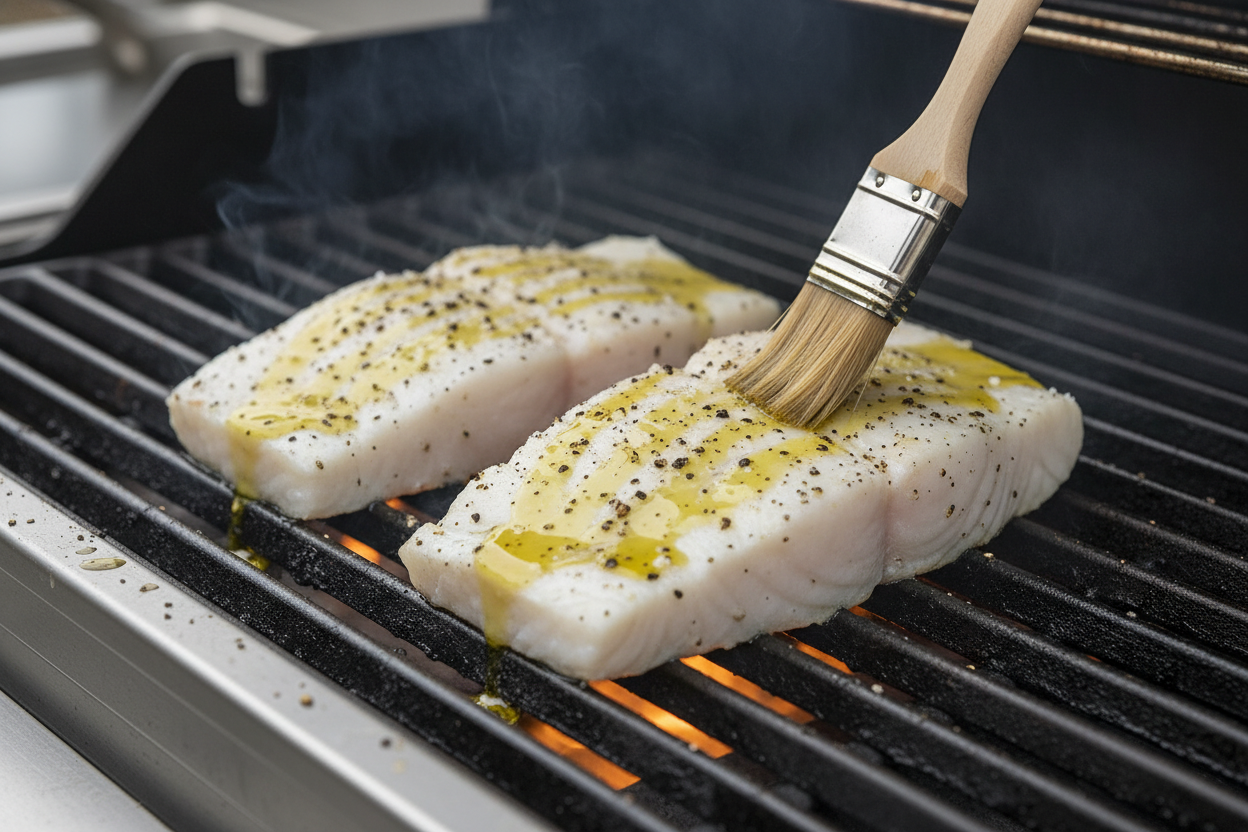
Preheat your grill to a medium-high heat, targeting a temperature of approximately 400°F. While the grill heats, take the time to thoroughly clean the grates. Once clean, generously oil them. Dip a paper towel in a high smoke-point vegetable oil and, using tongs, carefully wipe down the hot grates. This step is fundamental to preventing the delicate fish from sticking, ensuring your bbq white fish lifts cleanly and beautifully.
3. Season the Fillets
Pat the 4 halibut fillets dry with paper towels. This helps achieve a better sear. Brush each fillet evenly with 2 tbsp of olive oil. Next, sprinkle 1 tsp of salt and 0.5 tsp of black pepper across both sides of the fish. Ensure the seasoning is distributed thoroughly to enhance the natural taste of the lean white fish. Proper seasoning is key to a delicious charbroiled halibut.
4. Cook the Fish
Carefully place the seasoned halibut fillets onto the hot, well-oiled grates, ensuring the skin-side (if present) is facing up. Cook the fish undisturbed for precisely 4 minutes. This initial cooking time is designed to develop desirable grill marks and begin cooking through the fish. After 4 minutes, use a thin, sturdy spatula to carefully flip each fillet. Continue to cook for an additional 3 to 4 minutes on the second side. The halibut is done when its internal temperature reaches 130°F to 135°F at its thickest part. The flesh should flake easily with a fork, indicating perfect doneness without overcooking. This method results in beautifully seared halibut with a tender interior.
5. Rest and Garnish
Once cooked to perfection, remove the grilled halibut from the heat and transfer it to a clean plate or serving platter. Allow the fish to rest for 3 minutes. This resting period allows the juices to redistribute, ensuring a moist and tender fillet. Just before serving, generously top each halibut fillet with the prepared fresh mango tomato relish. The vibrant colors and flavors of the tropical fruit salsa perfectly complement the delicate fish.
Expert Tips for Flawless Fish
Mastering the grill for lean white fish like halibut requires attention to a few critical details. These expert tips will help ensure your grilled halibut mango salsa is consistently excellent.
- Temperature Matters: Halibut is a lean fish and cooks quickly. Never cook your halibut past 135°F internal temperature. Overcooking will result in dry, rubbery fish. A meat thermometer is your best friend here.
- Oil the Grates Thoroughly: Lean seafood is prone to sticking to grill grates. Always ensure your grates are meticulously clean and thoroughly oiled before placing the fish down. This creates a non-stick surface, allowing the fish to release easily and maintain its integrity.
- Salsa Variations for Tropical Fruit Salsa: The mango tomato relish is versatile. For added creaminess and a different flavor profile, consider gently folding in 0.5 cup of diced avocado right before serving. Alternatively, if you prefer a slightly different citrus note, you can swap the 2 tbsp of lime juice for freshly squeezed lemon juice in your tropical fruit salsa. These optional additions can customize the dish to your preference.
Ideal Side Dishes
Completing your grilled halibut mango salsa meal with the right accompaniments enhances the overall experience. Here are some ideal side dishes that complement the vibrant flavors and textures:
- Coconut Rice: The subtle sweetness and creamy texture of coconut rice provide a wonderful counterpoint to the bright, tangy salsa and savory fish.
- Grilled Asparagus: A simple side of grilled asparagus adds a touch of green and a pleasant, slightly smoky crispness that pairs well with the charbroiled halibut.
- Light Quinoa Salad: For a nutrient-dense and refreshing option, a light quinoa salad with fresh herbs and a simple vinaigrette offers a fantastic balance to this healthy fish dinner.
This grilled halibut mango salsa is more than just a recipe; it is a celebration of fresh, vibrant ingredients coming together in a simple yet elegant manner. Perfect for any occasion, it promises a burst of flavor that will leave a lasting impression. We invite you to try this summer seafood recipe and discover a new favorite.
For more inspiring recipes and culinary insights, make sure to follow our Facebook page. Join our community for daily dose of delicious ideas and cooking tips.
Fire-Roasted Halibut with Fresh Mango Relish
Ingredients
- 4 fillet Halibut 6 oz each
- 2 tbsp Olive oil For brushing
- 1 tsp Salt Kosher preferred
- 0.5 tsp Black pepper Freshly ground
- 1.5 cup Mango Diced
- 0.5 cup Tomato Diced
- 0.25 cup Red onion Finely chopped
- 0.25 cup Cilantro Chopped
- 2 tbsp Lime juice Freshly squeezed
- 1 tbsp Jalapeno Minced, optional
Instructions
- Combine 1.5 cups diced mango, 0.5 cup diced tomato, 0.25 cup finely chopped red onion, 0.25 cup chopped cilantro, 2 tbsp lime juice, and 1 tbsp minced jalapeno in a bowl. Let the mixture rest for 15 minutes so the flavors blend.
- Preheat the grill to medium-high heat (400°F). Thoroughly clean and oil the grates using a paper towel dipped in high smoke-point vegetable oil to prevent sticking.
- Brush the 4 halibut fillets with 2 tbsp of olive oil. Evenly sprinkle 1 tsp of salt and 0.5 tsp of black pepper across both sides of the fish.
- Place the fillets on the hot grates, skin-side up. Cook for 4 minutes until grill marks form. Carefully flip and cook for an additional 3 to 4 minutes. The fish is done when the internal temperature reaches 130°F to 135°F and it flakes easily with a fork.
- Remove the fish from the heat and let it rest for 3 minutes. Top each fillet generously with the prepared fruit salsa before serving.
For more daily recipes and tips, follow us on Facebook!
Click here to join our community!