Transforming tough cuts into tender, succulent masterpieces is the essence of true barbecue, and few things rival the satisfaction of perfectly Grilled Beef Ribs. This guide will walk you through the art of mastering these majestic bone-in cuts, whether you’re working with a gas or charcoal grill. Our focus is on achieving that coveted fall-off-the-bone tenderness and rich flavor through meticulous indirect heat grilling. We’ll delve into the precise techniques for setting up your grill, applying the ideal dry rub, and finishing with a glorious caramelized BBQ sauce. Prepare for a journey into the heart of low and slow cooking, understanding that while patience is key, the reward is immeasurable. Expect a prep time of about 20-30 minutes, followed by a total cook time of approximately 4-5 hours, culminating in an unforgettable meal.
Why Beef Back Ribs Are a Barbecue Centerpiece
When it comes to barbecue, BBQ beef back ribs stand in a league of their own. They offer a profoundly rich, hearty flavor profile that is distinct and deeply satisfying. Unlike other rib cuts, beef back ribs come from the prime rib section, meaning they carry robust marbling and a distinct beefy taste that translates into an incredibly juicy and flavorful experience. Each bite delivers a satisfying chew, reminiscent of a perfectly cooked steak, but with the added depth that only slow-cooked bone-in cuts can provide. The visual appeal is undeniable too: massive racks with their charred, sticky, saucy edges emerging from the grill are a testament to true barbecue craftsmanship. They are more than just ribs; they are a culinary statement, guaranteeing a memorable centerpiece for any gathering.
Essential Ingredients for the Perfect Rack
Crafting exceptional tender bone-in beef begins with quality ingredients and a well-balanced rub. Here’s exactly what you’ll need:
The Meat: 2 racks (approximately 4 lbs total) of high-quality beef back ribs. Look for good marbling and a consistent thickness.
The Binder: 2 tablespoons yellow mustard. This acts as an excellent adhesive for the rub and adds a subtle tang without overpowering the beef flavor.
The Homemade Rub:
1/4 cup brown sugar
2 tablespoons smoked paprika
1 tablespoon kosher salt
1 tablespoon black pepper
1 tablespoon garlic powder
1 tablespoon onion powder
The Finish: 1 cup of your favorite BBQ sauce. Choose one with a good balance of sweet, tangy, and smoky notes for optimal caramelization.
Step 1: Prepping the Meat
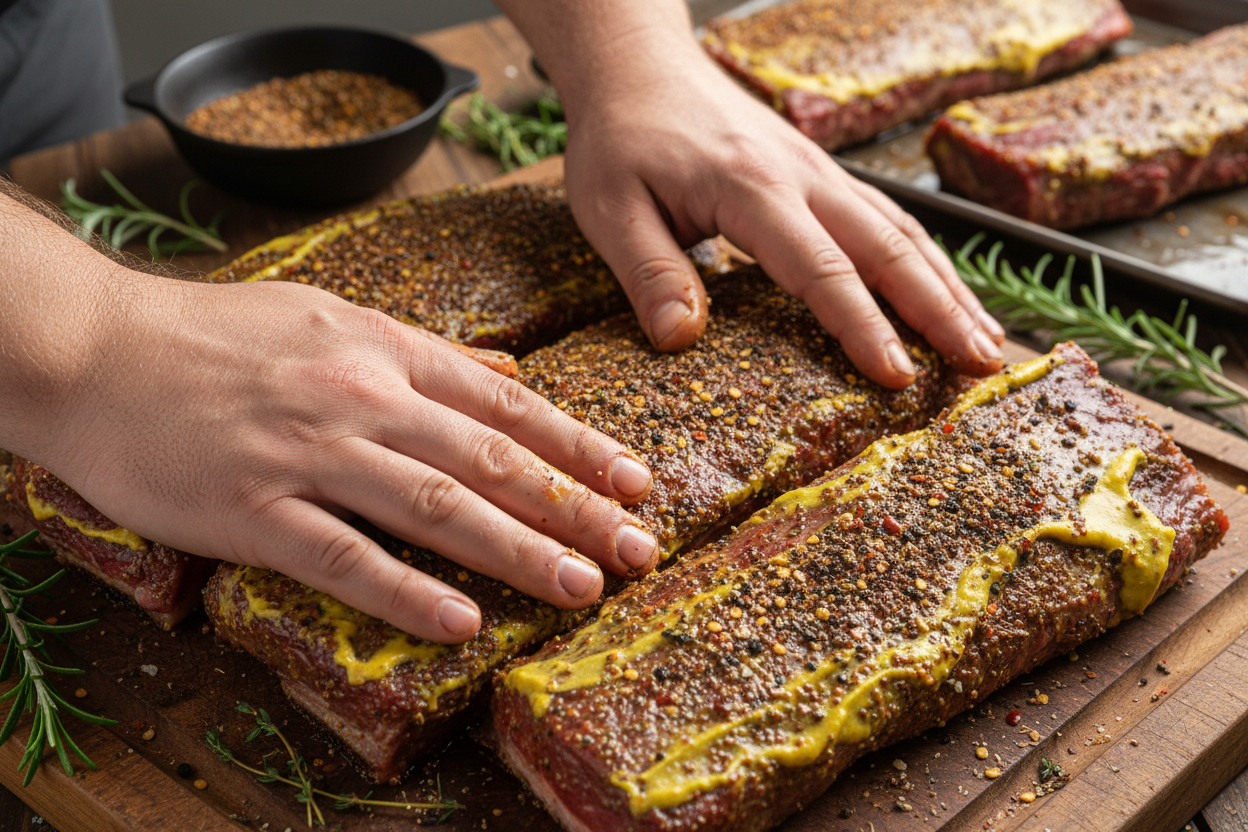
Proper preparation is the foundation for truly tender beef back ribs. The most critical step is removing the membrane, often called silver skin, from the bone side of each rack. This thin, tough layer will prevent your rub from penetrating the meat and can result in a chewier, less enjoyable texture. To remove it, start by using a butter knife or the blunt end of a spoon to gently slide under the membrane at one end of the rack. Work your way across, separating the membrane from the bone. Once you have enough of an edge lifted to get a good grip, grab it with a paper towel. The paper towel provides excellent friction, allowing you to pull the membrane cleanly off the entire rack in one steady motion. If it tears, simply repeat the process until all traces are gone. Next, evenly apply 2 tablespoons of yellow mustard over all surfaces of the ribs. This creates the perfect sticky base for your dry rub for ribs, ensuring it adheres beautifully and contributes to that fantastic bark.
Tender BBQ Grilled Beef Ribs (Gas or Charcoal Recipe) 5
Step 2: Crafting and Applying the Dry Rub
The dry rub is where the deep, complex flavors of your Grilled Beef Ribs truly begin. In a small bowl, combine 1/4 cup brown sugar, 2 tablespoons smoked paprika, 1 tablespoon kosher salt, 1 tablespoon black pepper, 1 tablespoon garlic powder, and 1 tablespoon onion powder. Mix these ingredients thoroughly until they are uniformly combined. This homemade blend provides a perfect balance of sweet, smoky, savory, and spicy notes that will complement the rich beef. Once mixed, generously sprinkle the rub over all sides of the mustard-coated ribs. Rather than rubbing aggressively, gently press the spices into the meat. This technique ensures the rub forms a robust, flavorful crust, or “bark,” during the low and slow cooking process. Don’t be shy; ensure every surface is well-coated for maximum flavor penetration and texture development. This crucial step sets the stage for a spectacular beef spare ribs recipe.
Tender BBQ Grilled Beef Ribs (Gas or Charcoal Recipe) 6
Step 3: Setting Up Your Grill for Indirect Heat
Achieving tender bone-in beef requires maintaining a consistent, low temperature for several hours, making indirect heat grilling absolutely essential. This setup prevents the ribs from burning and allows the connective tissues to break down slowly, resulting in unparalleled tenderness. The target temperature for your grill should be a steady 250°F (120°C).
Gas Grills:
For a gas grill ribs method, the process is straightforward. Start by igniting only half of your grill’s burners to a medium-low setting. You’ll want to aim for the ambient temperature inside the grill to reach 250°F. If your grill has three burners, light the two outside burners and leave the middle one off. If it has two, light one side and leave the other off. Close the lid and allow the grill to preheat. Monitor the internal thermometer on your grill, adjusting the lit burners as needed to stabilize the temperature at 250°F. The unlit side will be your cooking zone, providing gentle, indirect heat.
Charcoal Grills:
For charcoal barbecue beef, setting up for indirect heat requires a slightly different approach. You can use the “Minion Method” or simply bank your coals to one side. To bank coals, ignite about 30-40 briquettes in a chimney starter. Once they are fully ashed over, carefully transfer them to one side of your charcoal grill’s bottom grate. To help stabilize temperature and add moisture, place an aluminum pan filled with water directly under where the ribs will sit on the cooking grate (the unlit side). Close the grill lid, ensuring the bottom and top vents are partially open to regulate airflow. Monitor the grill’s temperature, adjusting vents as necessary to maintain a consistent 250°F. The water pan helps absorb excess heat and keeps the environment moist, preventing the ribs from drying out during their long cook.
Step 4: The Low and Slow Cook
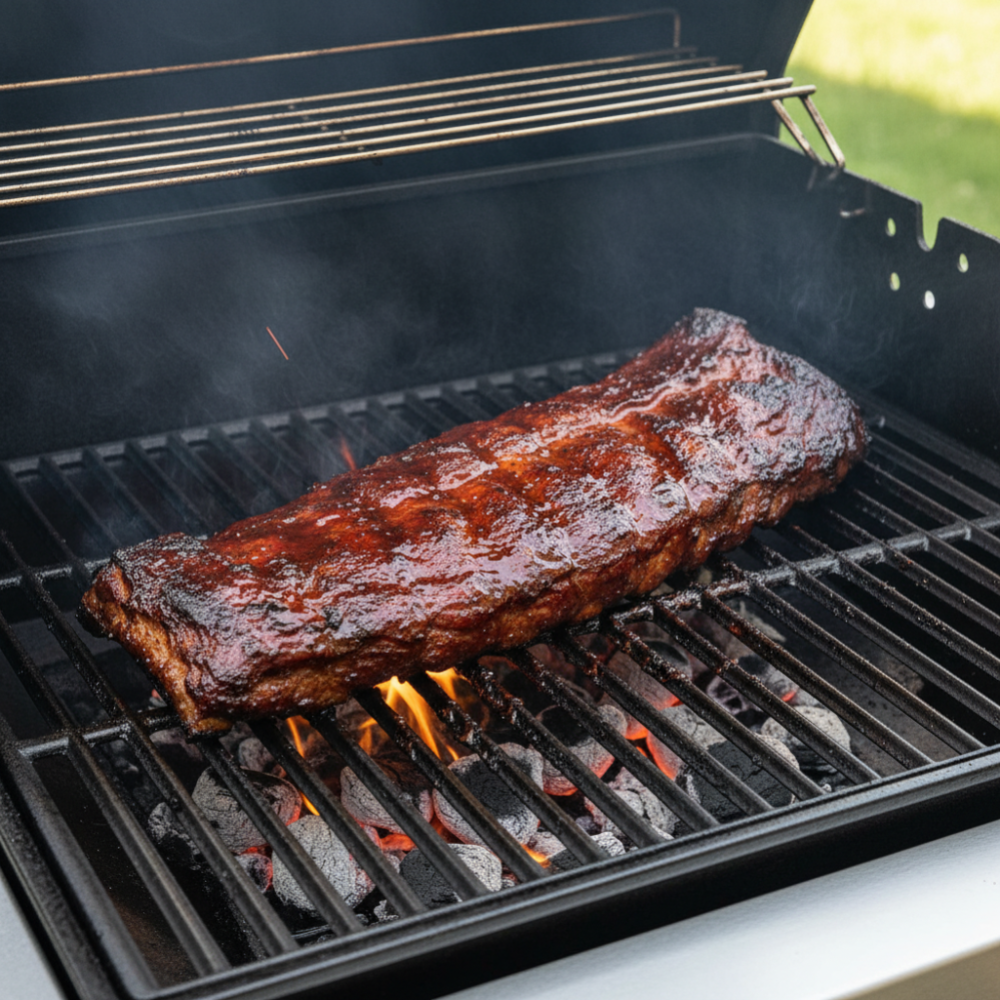
With your grill perfectly set up for indirect heat grilling at a consistent 250°F (120°C), it’s time for the main event of low and slow cooking. Carefully place the prepared BBQ beef back ribs bone-side down on the unlit, cooler side of your grill grate. Ensure there is enough space between the racks for even air circulation. Once the ribs are in place, close the grill lid immediately. This step is absolutely crucial for maintaining a consistent ambient temperature and allowing the smoke and heat to circulate evenly around the meat. Resist the temptation to constantly peek; every time you lift the lid, heat escapes, and the cooking process is interrupted, extending your overall cook time. Monitor your grill’s thermometer, making minor adjustments to the burner settings (for gas) or vents (for charcoal) to keep the temperature steady at 250°F. Allow the ribs to cook undisturbed for approximately 3 to 4 hours. You’re looking for the internal temperature of the thickest part of the meat to reach around 200°F (93°C). At this point, the collagen and fats within the beef will have rendered beautifully, resulting in incredibly tender bone-in beef that is almost ready for its final flourish.
Step 5: The High-Heat Caramelization Finish
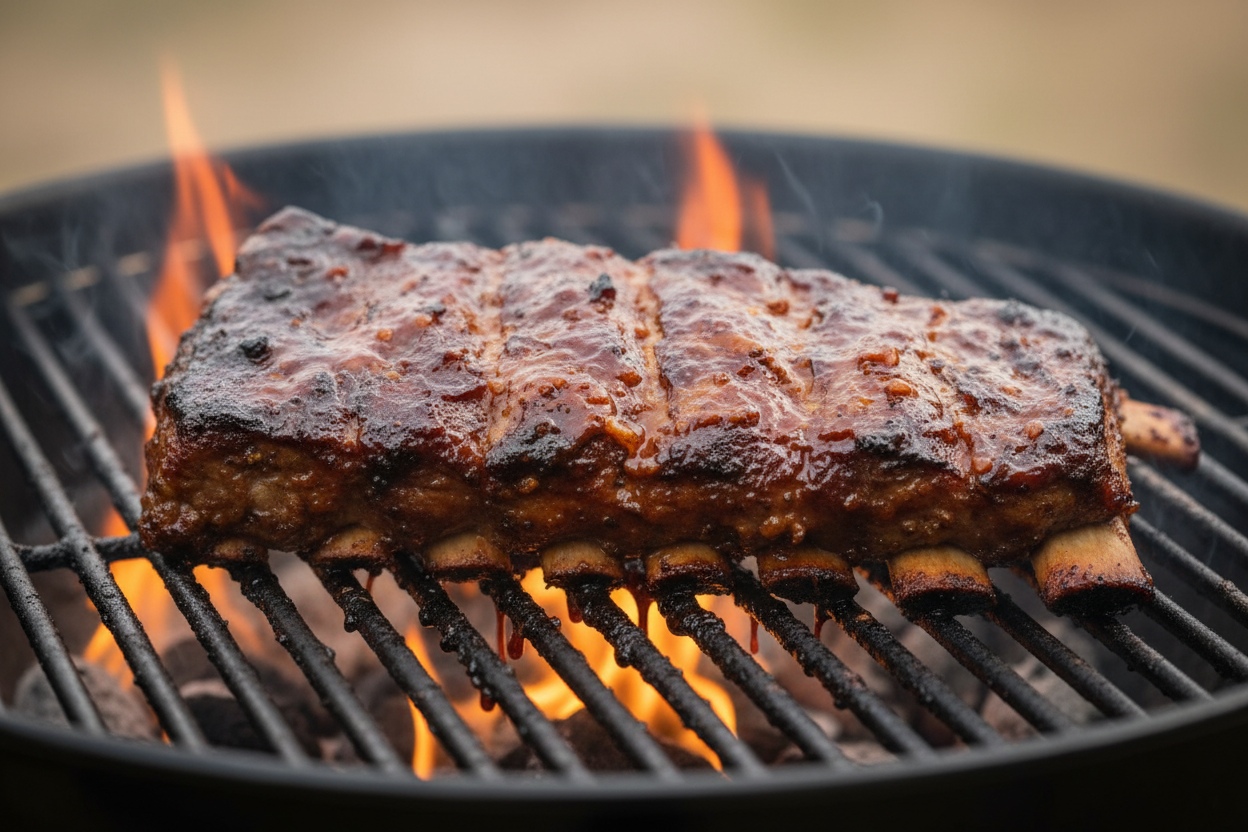
After hours of patient low and slow cooking, your Grilled Beef Ribs are now wonderfully tender. The final step is to achieve that irresistible, sticky, and slightly crispy outer crust. Carefully remove the ribs from the grill and generously slather all surfaces with 1 cup of your favorite BBQ sauce. Don’t be shy with the sauce; this is where the magic of caramelized BBQ sauce happens. Once coated, move the sauced ribs directly over the lit, direct heat side of your grill. This step requires vigilance, as the sugars in the BBQ sauce can burn quickly. Cook for approximately 5 to 10 minutes, flipping the ribs every 2-3 minutes. You are looking for the sauce to bubble, thicken, and develop a beautiful, dark, glossy sheen with some delightful crispy-charred edges. Keep a close eye on them to prevent burning. This high-heat kiss locks in moisture, creates an incredible texture contrast, and infuses the ribs with that classic barbecue finish, making this beef spare ribs recipe truly complete.
Resting and Serving
Once your Grilled Beef Ribs have achieved that perfect caramelized BBQ sauce finish, it’s vital to let them rest. Transfer the ribs to a clean cutting board, tent them loosely with foil, and allow them to rest for at least 10 minutes. This resting period is critical; it allows the juices within the meat to redistribute, ensuring every bite is moist and flavorful. Skipping this step can result in dry ribs. After resting, slice cleanly between the bones to separate individual ribs. Serve these magnificent ribs with classic summer side dishes such as creamy coleslaw, corn on the cob, or a hearty potato salad to complete your Sunday supper. Each bite of this tender bone-in beef will be a testament to your patience and skill.
Frequently Asked Questions
Can I wrap the ribs in foil (the Texas crutch)?
While this recipe focuses on unwrapped low and slow cooking for a firmer bark, wrapping the ribs in foil (often called the “Texas crutch”) after the initial 2-3 hours of smoking can certainly speed up the tenderization process and help retain moisture. If you choose this method, wrap the ribs tightly in heavy-duty aluminum foil after they’ve developed a good bark, adding a splash of apple juice or cider vinegar to the foil packet. Continue cooking in the foil until they reach an internal temperature of around 195-200°F (90-93°C), then remove from the foil, apply sauce, and finish over direct heat for caramelization.
How do I know when they are truly done if I don’t have a thermometer?
While a reliable instant-read thermometer is the best tool for checking doneness, you can use a few visual and tactile cues. The meat should have pulled back from the ends of the bones by about half an inch to an inch. When you gently lift a rack with tongs, it should feel flexible and show significant give, almost as if it’s about to break. If you try to pull a bone, it should twist free with little resistance. However, for precise results and safety, investing in an accurate meat thermometer is highly recommended, especially when perfecting a beef spare ribs recipe.
Storing and reheating leftovers to maintain moisture.
To store leftover BBQ beef back ribs, allow them to cool completely. Wrap individual ribs or sections tightly in aluminum foil, then place them in an airtight container or freezer bag. They will keep well in the refrigerator for 3-4 days or in the freezer for up to 3 months. When reheating, the best method to maintain moisture is to wrap the ribs tightly in foil with a tablespoon or two of beef broth or water, then reheat them in a preheated oven at 250-275°F (120-135°C) until warmed through, usually about 20-30 minutes. You can also reheat them on a grill over indirect heat, again wrapped in foil, or even briefly in a microwave if time is a concern, though this may slightly compromise texture.
Mastering Grilled Beef Ribs is a rewarding endeavor that brings incredible flavor to your table. The patient process of low and slow cooking transforms this cut into a tender, juicy delight, culminating in that irresistible caramelized BBQ sauce finish. We hope this comprehensive guide has equipped you with the knowledge and confidence to create your own barbecue masterpiece.
For more grilling tips, recipes, and behind-the-scenes barbecue action, be sure to follow our Facebook page. We love sharing our passion for food with fellow enthusiasts!
Using a butter knife and a paper towel, pry up and peel away the thin, papery membrane from the back (bone side) of both racks of beef ribs.
Coat both sides of the ribs evenly with yellow mustard. This acts as a binder for the spices.
In a small bowl, whisk together the brown sugar, smoked paprika, kosher salt, black pepper, garlic powder, and onion powder. Massage this rub generously into all sides of the meat.
Preheat your gas or charcoal grill to 250°F, configuring it for indirect heat cooking (heat on one side, no direct heat on the other).
Place the ribs bone-side down on the indirect heat side of the grill. Close the lid and cook undisturbed for 3 hours.
After 3 hours, check the internal temperature of the meat between the bones. Continue cooking until the thermometer reads 200°F and the meat is highly tender (usually 3.5 to 4 hours total).
Brush the top of the ribs generously with the BBQ sauce. Carefully move the racks over to the direct heat side of the grill.
Grill over direct heat for 5 to 10 minutes, watching closely to ensure the sugars in the sauce caramelize into crispy-charred edges without burning.
Remove the ribs from the grill and let them rest on a cutting board for 10 minutes before slicing between the bones to serve.