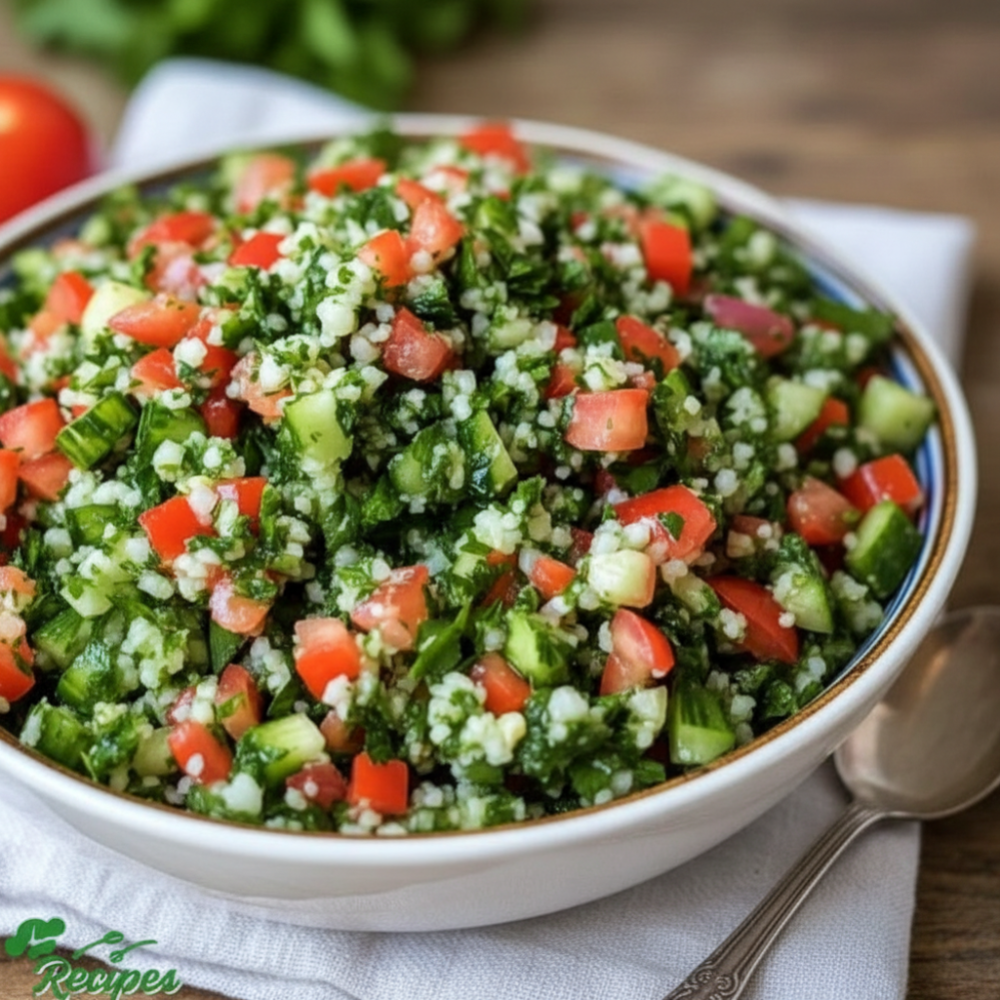
Lebanese Tabbouleh Salad stands as a testament to the enduring appeal of fresh, vibrant ingredients. This iconic creation is far more than just a side dish; it is an authentic Middle Eastern recipe that celebrates the bounty of nature with simplicity and profound flavor. Rooted deeply in the culinary traditions of the Levant, Tabbouleh is recognized globally for its refreshing taste and health benefits. It embodies the essence of a healthy Mediterranean diet, offering a perfect blend of vegetables, herbs, and wholesome grains.
The origins of this traditional mezze are traced back centuries, primarily in the mountainous regions of Syria and Lebanon. Historically, Tabbouleh was a hearty dish, where bulgur wheat formed a more substantial base. Over time, as ingredients became more readily available, the emphasis shifted to the verdant herbs, particularly parsley, making it the fresh parsley salad we know and love today. This evolution highlights a preference for lightness and intense herbal notes. Tabbouleh is truly a dish designed for warm weather, its cool, zesty character making it an ideal companion for summer gatherings or a light main course. It is inherently a vegan mezze dish, making it accessible and beloved by many.
Essential Ingredients
Crafting the perfect Lebanese Tabbouleh Salad begins with selecting the freshest, highest quality ingredients. Each component plays a vital role in achieving the characteristic texture and flavor profile.
- 2 bunches flat-leaf parsley: This is the undeniable star of the dish. Flat-leaf parsley brings a bold, peppery freshness that defines Tabbouleh. It provides both the bulk and the vibrant green color.
- 1/4 cup fine bulgur wheat: Fine bulgur wheat is crucial for texture. It absorbs the lemon olive oil dressing and juices from the vegetables, offering a subtle chewiness without overpowering the herbs. It is a staple in Middle Eastern cuisine.
- 2 medium firm tomatoes and 1/2 cup English cucumber: These vegetables contribute essential moisture, sweetness, and a pleasant crunch. Firm tomatoes hold their shape well, while English cucumber adds a cool, refreshing element.
- 1/4 cup fresh mint leaves: Mint provides a bright, cooling counterpoint to the parsley. Its aromatic qualities are indispensable, adding a layer of complexity and a signature freshness to the salad.
- 3 scallions: Scallions, also known as green onions, offer a mild onion flavor without the sharpness of larger onions. They introduce a gentle allium note that complements the fresh herbs and vegetables.
- The Dressing: The simple yet potent dressing ties all the flavors together.
- 1/4 cup extra virgin olive oil: A high-quality extra virgin olive oil is key for its fruity, peppery notes and smooth mouthfeel. It coats the ingredients, enriching the overall taste.
- 1/4 cup fresh lemon juice: Fresh lemon juice is paramount for the dish’s signature zest. It provides the acidity that brightens the flavors and helps soften the bulgur wheat.
- 1 tsp salt: Salt enhances all the other flavors, balancing the acidity of the lemon and the freshness of the herbs.
- 1/4 tsp black pepper: A touch of freshly ground black pepper adds a subtle warmth and aromatic finish.
Step-by-Step Preparation Guide
Follow these steps precisely to create an authentic Lebanese Tabbouleh Salad that bursts with flavor and freshness.
- Soak the Wheat: Begin by preparing the fine bulgur wheat. Rinse 1/4 cup of fine bulgur wheat thoroughly under cold water using a fine-mesh sieve. This removes any dust or impurities. Transfer the rinsed bulgur to a small bowl. Pour 1/4 cup of fresh lemon juice directly over the bulgur. This initial soak allows the bulgur to soften and absorb the vibrant lemon flavor, becoming plump and tender. Let it soak for exactly 15 minutes. During this time, the bulgur will swell significantly.
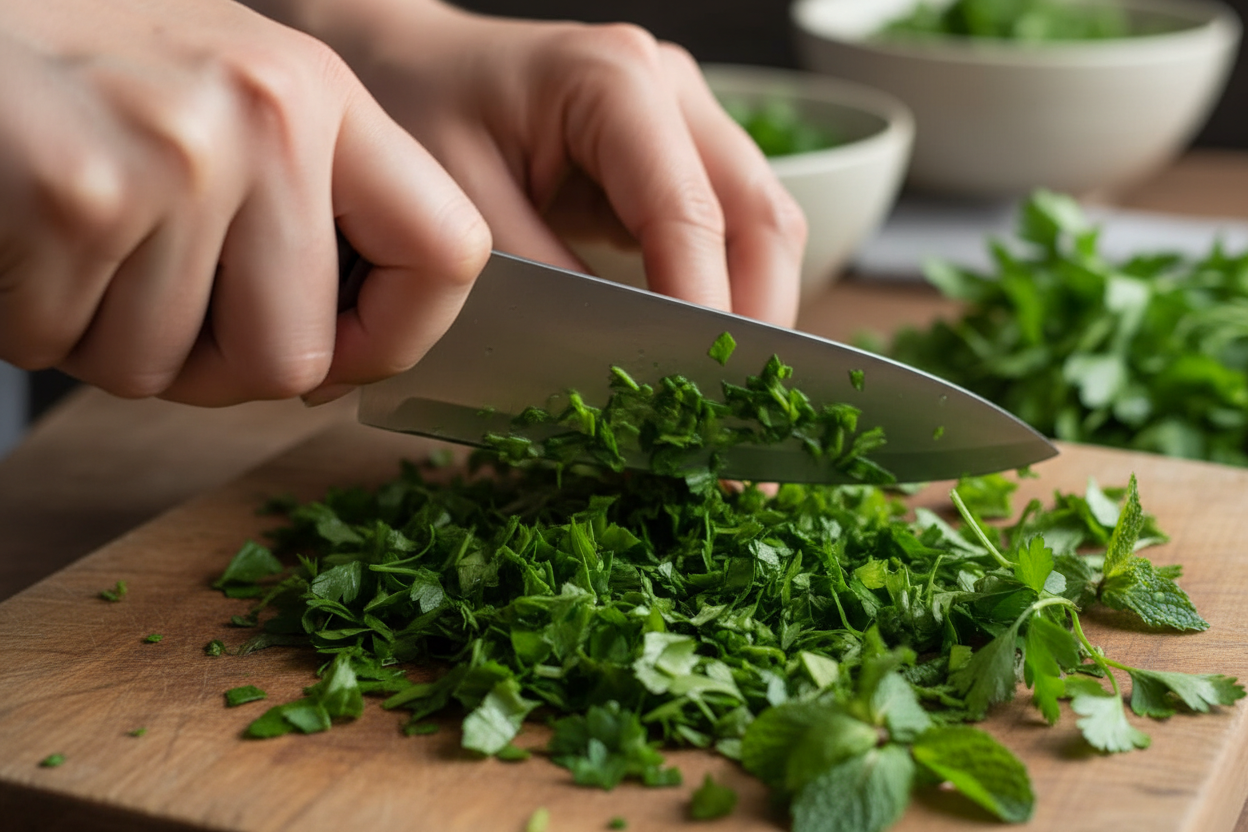
- Chop the Herbs: While the bulgur soaks, prepare the herbs. Wash 2 bunches of flat-leaf parsley and 1/4 cup of fresh mint leaves very carefully. It is critical to dry them completely after washing. Use a salad spinner or gently pat them dry with a clean kitchen towel. Any excess moisture will make the Tabbouleh soggy. Once dry, gather the parsley and mint into tight bundles. Using a very sharp knife, finely chop the herbs. Aim for a consistent, small dice, almost like confetti. Transfer the finely chopped herbs to a large mixing bowl.
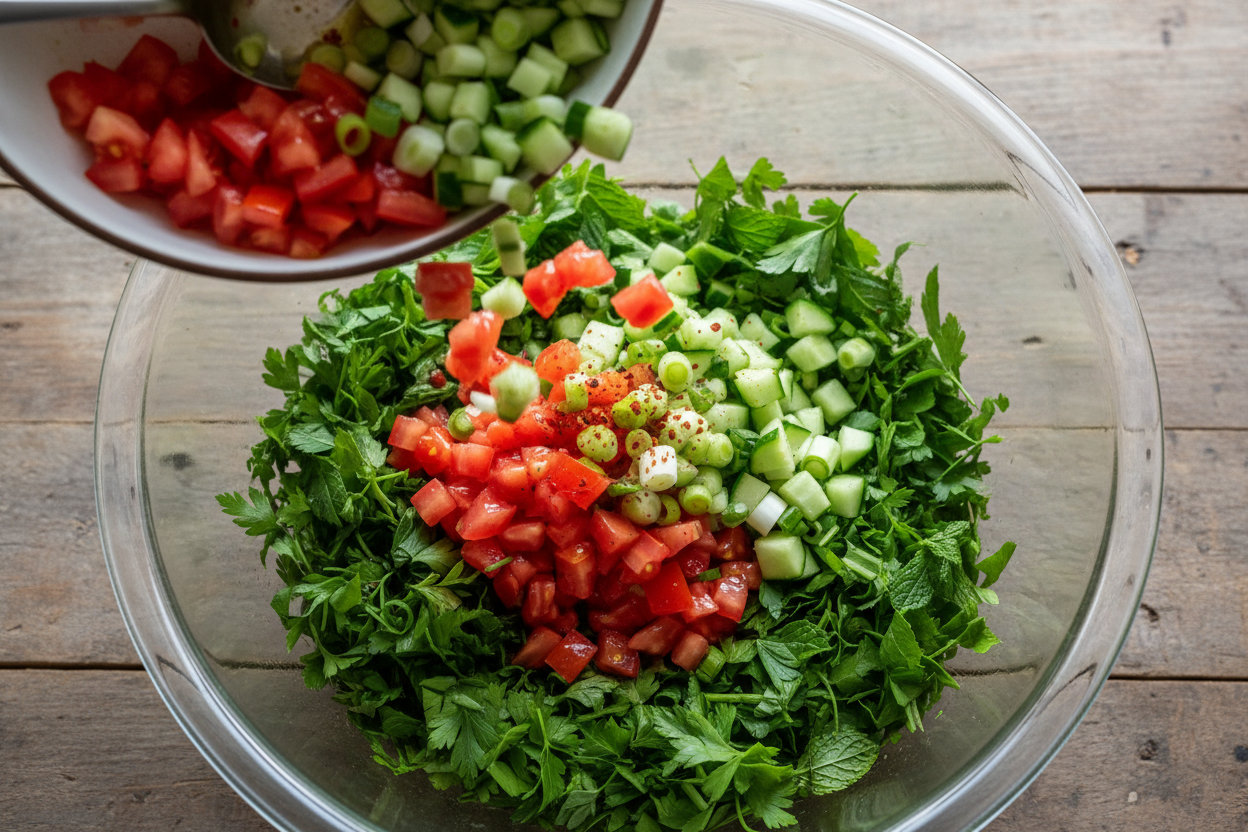
- Prep Vegetables: Next, prepare the fresh vegetables. Take 2 medium firm tomatoes and dice them very finely. The small dice ensures they integrate well with the herbs and bulgur without large chunks. Similarly, dice 1/2 cup of English cucumber into small, uniform pieces. Thinly slice 3 scallions, using both the white and green parts for maximum flavor and visual appeal. Add the finely diced tomatoes, diced cucumber, and thinly sliced scallions to the large bowl with the chopped herbs.
- Combine: After 15 minutes, the fine bulgur wheat will have softened and absorbed most of the lemon juice. Transfer the softened bulgur, along with any remaining lemon juice from the small bowl, into the large mixing bowl containing the herbs and vegetables. Use a spoon or spatula to ensure all the bulgur and lemon juice are added, as this remaining juice contributes significantly to the zesty summer bowl character of the salad. Gently toss all the ingredients together to ensure an even distribution.
- Dress and Serve: Finally, complete the dressing and season the Tabbouleh. Drizzle 1/4 cup of extra virgin olive oil over the mixed ingredients. Season the entire mixture with 1 tsp of salt and 1/4 tsp of black pepper. Using clean hands or two large spoons, toss the salad gently but thoroughly. The goal is to distribute the dressing and seasonings evenly without bruising the delicate herbs. Taste and adjust seasoning if necessary, though these quantities are typically balanced. Serve the Lebanese Tabbouleh Salad immediately for the best fresh flavor.
Chef Tips for the Best Results
Achieving a truly exceptional Lebanese Tabbouleh Salad relies on a few expert techniques that elevate it beyond a simple mixed salad. These small details ensure the proper texture, vibrant appearance, and intense flavor.
“The secret to a pristine Tabbouleh lies in the preparation of its greens. Thorough drying and precise hand-chopping are non-negotiable for an authentic experience.”
- Dry the greens thoroughly to prevent a soggy mixture: This tip is paramount for the integrity of your fresh parsley salad. After washing your 2 bunches of flat-leaf parsley and 1/4 cup of fresh mint leaves, it is absolutely essential to remove every last drop of water. Excess moisture is the enemy of Tabbouleh. Water dilutes the intense flavors of the lemon olive oil dressing, and it makes the herbs limp and unappetizing. Use a salad spinner to remove most of the water, then spread the herbs out on clean kitchen towels or paper towels and gently blot them dry. Allow them to air dry for a few minutes if time permits. This meticulous drying ensures your Tabbouleh remains light, fluffy, and retains its distinct texture.
- Chop by hand instead of using a food processor to avoid bruising the delicate leaves: While a food processor might seem like a time-saver, it is not recommended for Tabbouleh. The powerful blades of a food processor tend to bruise and crush the delicate leaves of the 2 bunches of flat-leaf parsley and 1/4 cup of fresh mint. This bruising releases bitter compounds and turns the herbs into a paste rather than fine, distinct pieces. Hand chopping with a very sharp knife, using a rocking motion, ensures that the herbs are cleanly cut. This preserves their vibrant green color, their aromatic oils, and their structural integrity. The result is a Tabbouleh with distinct texture and bright, unblemished flavor, truly fitting for an authentic Middle Eastern recipe.
Dietary Variations and Storage
This healthy Mediterranean diet staple is naturally versatile and accommodating. While the classic recipe is perfect as is, it can be adapted to suit different dietary needs without compromising its fresh essence.
- Gluten-Free swaps: For individuals avoiding gluten, the 1/4 cup of fine bulgur wheat can be easily substituted.
- Quinoa: Cooked quinoa makes an excellent gluten-free alternative. Ensure it is cooked and cooled completely before mixing it into the salad. Its small grains and slightly nutty flavor blend seamlessly with the herbs and vegetables.
- Hemp hearts: Hemp hearts offer a raw, nutrient-dense option. They do not require cooking and can be added directly to the mixture, providing a similar texture to bulgur with a boost of healthy fats.
When making these substitutions, it is still advisable to let the chosen alternative sit with some of the fresh lemon juice for a short period, allowing it to absorb flavor before combining with the other ingredients.
- Best practices for keeping leftovers fresh in the fridge: Lebanese Tabbouleh Salad is best enjoyed fresh, but leftovers can be stored. Transfer any remaining Tabbouleh to an airtight container. Refrigerate it promptly. It will stay fresh for up to 2-3 days. Be aware that the herbs may slightly wilt, and the vegetables may release more water over time. To refresh slightly, a squeeze of additional fresh lemon juice or a drizzle of extra virgin olive oil can revive its zesty summer bowl appeal before serving again. Do not freeze Tabbouleh, as the delicate herbs and vegetables will not hold their texture well upon thawing.
Embrace the simplicity and profound flavors of Lebanese Tabbouleh Salad. This vibrant, healthy Mediterranean diet staple offers a burst of freshness that brightens any meal. Whether served as a light lunch or a crucial component of a larger mezze spread, its zesty appeal is undeniable. Its combination of fresh parsley, crisp vegetables, and a bright lemon olive oil dressing creates a truly satisfying and authentic Middle Eastern recipe.
For more delicious and authentic recipes, be sure to follow our Facebook page.
Traditional Parsley and Bulgur Bowl
Ingredients
- 2 bunches flat-leaf parsley finely chopped
- 1/4 cup fine bulgur wheat rinsed
- 2 medium firm tomatoes finely diced
- 1/2 cup English cucumber finely diced
- 1/4 cup fresh mint leaves finely chopped
- 3 whole scallions thinly sliced
- 1/4 cup extra virgin olive oil for dressing
- 1/4 cup fresh lemon juice for soaking and dressing
- 1 tsp salt adjust to taste
- 1/4 tsp black pepper freshly ground
Instructions
- Rinse the 1/4 cup fine bulgur wheat and place it in a small bowl. Pour the 1/4 cup fresh lemon juice over it and let it soak for 15 minutes to soften.
- Wash and thoroughly dry the 2 bunches of flat-leaf parsley and 1/4 cup fresh mint. Finely chop both using a sharp knife and place in a large mixing bowl.
- Add the 2 finely diced tomatoes, 1/2 cup diced cucumber, and 3 thinly sliced scallions to the bowl with the herbs.
- Add the softened bulgur along with any unabsorbed lemon juice into the large bowl.
- Drizzle with 1/4 cup extra virgin olive oil, sprinkle with 1 tsp salt and 1/4 tsp black pepper, and toss everything gently until well combined. Serve chilled or at room temperature.
For more daily recipes and tips, follow us on Facebook!
Click here to join our community!