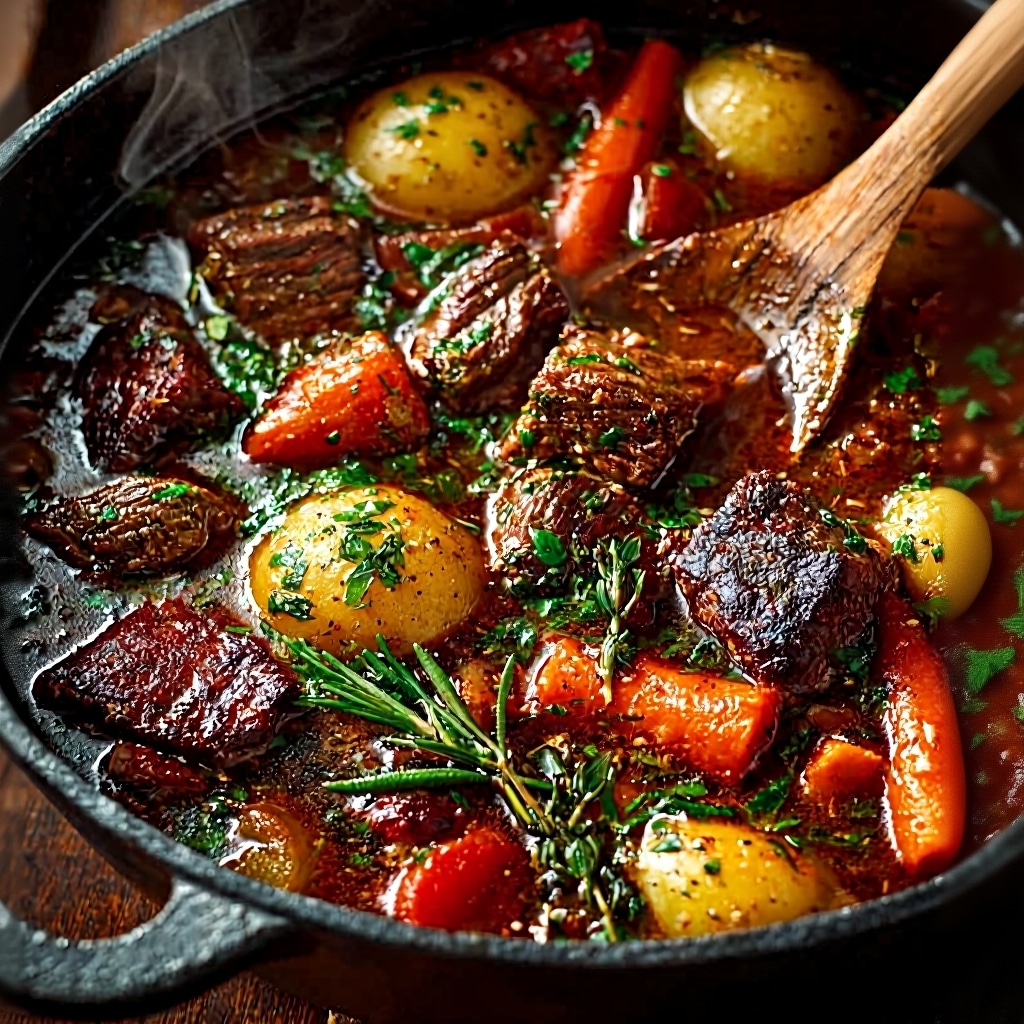
Embrace the cozy season with a bowl of pure comfort. This warm beef vegetable stew is more than just a meal; it’s a nostalgic hug in a bowl, brimming with tender chunks of beef, hearty root vegetables, and a rich, savory broth that simmers for hours to develop an incredible depth of flavor. Whether you’re a seasoned cook or a kitchen novice, this guide will walk you through creating the most delicious, soul-soothing stew your family has ever tasted. We’ll cover everything from selecting the perfect cut of beef to mastering the art of the low-and-slow simmer, ensuring your homemade beef stew is a resounding success.
Why This Recipe is Simply the Best
In a world of countless stew recipes, what makes this one stand out? It’s all about the technique and the layers of flavor. We don’t just toss ingredients in a pot; we build a foundation of taste at every step. By perfectly searing the beef, we create a rich, caramelized crust (thanks to the Maillard reaction) that forms the base of our stew’s flavor. We use a combination of aromatic vegetables, robust herbs, and a splash of red wine to create a broth that is both complex and deeply satisfying. This recipe is designed to be foolproof, yielding fall-apart tender beef stew meat and perfectly cooked vegetables every single time. It’s the quintessential one-pot beef stew that truly tastes even better the next day.
Essential Ingredients for the Perfect Stew
The Star of the Show: Choosing the Right Cut of Beef
The secret to incredibly tender stew beef is choosing a cut with plenty of collagen-rich connective tissue. Forget expensive steaks! You want tougher, muscular cuts that break down into succulent, melt-in-your-mouth morsels during a long, slow cook. The top choice is beef chuck roast (also called shoulder or chuck roll), ideal for a rich beef chuck stew recipe. It has the perfect fat-to-meat ratio. Other great options include bottom round roast or brisket. Look for cuts with good marbling, as that fat will render down and add immense flavor and richness to your warm beef vegetable stew.
A Symphony of Hearty Vegetables
The vegetables are just as important as the beef. For the essential flavor base (the mirepoix), you’ll need yellow onions, carrots, and celery. For the hearty filling, waxy potatoes like Yukon Golds or red potatoes are ideal as they hold their shape well during cooking, making it a classic beef stew with potatoes and carrots. Garlic is non-negotiable for its aromatic punch. You can also add other vegetables like mushrooms for an earthy depth, or frozen peas stirred in at the very end for a pop of color and sweetness.
The Flavor-Packed Liquid Base
This is where the magic happens for your classic beef and vegetable soup. A quality, low-sodium beef broth or stock is essential for a savory beef broth. For incredible depth of flavor, we’ll use a bit of tomato paste and a dry red wine (like a Cabernet Sauvignon or Merlot) to deglaze the pan – the alcohol cooks off, leaving only richness behind. A dash of Worcestershire sauce adds a savory, umami kick, while a classic bouquet of bay leaves, fresh thyme, and rosemary infuses the stew with a wonderful herbal aroma.
Kitchen Tools and Equipment You’ll Need
You don’t need any fancy gadgets to make a fantastic warm beef vegetable stew. The most important tool is a heavy-bottomed pot that distributes heat evenly, perfect for an easy beef stew stovetop method.
- Dutch Oven or Heavy-Bottomed Pot: A 5-quart or larger enameled cast-iron Dutch oven beef stew pot is perfect for searing and simmering on the stovetop and is oven-safe.
- Large Cutting Board: For safely chopping your vegetables and trimming your beef.
- Sharp Chef’s Knife: A good knife makes prep work faster and safer.
- Wooden Spoon or Spatula: Ideal for scraping up the browned bits from the bottom of the pot, an important step for flavor.
- Measuring Cups and Spoons: For accurate ingredient portions.
Step-by-Step Instructions: How to Make Warm Beef Vegetable Stew
Step 1: Prepare Your Ingredients (Mise en Place)
Before you turn on the heat, get everything ready. Pat your beef chunks dry with a paper towel (this helps them brown better). Season them generously with salt and pepper. Chop your onions, carrots, celery, and potatoes into uniform, bite-sized pieces. Mince the garlic. Having everything prepped and ready to go makes the cooking process smooth and enjoyable for your warm beef vegetable stew.
Step 2: Sear the Beef for Maximum Flavor
Heat a tablespoon of olive oil in your Dutch oven over medium-high heat. Working in batches to avoid overcrowding the pan, add the beef in a single layer. Sear for 2-3 minutes per side, until a deep brown crust forms. Don’t move the beef around too much. Let it sit and develop that color. This step, the Maillard reaction, is crucial for developing the deep, savory flavor of the stew, making it a truly hearty beef stew recipe.
Step 3: Sauté the Aromatics
Reduce the heat to medium. If needed, add another drizzle of oil to the pot. Add the chopped onions, carrots, and celery. Cook, stirring occasionally, for 5-7 minutes, until the vegetables have softened and the onions are translucent. Add the minced garlic and cook for another minute until fragrant.
Step 4: Deglaze and Build the Broth
Stir in the tomato paste and cook for one minute to deepen its flavor. Pour in the red wine, scraping the bottom of the pot with your wooden spoon to release all those delicious browned bits (fond). Let the wine simmer and reduce by about half. This concentrates the flavor and cooks off the raw alcohol taste, creating a rich base for your warm beef vegetable stew.
Step 5: Simmer to Perfection
Return the seared beef and any accumulated juices to the pot. Add the beef broth, Worcestershire sauce, bay leaves, and thyme. Bring the mixture to a gentle simmer, then reduce the heat to low, cover the pot, and let it cook for at least 1.5 to 2 hours, or until the beef is starting to become tender. After this initial simmer, add the potatoes, cover, and continue to cook for another 45-60 minutes until the potatoes are fork-tender and the beef is falling apart, making it a true old fashioned beef stew.
Step 6: The Finishing Touches
Remove the bay leaves and thyme sprigs. Taste the stew and adjust seasoning with salt and pepper as needed. If you’re using peas, stir them in now and let them cook for 5 minutes. If the stew isn’t as thick as you’d like, you can create a cornstarch slurry to thicken beef stew effectively.
Alternative Cooking Methods
Slow Cooker / Crock-Pot Beef Stew
This recipe is easily adapted for the slow cooker, perfect for a no-fuss winter stew recipe. First, complete steps 2, 3, and 4 (searing beef, sautéing aromatics, and deglazing) in a skillet on the stovetop. This is an essential step you should not skip, as it builds the flavor base. Transfer the seared beef and cooked vegetables to your slow cooker. Pour the deglazed liquid over top, then add the remaining broth, potatoes, and herbs. Stir to combine. Cover and cook on LOW for 7-8 hours or on HIGH for 4-5 hours, until the beef and vegetables are tender. Thicken with a cornstarch slurry during the last 30 minutes of cooking if desired for your slow cooker beef vegetable stew.
Instant Pot / Pressure Cooker Beef Stew
For a faster version of this comforting meal, use your pressure cooker. Use the ‘Sauté’ function to complete steps 2, 3, and 4 directly in the Instant Pot insert. Once you’ve deglazed the pot, hit ‘Cancel’. Return the beef to the pot, add the potatoes, broth, and herbs. Secure the lid, set the valve to ‘Sealing’, and pressure cook on HIGH for 35 minutes. Allow the pressure to release naturally for at least 10-15 minutes before performing a quick release. Remove the lid, and if needed, thicken the stew using the ‘Sauté’ function with a cornstarch slurry.
Pro Tips for an Unforgettable Stew
- Don’t Crowd the Pan: When searing the beef, do it in batches. Overcrowding the pan will steam the meat instead of browning it, and you’ll miss out on that crucial flavor development for your warm beef vegetable stew.
- Flour Your Beef: For an extra flavor crust and a naturally thicker stew, toss your seasoned beef chunks in a few tablespoons of all-purpose flour before searing. This helps the gravy later on.
- Low and Slow is the Way to Go: Resist the urge to crank up the heat to cook the stew faster. A low, gentle simmer is the key to breaking down the connective tissues in the beef, making it unbelievably tender.
- Taste and Season at the End: The flavors will concentrate as the stew simmers. Wait until the end to do your final seasoning with salt and pepper to avoid over-salting.
- Make it a Day Ahead: Stew is the ultimate make ahead beef stew. The flavors actually meld and deepen overnight, making it taste even better the next day. This is a top tip for any comfort food recipes.
What to Serve with Your Hearty Stew
This warm beef vegetable stew is a complete meal on its own, perfect for fall dinner ideas, but serving it with the right accompaniment can take it to the next level.
- Crusty Bread: A rustic baguette or a crusty sourdough is essential for sopping up every last drop of the delicious broth.
- Creamy Mashed Potatoes: Serve the stew over a bed of fluffy, buttery mashed potatoes for the ultimate comfort food experience.
- Buttered Egg Noodles: A simple and satisfying base that pairs beautifully with the rich gravy.
- Garlic Bread: Toasted garlic bread is always a crowd-pleaser and a perfect partner for this savory stew.
Storage, Freezing, and Reheating Instructions
Storing Leftovers
Allow the stew to cool completely before transferring it to an airtight container. It can be stored in the refrigerator for up to 4 days. The flavors will continue to develop, making leftovers a real treat.
Freezer-Friendly Tips
This freezer friendly stew freezes beautifully. Let it cool completely, then portion it into freezer-safe bags or containers, leaving a little space for expansion. It can be frozen for up to 3 months. Note that potatoes can sometimes change texture slightly upon thawing, but they are generally fine in a stew. For best results, thaw the stew overnight in the refrigerator before reheating.
The Best Way to Reheat
Reheat the stew gently in a saucepan over medium-low heat on the stovetop, stirring occasionally until warmed through. Avoid boiling, which can make the beef tough. You can also reheat it in the microwave in a covered, microwave-safe dish.
Frequently Asked Questions (FAQ)
What is the best cut of beef for stew?
The best cut of beef for stew is generally beef chuck. It comes from the shoulder and has a great balance of meat and fat, with lots of connective tissue. During the long, slow cooking process, this tissue breaks down into gelatin, which makes the meat incredibly tender and enriches the broth. Other good options include bottom round or even brisket.
How do I make my beef stew meat tender and not tough?
The key to tender beef stew meat is twofold: choosing the right cut (like beef chuck) and using a low-and-slow cooking method. High heat will cause the muscle fibers in the meat to seize up and become tough. A gentle simmer for a long period (at least 2-3 hours) is essential to allow the collagen to break down and tenderize the meat, resulting in fall-apart tender deliciousness.
Should you cook vegetables before adding to beef stew?
Yes, for some of them. The aromatic vegetables—onions, carrots, and celery—should be sautéed at the beginning to soften them and build a flavor base. Harder root vegetables like potatoes, however, should be added later in the cooking process (about an hour before it’s done) so they don’t turn to mush and retain their texture in the finished warm beef vegetable stew.
How can I thicken my warm beef vegetable stew?
To how to thicken beef stew, the simplest way is to make a cornstarch slurry: mix one tablespoon of cornstarch with two tablespoons of cold water until smooth, then whisk it into the simmering stew. Let it cook for a few more minutes to thicken. You can also use a flour-and-butter paste (beurre manié) or simply toss the beef in flour before you sear it, which also adds a foundational layer of flavor.
A Perfect Bowl of Comfort
There you have it—everything you need to create a truly memorable warm beef vegetable stew. It’s a recipe that celebrates simple ingredients and the magic of time, transforming them into a rich, hearty, and deeply comforting meal. It’s perfect for a chilly evening, a family gathering, or whenever you need a delicious taste of home. We hope you enjoy every single bite of this incredible hearty beef stew recipe. Don’t forget to leave a comment below and let us know how yours turned out!
For more daily recipes and tips, follow us on Facebook!
Click here to join our community!