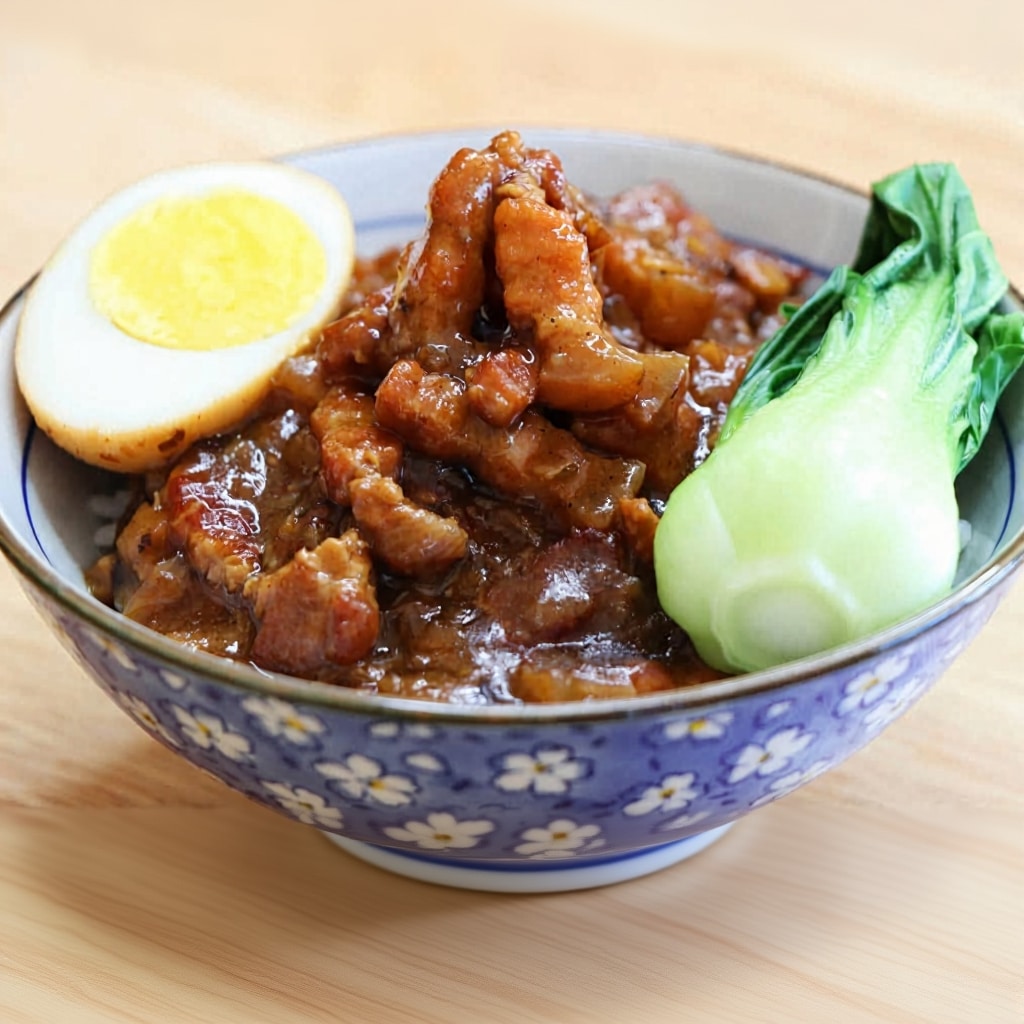
The Ultimate Guide to Authentic Taiwanese Braised Pork Belly (Lu Rou Fan)
Imagine a bowl of perfectly steamed rice, draped with glistening, deeply savory, and utterly melt-in-your-mouth pieces of pork belly. Each morsel, slow-braised to perfection, carries the rich flavors of soy, aromatic spices, and a hint of sweetness, all culminating in a silky, umami-rich sauce that clings to every grain. This isn’t just a meal; it’s a warm hug in a bowl, a taste of home, and the very essence of Taiwanese comfort food: Taiwanese Braised Pork Belly, affectionately known as Lu Rou Fan (滷肉飯).
This iconic dish is more than just food in Taiwan; it’s a cultural cornerstone, a humble yet profoundly satisfying culinary experience found on every street corner and in countless family kitchens. Prepare to embark on a culinary journey as we unveil the secrets to making an authentic, restaurant-quality Taiwanese braised pork rice at home. We’ll cover everything from selecting the best cut of pork for braising to mastering the aromatic sauce, ensuring you can recreate this beloved dish with confidence and flair.
What is Lu Rou Fan?
The Heart of Taiwanese Comfort Food
At its core, Lu Rou Fan is a quintessential expression of Taiwanese comfort food. This unassuming dish of braised pork belly over rice has achieved legendary status, gracing menus from bustling night markets to elegant family dining tables. Its signature flavor profile is a harmonious blend of savory goodness, subtle sweetness, and a profound umami depth, all elevated by fragrant spices. Simple yet profoundly satisfying, it embodies the soul of Taiwanese cuisine.
Lu Rou Fan vs. Rou Zao Fan: What’s the Difference?
While often used interchangeably, there’s a subtle distinction. Lu Rou Fan traditionally features hand-cut pork belly, often with the skin and a generous amount of fat, slow-cooked until incredibly tender. Rou Zao Fan often uses finely ground or minced pork, Taiwan-style, resulting in a slightly different texture and mouthfeel. Both are delicious, but the luscious texture of braised pork belly is what truly defines authentic Lu Rou Fan.
Is This the Same as Chinese Hong Shao Rou?
Though both are iconic braised pork belly dishes, Hong Shao Rou vs Lu Rou Fan reveals distinct differences. Shanghainese Hong Shao Rou (Red Braised Pork) often uses ginger, scallions, and a higher proportion of sugar for a sweeter, glossy finish. Our Taiwanese Braised Pork Belly leans more on fried shallots and five-spice powder, resulting in a more savory, deeply aromatic sauce with a focus on soy and umami, rather than overt sweetness.
Why This is the Best Taiwanese Braised Pork Belly Recipe
This Lu Rou Fan recipe stands out for several compelling reasons:
- Authentic Flavor: We’ve meticulously balanced key ingredients like fried shallots, Shaoxing wine, and specific soy sauces to capture the true, unmistakable taste of a Taiwanese street food staple.
- Melt-in-Your-Mouth Texture: Our expert method ensures the pork belly with skin recipe achieves an incredibly tender, gelatinous consistency without disintegrating, allowing it to practically melt on your tongue.
- Perfectly Balanced Sauce: You’ll achieve an ideal savory, slightly sweet, and aromatic sauce that’s not too oily or too thin – it perfectly coats every grain of rice and enhances the succulent pork.
- Surprisingly Simple: Despite its complex flavor profile, our step-by-step instructions make this easy braised pork belly recipe accessible for home cooks, guaranteeing restaurant-quality results with minimal fuss.
Key Ingredients for Success
Crafting the perfect Taiwanese Braised Pork Belly hinges on understanding the role of each crucial ingredient.
The Pork Belly: The Star of the Show
For an authentic and truly luxurious texture, skin-on pork belly is non-negotiable. The skin provides essential gelatin, which breaks down during the slow-cooking process, enriching the sauce and giving the pork its signature tender, slightly chewy, and incredibly moist consistency. Select pork belly with a good balance of lean meat, fat, and skin. Cut the pork into small, uniform cubes, roughly 1/2 to 3/4 inch, ensuring even cooking and bite-sized perfection.
The Aromatic Foundation: Fried Shallots, Garlic & Dried Shrimp
The soul of our authentic Taiwanese braised pork lies in its aromatics. Fried shallots are paramount, lending a unique savory sweetness and depth that cannot be replicated. Ready-made fried shallots are available, or make them from scratch for superior flavor. Minced garlic provides a pungent base, while dried shrimp and dried shiitake mushrooms (rehydrated and sliced) contribute an incredible, savory umami depth that elevates the entire dish, creating a truly irresistible umami-rich sauce.
The Braising Liquid: More Than Just Soy Sauce
The braising liquid is a symphony of flavors. We use a combination of light and dark soy sauce: light soy for its salty backbone, and dark soy for its rich, appetizing color and a hint of sweetness. Crucially, Shaoxing rice wine adds a complex, aromatic depth that rounds out the savory notes. Rock sugar (or regular granulated sugar) balances saltiness, adds subtle sweetness, and aids caramelization, contributing to the beautiful sheen of the finished sauce.
The Spices: Five-Spice and Star Anise
These warm, aromatic spices are key to the distinctive fragrance of Lu Rou Fan. A small amount of five-spice powder, typically a blend of star anise, cloves, cinnamon, Sichuan pepper, and fennel seeds, imparts a warm, complex aroma without overpowering the delicate pork. A whole star anise pod further enhances this sweet-savory profile, infusing the braising liquid with its unique liquorice-like fragrance. The goal is to complement the pork’s natural richness.
Step-by-Step Instructions: How to Make Taiwanese Braised Pork Belly
Follow these detailed steps to master the art of how to make Lu Rou Fan at home.
Step 1: Prepare Your Ingredients (Mise en Place)
Begin by meticulously preparing all your ingredients. Soak dried shiitake mushrooms in warm water until softened, then slice them thinly and reserve the soaking liquid. Rehydrate dried shrimp if using. Mince garlic and finely chop any fresh shallots if making your own fried shallots. Cut the pork belly with skin into uniform 1/2-inch to 3/4-inch cubes. Have your soy sauces, rice wine, sugar, and spices measured out.
Step 2: Render the Pork Belly Fat
Place the cut pork belly into a cold pot or wok over medium heat. Gradually render some of its fat, stirring occasionally, until the pieces are lightly browned and some fat has rendered. This adds flavor and reduces greasiness. Drain off most of the rendered fat, leaving just a tablespoon or two in the pot.
Step 3: Caramelize and Build the Flavor Base
Using the reserved fat, sauté the minced garlic, rehydrated dried shrimp, and sliced shiitake mushrooms until fragrant, about 1-2 minutes. Add fried shallots. Push the aromatics to one side, then add the rock sugar to the empty space in the pot. Let it melt and lightly caramelize, then stir it into the aromatics.
Step 4: The Simmering Process
Return the rendered pork belly to the pot. Pour in the light and dark soy sauces, Shaoxing wine, five-spice powder, and star anise. Add the reserved mushroom soaking liquid and enough water to just barely cover the pork. Bring the mixture to a boil, then immediately reduce the heat to low, cover the pot, and let it simmer gently for at least 1.5 to 2 hours, or until the pork is incredibly tender. Patience is key; low and slow cooking allows connective tissues to break down, creating melt-in-your-mouth texture.
Step 5: Making Perfect Soy-Braised Eggs
About 30-45 minutes before the end of the braising time, add peeled hard-boiled eggs to the pot. Submerge them completely in the flavorful braising liquid. As they simmer, the eggs will absorb the rich umami-rich sauce, transforming into delectable soy-braised eggs that are a mandatory accompaniment to Lu Rou Fan. These eggs become deeply savory and beautifully marbled, perfectly complementing the pork.
Expert Tips for Restaurant-Quality Lu Rou Fan
“The secret to exceptional Taiwanese Braised Pork Belly: patience. Don’t rush the simmer, and let flavors meld overnight.”
- The Overnight Rest: For profoundly deeper flavors and an even more satisfying texture, prepare your Lu Rou Fan a day in advance. Resting the dish overnight in the fridge allows the flavors to meld and intensify, resulting in an even more sublime experience when reheated.
- Skimming the Fat: If your sauce appears too greasy, especially after an overnight rest, use a spoon or ladle to skim off any excess solidified fat from the surface before reheating. This yields a cleaner, balanced sauce.
- Achieving the Perfect Sauce Consistency: If your sauce is too thin after the pork is tender, carefully remove the pork belly and eggs, then simmer the remaining sauce over medium-high heat, uncovered, until it reduces and thickens to your desired consistency.
- Don’t Skip the Fried Shallots: These are absolutely crucial for authentic flavor. If unavailable, making them yourself (thinly sliced, fried until crispy) is worth the effort for their aromatic foundation.
Cooking Variations & Substitutions
Instant Pot Taiwanese Braised Pork Belly
For a quicker version of how to make Lu Rou Fan, the Instant Pot is your friend. Follow steps 1-3. Then, combine all ingredients (pork, aromatics, braising liquid) in the Instant Pot. Cook on high pressure for 25-30 minutes, followed by a natural pressure release for 10-15 minutes, then quick release. Add the soy-braised eggs during the last 10 minutes of natural release, or warm them through on ‘Sauté’ mode after the pork is done. Adjust liquid as needed, often slightly less than stovetop.
Slow Cooker (Crockpot) Method
The slow cooker is perfect for slow-cooked pork belly. After completing steps 1-3 on the stovetop, transfer everything to your slow cooker. Cook on low for 6-8 hours or on high for 3-4 hours, until the pork is fork-tender. This ‘set-it-and-forget-it’ approach yields wonderfully tender pork with minimal fuss. Add the hard-boiled eggs during the last hour of cooking.
Ingredient Substitutions
While skin-on pork belly is ideal, if unavailable, pork shoulder or pork butt can be used for a leaner alternative. The texture will be different, but still delicious. For soy sauce, ensure you use a quality brand. If dried shrimp or mushrooms are hard to find, you can omit them, though you’ll miss some of the umami depth. Adjust sugar and salt to your taste; some prefer a sweeter sauce, others more savory.
How to Serve and Store Lu Rou Fan
The Classic Serving Style
The traditional way to enjoy Taiwanese Braised Pork Belly is by spooning the rich, tender pork and its glossy sauce generously over a steaming bed of fluffy, short-grain white rice. The rice acts as a perfect canvas, soaking up every drop of the savory liquid. This is the essence of braised pork belly over rice.
Essential Sides and Toppings
To complete the authentic Lu Rou Fan experience, don’t forget the accompaniments. The mandatory inclusion is at least one, often two, of those glorious soy-braised eggs. Blanched green vegetables, such as bok choy, yu choy, or broccoli florets, add a welcome burst of freshness, color, and a slight crunch. Pickled yellow daikon radish (Takuan) adds a tangy, acidic contrast.
Storing and Reheating Leftovers
Lu Rou Fan is a fantastic dish for meal prepping. Store leftovers in an airtight container in the refrigerator for up to 5 days, where the flavors will continue to deepen. Yes, you can freeze Lu Rou Fan! Portion it into freezer-safe containers or bags and freeze for up to 3 months. Thaw overnight in the fridge and reheat gently on the stovetop over low heat, adding a splash of water if needed, or in the microwave until thoroughly warmed through.
Frequently Asked Questions (FAQ)
What is the best cut of pork for Taiwanese Braised Pork Belly?
The best cut of pork for braising Lu Rou Fan is undoubtedly skin-on pork belly. The layers of meat, fat, and skin render down during the slow-cooking process, providing essential gelatin and moisture, resulting in the incredibly tender and rich texture that defines this dish. Pork shoulder or butt can be used, but won’t offer the same gelatinous mouthfeel.
Why is my braised pork tough?
If your braised pork belly is tough, it almost certainly means it hasn’t been simmered long enough. The key to tender braised pork is a low and slow cooking process. Connective tissues need ample time to break down, transforming the meat from tough to irresistibly tender. Patience is crucial for perfect results.
Can I make this dish less sweet or salty?
Absolutely! The beauty of homemade cooking is customization. To make it less sweet, reduce the amount of rock sugar or granulated sugar. For less saltiness, use slightly less light soy sauce. Always taste the braising liquid before the long simmer and adjust seasonings to your personal preference.
What’s the difference between light and dark soy sauce in this recipe?
In this Taiwanese Braised Pork Belly recipe, light soy sauce (生抽) is the primary source of saltiness and savory flavor. Dark soy sauce (老抽), on the other hand, is less salty but much thicker, and its main purpose is to impart a beautiful, deep reddish-brown color to the sauce, as well as a subtle hint of sweetness and deeper umami.
My sauce is too thin. How can I thicken it?
If your umami-rich sauce is too thin after the pork is cooked, carefully remove the tender pork and eggs from the pot using a slotted spoon. Bring the remaining sauce to a simmer over medium-high heat, stirring occasionally, and allow it to reduce uncovered until it reaches your desired thickness. The natural gelatin from the pork belly will help it thicken beautifully.
Conclusion
Mastering Taiwanese Braised Pork Belly, or Lu Rou Fan, is a true culinary achievement that brings the heart of Taiwan right into your home. This guide has equipped you with the knowledge and techniques to create an authentic, unforgettable dish. Embrace the low-and-slow simmer, prioritize quality ingredients like skin-on pork belly and fried shallots, and witness the magic of flavors deepening with an overnight rest. Don’t just read about this incredible Taiwanese comfort food – try it!
Try this satisfying Lu Rou Fan recipe, share your results, and let the savory aromas fill your kitchen. It’s more than just a meal; it’s an experience.
[Full Printable Recipe Card Embedded Here]
For more daily recipes and tips, follow us on Facebook!
Click here to join our community!