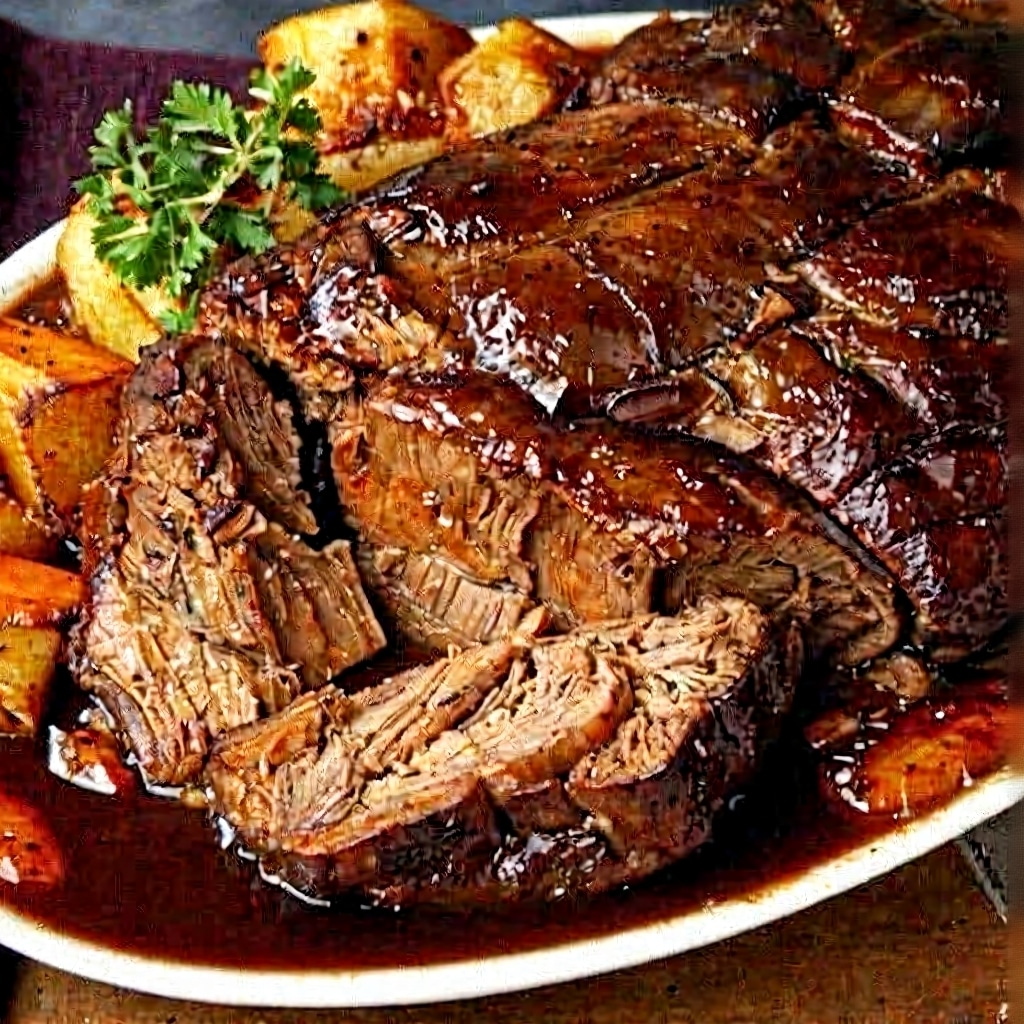
There are few culinary experiences as comforting and satisfying as a perfectly executed Sunday Beef Roast. It’s more than just a meal; it’s a tradition, a centerpiece for family gatherings, and a dish that evokes warmth and nostalgia. Forget the dry, tough roasts of the past. Our method focuses on achieving a truly melt-in-your-mouth beef texture, turning a humble cut into something extraordinary. This guide will walk you through creating a tender, braised, and utterly effortless Sunday supper that will become a cherished part of your family roast dinner ideas.
The Ultimate Sunday Beef Roast: Tender, Braised, and effortless
Why This Braised Method Changes Everything
Many home cooks shy away from making a roast, fearing a dry, flavorless outcome. This often stems from traditional dry-roasting methods, which, while suitable for certain cuts, can easily lead to disappointment with others. Our approach champions braised beef chuck roast, a technique that utterly transforms the meat.
The difference between dry roasting and braising: Dry roasting cooks meat with dry heat, often resulting in moisture loss if not carefully monitored or if the cut is lean. Braising, conversely, involves searing the meat first for deep flavor, then submerging it partially in a flavorful liquid and cooking it covered at a low temperature for an extended period. This creates a steamy, moist environment that tenderizes the meat from within.
Understanding collagen breakdown for melt-in-your-mouth texture: The secret to that irresistible, pull-apart texture lies in collagen. Cheaper cuts of beef, like chuck roast, are rich in connective tissue and collagen. When subjected to the low, slow heat of braising, this collagen gradually breaks down into gelatin. This gelatin infuses the meat with moisture, creating a succulent, tender pot roast recipe that practically melts on your fork.
Why the “Low and Slow” trick saves money on cheaper cuts: This method is not only delicious but also budget-friendly. Because braising works wonders on tougher, less expensive cuts of beef, you don’t need to splurge on prime rib to achieve an incredible Sunday Beef Roast. A good quality chuck roast, patiently slow cooked, will deliver a superior result to a lean, expensive cut that’s been dry-roasted.
Choosing the Best Cut of Beef
The foundation of any great roast dinner is choosing the right cut of beef. For our braised Sunday supper, the selection is critical for achieving that desirable, fall-apart tenderness.
Chuck Roast vs. Rump Roast: Why fat marbling matters: When considering the best beef cut for roasting using the braising method, a chuck roast (also known as shoulder roast, pot roast, or blade roast) is the undisputed champion. It’s generously marbled with fat and abundant in collagen, both of which are essential for succulence during a long braise. A rump roast, while sometimes used for roasting, is leaner and can become dry if not managed carefully. The intramuscular fat in a chuck roast renders down, basting the meat from the inside out and contributing immensely to the flavor and texture of your tender pot roast recipe.
Why you should avoid lean cuts (like Round) for this specific recipe: Cuts like top round or bottom round are very lean with minimal marbling. While excellent for quick searing or deli slices, they lack the connective tissue and fat necessary to withstand the long, slow cooking of braising without becoming tough and stringy. Stick to cuts with good marbling for this rich, slow cooked Sunday dinner experience.
Sourcing quality beef for Sunday dinner: Look for a chuck roast that has good, even marbling throughout the muscle. A darker red color indicates freshness. Don’t be afraid to ask your butcher for advice; they can guide you to the perfect piece for your Sunday Beef Roast.
Ingredients for Success
Simple, high-quality ingredients are all you need to create an unforgettable Dutch oven beef roast.
The Beef: Select a 3-4lb boneless chuck roast. This size is ideal for searing and will fit comfortably in most standard Dutch ovens.
The Aromatics: One large yellow onion, roughly chopped. 4-6 cloves of garlic, smashed or minced. A few sprigs of fresh thyme and rosemary – their earthy notes are perfect for beef.
The Liquid: 4 cups (32 oz) high-quality beef broth (low sodium is often best so you can control the seasoning). 1 cup dry red wine (such as Cabernet Sauvignon or Merlot) for incredible depth of flavor. If you prefer to omit wine, extra beef broth will suffice.
The Potatoes: For the best crispy roasted potatoes side dish, choose 2-3 lbs of Yukon Gold potatoes. Their waxy texture holds up well to roasting, and their skin crisps beautifully. Russets are also an option if you prefer a fluffier interior, but may require a bit more attention to prevent drying.
Other essentials: Olive oil, salt, freshly cracked black pepper, a bay leaf, and optional root vegetables like carrots and celery for even more flavor.
Step-by-Step Cooking Instructions
Get ready to transform your kitchen into an aromatic haven with this step-by-step guide to your next Sunday Beef Roast.
Phase 1: The Searing (Flavor Foundation)
Drying the meat and seasoning aggressively: Pat the chuck roast thoroughly dry with paper towels. Moisture on the surface prevents proper searing. Generously season all sides of the beef with kosher salt and freshly ground black pepper. Don’t be shy – this is where much of the initial flavor comes from.
Getting the Dutch oven smoking hot: Place a large Dutch oven over medium-high heat. Add 1-2 tablespoons of olive oil. Once the oil shimmers and just begins to smoke, carefully place the seasoned beef into the pot. Sear for 4-5 minutes per side until a deep, golden-brown crust forms. This crust (the Maillard reaction) is crucial for developing rich flavor. Remove the beef and set aside.
Phase 2: The Braise
Sautéing Aromatics: Reduce the heat to medium. Add the chopped onion, carrots, and celery (if using) to the Dutch oven. Sauté for 5-7 minutes until softened, scraping up any browned bits (fond) from the bottom of the pot. Add the minced garlic and cook for another minute until fragrant.
Deglazing the pan to lift the fond: Pour in the red wine. Use a wooden spoon to vigorously scrape the bottom of the pot, dissolving all those delicious browned bits – this is the fond, packed with flavor. Let the wine simmer for 2-3 minutes to reduce slightly and burn off some of the alcohol.
Assembling for the Braise: Return the seared beef to the Dutch oven. Add the beef broth, ensuring the liquid comes about two-thirds of the way up the sides of the roast. Add the fresh thyme, rosemary, and bay leaf. Bring the liquid to a gentle simmer on the stovetop.
Setting the oven temperature for the long haul: Preheat your oven to 300°F (150°C). Cover the Dutch oven tightly with its lid. Transfer the pot to the preheated oven and cook for 3-4 hours, or until the beef is incredibly tender and easily pulls apart with a fork. Check occasionally to ensure the liquid isn’t evaporating too quickly; add a little more broth if needed.
Phase 3: The Crispy Roasted Potatoes
Prepping the potatoes: About 1 hour before the beef is done, wash and chop your Yukon Gold potatoes into 1-inch pieces. Toss them with 2 tablespoons of olive oil, salt, and pepper on a large baking sheet.
Timing the potatoes to finish when the meat is resting: Once the beef is removed from the oven and resting (see next step), increase the oven temperature to 400°F (200°C). Place the baking sheet with potatoes in the hot oven. Roast for 30-40 minutes, flipping halfway through, until deeply golden brown and crispy.
Resting the Beef: Once the beef is tender, carefully remove the Dutch oven from the oven. Transfer the beef to a cutting board, tent it loosely with foil, and let it rest for at least 15-20 minutes. This allows the juices to redistribute, ensuring a more succulent result. This is the ideal time to focus on your crispy roasted potatoes side dish and gravy!
How to Make Rich Beef Gravy from Scratch
No Sunday Beef Roast is complete without a velvety, rich gravy to pour over that melt-in-your-mouth beef and crispy potatoes.
Utilizing the pot drippings: After removing the beef, place the Dutch oven with all the cooking liquid and aromatics back on the stovetop over medium heat. Remove the herb sprigs and bay leaf.
Straining for a silky smooth finish: For the ultimate smooth gravy, pour the contents of the Dutch oven through a fine-mesh sieve into a saucepan, pressing down on the solids to extract all the flavorful liquid. Discard the solids (or enjoy them separately!).
The cornstarch slurry vs. roux method: For a quick and easy thickening, a cornstarch slurry is excellent. In a small bowl, whisk 2 tablespoons of cornstarch with 3 tablespoons of cold water until smooth. Whisk this slurry into the simmering strained liquid. Continue whisking as the gravy thickens to your desired consistency. Simmer for 2-3 minutes to cook out any starchy taste. Alternatively, you can melt 2 tablespoons of butter in the saucepan, whisk in 2 tablespoons of flour to make a roux, then gradually whisk in the beef liquid until thickened. Taste and adjust seasoning with salt and pepper.
“The secret to a truly memorable Sunday Beef Roast isn’t just the meat; it’s the rich gravy made from the pot drippings, encapsulating all the deep flavors of your slow cooked Sunday dinner.”
Variations and Substitutions
While the Dutch oven method is our favorite for a Sunday Beef Roast, you can adapt this recipe to other popular cooking appliances.
Slow Cooker Adaptation: To convert this for an 8-hour cook, follow Phase 1 (searing the beef and sautéing aromatics) in a pan on the stovetop. Then, transfer the seared beef, aromatics, wine, and beef broth to your slow cooker. Cook on LOW for 7-8 hours or on HIGH for 4-5 hours, or until the beef is fork-tender. Make the gravy on the stovetop with the slow cooker liquid once the beef is removed.
Instant Pot Method: For a faster tender pot roast recipe, use the Sauté function to sear the beef and cook the aromatics. Deglaze with red wine. Add the beef broth and beef. Close the lid and set to pressure cook on HIGH for 60-75 minutes (depending on beef thickness). Allow for a natural pressure release for 10-15 minutes before quick-releasing any remaining pressure. Finish with gravy as directed.
Alcohol-Free: If you prefer to omit red wine, simply substitute it with an equal amount of additional beef broth. You might also add a splash of balsamic vinegar or Worcestershire sauce for an extra layer of savory depth.
Storage and Leftovers
A delicious Sunday Beef Roast often means equally delicious leftovers!
Best ways to reheat roast beef without drying it out: To keep your roast beef succulent, slice it against the grain if not already shredded. Store it in an airtight container with plenty of the reserved gravy. To reheat, gently warm the beef and gravy together in a covered dish in the oven (around 275°F/135°C) or on the stovetop over low heat until warmed through. Avoid microwaving if possible, as it can dry out the meat.
Leftover ideas: Shredded roast beef is incredibly versatile. Use it for hearty sandwiches (think French dip!), create a comforting hash with roasted potatoes and eggs, or make delicious beef tacos or quesadillas. It also works beautifully in a shepherd’s pie or as a filling for savory hand pies. These Sunday supper recipes just keep giving!
Frequently Asked Questions (FAQ)
Here are answers to common questions about preparing the ultimate Sunday Beef Roast:
Q: What is the ideal internal temperature for a braised beef roast?
A: For a braised beef roast, you’re not aiming for a specific internal temperature as you would with a steak. Instead, you’re cooking until the collagen breaks down, making the meat incredibly tender and easily shreddable with a fork, typically around 190-205°F (88-96°C).
Q: Can I prepare the beef roast ahead of time?
A: Absolutely! A braised Sunday Beef Roast often tastes even better the next day as the flavors have more time to meld. Cook it fully, let it cool, then refrigerate the beef submerged in its gravy. Reheat gently as described in the storage section.
Q: My gravy is too thin/too thick. How do I fix it?
A: If your gravy is too thin, whisk a bit more cornstarch slurry (1 tsp cornstarch mixed with 1 tsp cold water) into the simmering gravy and cook for another minute. If it’s too thick, simply whisk in a little more beef broth or water until it reaches your desired consistency.
Q: Can I add other vegetables to the braise?
A: Yes! Root vegetables like chopped carrots, celery, parsnips, or even small potatoes can be added to the Dutch oven along with the aromatics. They will cook down with the beef and absorb all the delicious flavors, making them a wonderful complement to your family roast dinner ideas.
Q: What side dishes pair best with Sunday Beef Roast?
A: Beyond our fantastic crispy roasted potatoes side dish, classic pairings include creamy mashed potatoes, green bean almondine, steamed asparagus, glazed carrots, or a simple green salad with a vinaigrette. A fresh loaf of crusty bread is also perfect for soaking up that rich beef gravy.
Prepare to impress your family and friends with this foolproof recipe for a truly unforgettable Sunday Beef Roast. It’s a testament to the magic of low and slow cooking, transforming a simple cut into a luxurious, melt-in-your-mouth beef experience. Happy cooking!
Follow us on Facebook for more delicious recipes and cooking tips: Our Facebook Page
Perfect Sunday Braised Beef Roast with Crispy Potatoes
Ingredients
- 3-4 lbs Boneless Beef Chuck Roast Trimmmed of excess hard fat
- 2 tbsp Olive Oil Divided use
- 1 tbsp Kosher Salt Plus more for potatoes
- 1 tsp Black Pepper Freshly cracked
- 1 large Yellow Onion Roughly chopped
- 4 cloves Garlic Smashed and peeled
- 2 cups Beef Broth Low sodium preferred
- 1 cup Dry Red Wine Cabernet or Merlot (optional, substitute beef broth)
- 4 sprigs Fresh Thyme Whole
- 3 lbs Potatoes Yukon Gold or Russet, peeled and chopped into 2-inch chunks
- 2 tbsp Cornstarch Mixed with 2 tbsp water (for gravy)
- 1 tbsp Fresh Parsley Chopped, for garnish
Instructions
- Preheat your oven to 325°F (163°C). Pat the beef chuck roast completely dry with paper towels and season generously on all sides with kosher salt and black pepper.
- Heat 1 tablespoon of olive oil in a large Dutch oven over medium-high heat. Once the oil is shimmering, add the beef. Sear undisturbed for 4-5 minutes per side until a dark brown crust forms. Remove the beef and set aside on a plate.
- Reduce heat to medium. Add the chopped onion to the pot and sauté for 3-4 minutes until softened. Add the garlic and cook for 1 minute until fragrant.
- Pour in the red wine (or 1 cup broth) to deglaze the pan, scraping up the browned bits from the bottom with a wooden spoon. Allow to simmer for 2 minutes to reduce slightly.
- Return the beef (and any resting juices) to the pot. Pour in the beef broth and add the thyme sprigs. The liquid should cover about halfway up the beef. Cover with a tight-fitting lid.
- Place the Dutch oven in the preheated oven and braise for 3 to 3.5 hours, or until the beef is fork-tender and falling apart.
- While the beef cooks, prepare the potatoes. Toss peeled and chopped potatoes with the remaining 1 tablespoon of olive oil, salt, and pepper.
- When the beef has 45 minutes left, you can roast the potatoes in a separate oven at 400°F (200°C), or
- Spread potatoes on a baking sheet and roast at 425°F for 30-40 minutes, flipping halfway, until golden and crispy.
- While potatoes roast and beef rests, strain the liquid from the Dutch oven into a saucepan (discarding solids). Bring to a simmer. Whisk in the cornstarch slurry and cook for 2-3 minutes until thickened into a gravy.
- Serve the sliced or shredded beef with the roasted potatoes, drizzled generously with gravy and garnished with fresh parsley.
For more daily recipes and tips, follow us on Facebook!
Click here to join our community!