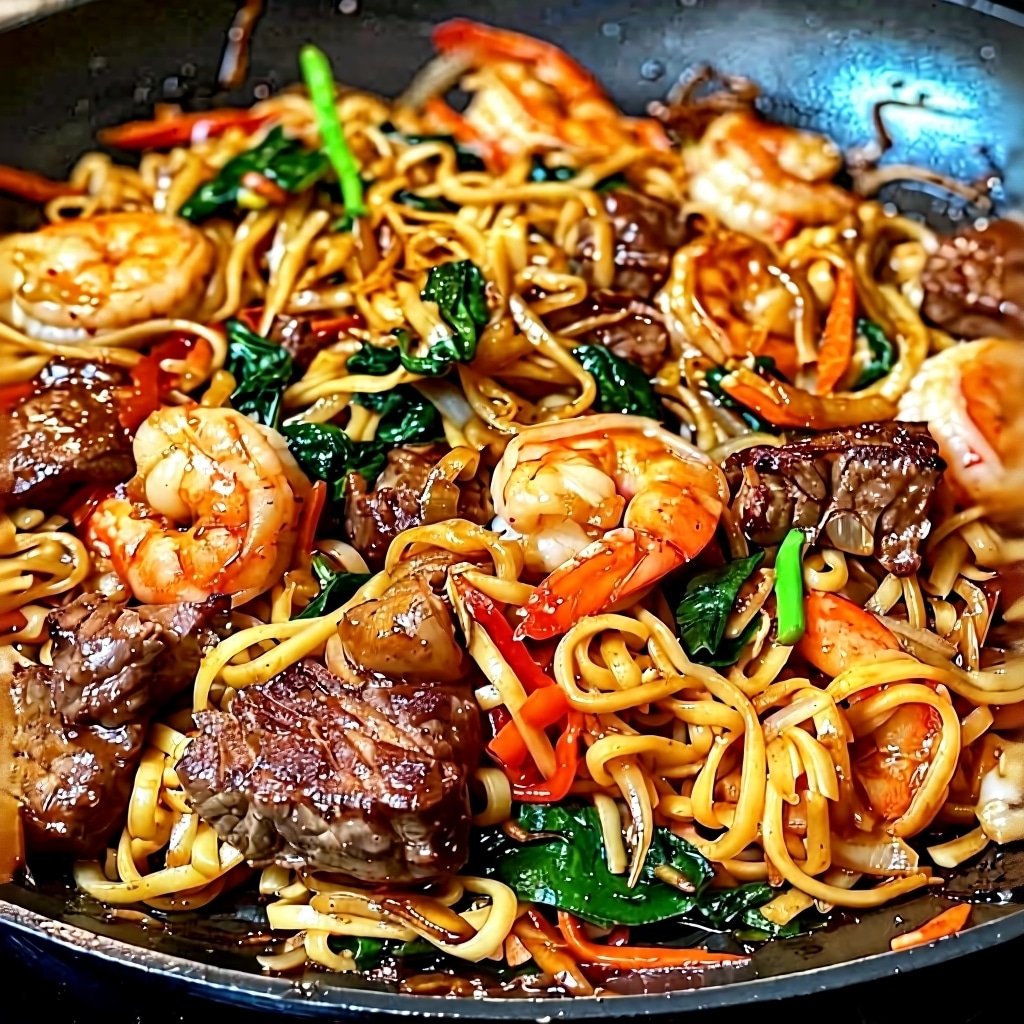
Forget the takeout menu! Today, we’re diving into a dish that’s a true culinary masterpiece, combining the best of land and sea: Steak and Shrimp Lo Mein. Imagine tender, savory slices of beef, perfectly cooked, succulent shrimp, and bouncy, slurpable noodles, all coated in an utterly irresistible, umami-rich sauce. This isn’t just any homemade lo mein; this is the ultimate ‘surf and turf’ noodle experience, designed to satisfy your deepest takeout cravings and impress everyone at your dinner table. Get ready to create a Chinese noodle dish that’s not only better than your favorite restaurant’s offering but also surprisingly easy to whip up in your own kitchen.
Why This Recipe is a Weeknight Winner
In our busy lives, finding a meal that’s both exciting and effortless can feel like a quest. This Steak and Shrimp Lo Mein recipe checks all the boxes, making it a true hero for your dinner rotation.
Flavor Explosion
Our carefully crafted lo mein sauce delivers a harmonious blend of savory, sweet, and umami notes, creating a flavor profile that truly coats every strand of noodle, every piece of steak, and every succulent shrimp. It’s an unforgettable taste that will have you reaching for seconds.
Quick and Easy
Don’t let the gourmet taste fool you! This easy lo mein recipe is designed for efficiency. With a bit of prep, you can have this fantastic stir fry noodles with steak and shrimp on the table in under 40 minutes, making it the perfect quick weeknight dinner solution.
Fully Customizable
The beauty of homemade lo mein lies in its flexibility. Our recipe provides a fantastic base, but feel free to swap out proteins, add more lo mein vegetables, or adjust the spice level to suit your family’s preferences. It’s your kitchen, your rules!
Healthier Than Takeout
When you make your own Steak and Shrimp Lo Mein, you’re in control of every ingredient. This means less sodium, healthier oils, and fresh, vibrant vegetables, making it a significantly better-for-you alternative to traditional takeout options.
The Key Components: A Deep Dive into Ingredients
Crafting the perfect Steak and Shrimp Lo Mein starts with understanding each ingredient and how it contributes to the overall masterpiece. Here’s what you need to know to build your best-ever combination lo mein.
For the Perfect Steak
Choosing the right cut of beef is crucial for tender lo mein. We recommend flank steak, sirloin steak, or flat iron steak. These cuts are flavorful and, when sliced thinly against the grain, become incredibly tender. Slicing against the grain breaks up the muscle fibers, ensuring a melt-in-your-mouth texture. A brief marinade is also essential for both flavor and tenderness, paving the way for a delicious sirloin steak stir fry or flank steak lo mein.
Choosing the Right Shrimp
For this dish, large or jumbo shrimp (21-25 count per pound) work best, as they stand up well to stir-frying without becoming rubbery. You can use fresh or frozen shrimp; if using frozen, ensure they are fully thawed and patted dry before cooking. Don’t forget to peel and devein them for the best eating experience. Their succulent sweetness is a perfect complement to the savory beef in this surf and turf lo mein.
All About the Lo Mein Noodles
True lo mein noodles are typically fresh or dried egg noodles, often thicker and chewier than other Asian noodle varieties. You can usually find them in the refrigerated or dried pasta aisle of your grocery store, or at an Asian market. If you can’t find specific lo mein noodles, don’t fret! Spaghetti, linguine, or even ramen noodles (without the seasoning packet) can serve as viable substitutes, though the texture will be slightly different.
The Secret to Our Irresistible Lo Mein Sauce
The heart of any great lo mein is its sauce. Our best lo mein sauce recipe combines:
- Soy Sauce: The savory, salty base.
- Oyster Sauce: Adds a rich, umami depth with a touch of sweetness.
- Sesame Oil: Contributes a nutty, aromatic finish.
- Fresh Ginger & Garlic: Essential aromatics for authentic Asian flavor.
- Sugar: Balances the savory notes.
- Cornstarch: Thickens the sauce, helping it cling beautifully to the noodles and proteins.
- Chicken Broth: Adds liquid and flavor without overpowering.
This blend creates a saucy noodles recipe that is truly better than takeout lo mein.
A Rainbow of Vegetables
Classic lo mein vegetables add color, texture, and nutrition. We love broccoli florets, sliced carrots, snow peas, and crisp bok choy. Feel free to incorporate other favorites like bell peppers, mushrooms, water chestnuts, or snap peas. The key is to cut them into similar sizes for even cooking.
How to Make Steak and Shrimp Lo Mein: A Step-by-Step Guide
Ready to transform simple ingredients into an extraordinary homemade lo mein? Follow these steps for the perfect Steak and Shrimp Lo Mein recipe.
Step 1: Mise en Place – Prep for Success
The secret to successful stir-frying is having all your ingredients ready before you even turn on the heat. This means slicing your steak against the grain, chopping all your chosen lo mein vegetables, whisking together your best lo mein sauce, peeling and deveining your shrimp, and having your noodles prepped. This ensures a smooth, quick cooking process without frantic scrambling.
Step 2: Marinate the Steak & Prepare the Shrimp
For maximum tenderness and flavor, marinate your thinly sliced steak for at least 15-20 minutes. A simple marinade of soy sauce, a touch of cornstarch (for velveting), and a dash of rice wine vinegar works wonders. This also helps answer the question of how to make steak and shrimp lo mein truly stand out. Season your shrimp lightly with salt and pepper.
Step 3: Cook the Lo Mein Noodles
Cook your lo mein noodles according to package directions, aiming for al dente. Overcooked noodles will become mushy in the stir-fry. Once cooked, immediately drain and rinse them thoroughly with cold water to stop the cooking process and remove excess starch. Toss them with a tiny bit of sesame oil to prevent sticking, ensuring you know how to cook lo mein noodles perfectly.
Step 4: Sear the Steak and Shrimp to Perfection
Heat a wok or large skillet over high heat with a tablespoon of oil. Cook your marinated steak in batches to avoid overcrowding the pan, which would steam the meat instead of searing it. You want a beautiful brown crust. Once cooked through and nicely seared, remove the steak and set it aside. Repeat with the shrimp, cooking for just 1-2 minutes per side until pink and opaque. Overcooked shrimp are tough, so watch them closely!
Step 5: Stir-Fry the Vegetables
Add a little more oil to the hot wok. Start with harder vegetables like carrots and broccoli, stir-frying for 2-3 minutes. Then, add softer lo mein vegetables like snow peas or bok choy, cooking for another 1-2 minutes until they are tender-crisp. You want them vibrant and with a slight crunch, not limp.
Step 6: Combine and Sauce
Return the cooked steak and shrimp to the pan with the stir-fried vegetables. Add your prepared lo mein noodles. Pour the irresistible lo mein sauce over everything. Using tongs, toss constantly to ensure all ingredients are thoroughly coated in the rich, glossy sauce. Continue tossing for 1-2 minutes until everything is heated through and the sauce has thickened slightly. Serve immediately!
A Chef’s Secrets for Restaurant-Quality Lo Mein
Elevate your homemade lo mein from good to absolutely phenomenal with these expert tips, making your Steak and Shrimp Lo Mein truly better than takeout.
The Velvet Touch: How to Velvet Steak
For incredibly tender, melt-in-your-mouth beef, try velveting. This simple technique involves marinating thinly sliced beef with cornstarch and often an egg white, then quickly blanching it in hot oil or water before stir-frying. This creates a protective coating that locks in moisture, resulting in steak as tender as you’d find in any top-tier Chinese restaurant. It’s a game-changer for your stir fry noodles with steak and shrimp.
High Heat, Quick Cooking
A roaring hot wok or skillet is non-negotiable for authentic stir-frying. High heat ensures that ingredients sear quickly, developing a caramelized flavor (often referred to as ‘wok hei’ in Cantonese cuisine) rather than steaming. This rapid cooking also keeps vegetables crisp and meat tender, preserving their natural textures and flavors.
Don’t Drown Your Noodles
When adding the sauce, start with a little less than you think you need. The goal is to lightly coat the noodles and proteins, creating a saucy noodles recipe, not a soup! You can always add a touch more if desired, but you can’t take it away. A perfectly sauced lo mein allows the individual flavors of the steak, shrimp, and vegetables to shine through.
Variations and Substitutions
This Steak and Shrimp Lo Mein recipe is wonderfully versatile. Don’t hesitate to make it your own!
Protein Swaps
Not a fan of surf and turf? You can easily make this a chicken lo mein, pork lo mein, or even a vegetarian version using fried tofu or tempeh. Feel free to combine proteins or use just one. This is truly a combination lo mein that caters to all tastes.
Make it Gluten-Free
To enjoy a gluten-free lo mein, simply swap out regular soy sauce for tamari. Many brands of lo mein noodles are not gluten-free, so opt for certified gluten-free rice noodles or other gluten-free Asian noodle recipes, which will still be delicious.
Turn Up the Heat
For those who love a spicy kick, a dash of sriracha, chili garlic sauce, or a pinch of red pepper flakes added to the lo mein sauce will do the trick. You can also garnish with fresh sliced chilies.
Low-Carb Lo Mein?
Yes, it’s possible! Replace traditional lo mein noodles with zucchini noodles (zoodles), spiraled sweet potato noodles, or shirataki noodles for a delicious low-carb alternative. You’ll still get all the amazing flavors of the steak, shrimp, and sauce.
Serving, Storing, and Reheating
Enjoying your homemade lo mein doesn’t have to end with the first plate.
What to Serve with Steak and Shrimp Lo Mein
This dish is robust enough to stand on its own, but if you’re looking to create a full Asian-inspired meal, consider pairing it with simple crab rangoon, crispy egg rolls, or a refreshing cucumber salad. Garnish your finished dish with a sprinkle of sesame seeds and fresh sliced green onions for extra flavor and visual appeal.
Storing and Reheating Leftovers
Leftover Steak and Shrimp Lo Mein is fantastic! Store it in an airtight container in the refrigerator for up to 3-4 days. To reheat, the best method is to gently warm it in a skillet or wok over medium heat with a splash of water or broth to rehydrate the noodles and sauce. You can also microwave it, but the skillet method helps maintain the noodles’ texture and prevents them from drying out.
Frequently Asked Questions (FAQ)
What is the difference between Lo Mein and Chow Mein?
The primary difference lies in how the noodles are prepared. Lo Mein means “tossed noodles,” where the pre-cooked noodles are added at the end of the stir-fry process and tossed with the sauce and other ingredients. Chow Mein, meaning “fried noodles,” involves stir-frying the noodles, often until they are crispier, sometimes even pan-fried separately before being combined with other ingredients.
What is the best cut of steak for lo mein?
The best cuts for lo mein are those that are tender and flavorful when cooked quickly at high heat. Flank steak, sirloin steak, and flat iron steak are excellent choices. Remember to slice the steak thinly against the grain for maximum tenderness, no matter what kind of steak for lo mein you choose.
How do I prevent my lo mein noodles from getting sticky or mushy?
To prevent sticky or mushy noodles, cook them just until al dente according to package directions. Immediately rinse them with cold water after draining to stop the cooking process and wash away excess starch. Then, toss them lightly with a small amount of sesame oil to keep them from sticking together before adding them to the stir-fry.
Can I make the lo mein sauce in advance?
Absolutely! Preparing the lo mein sauce in advance is a fantastic time-saver. Simply whisk all the sauce ingredients together and store it in an airtight container in the refrigerator for up to a week. This makes your quick weeknight dinner even faster to prepare when you’re ready to cook your Steak and Shrimp Lo Mein.
[Recipe Card Placeholder]
Find the full printable recipe card for this delicious Steak and Shrimp Lo Mein below, complete with detailed ingredient measurements, prep time, cook time, and nutritional information. Get ready to cook!
Conclusion
You now have all the tools and knowledge to create a truly spectacular Steak and Shrimp Lo Mein. This homemade lo mein isn’t just a meal; it’s an experience – a delicious, easy, and satisfying dish that truly lives up to its promise of being better than takeout. So, gather your ingredients, fire up your wok, and prepare to delight your taste buds. We can’t wait for you to try this recipe!
For more daily recipes and tips, follow us on Facebook!
Click here to join our community!