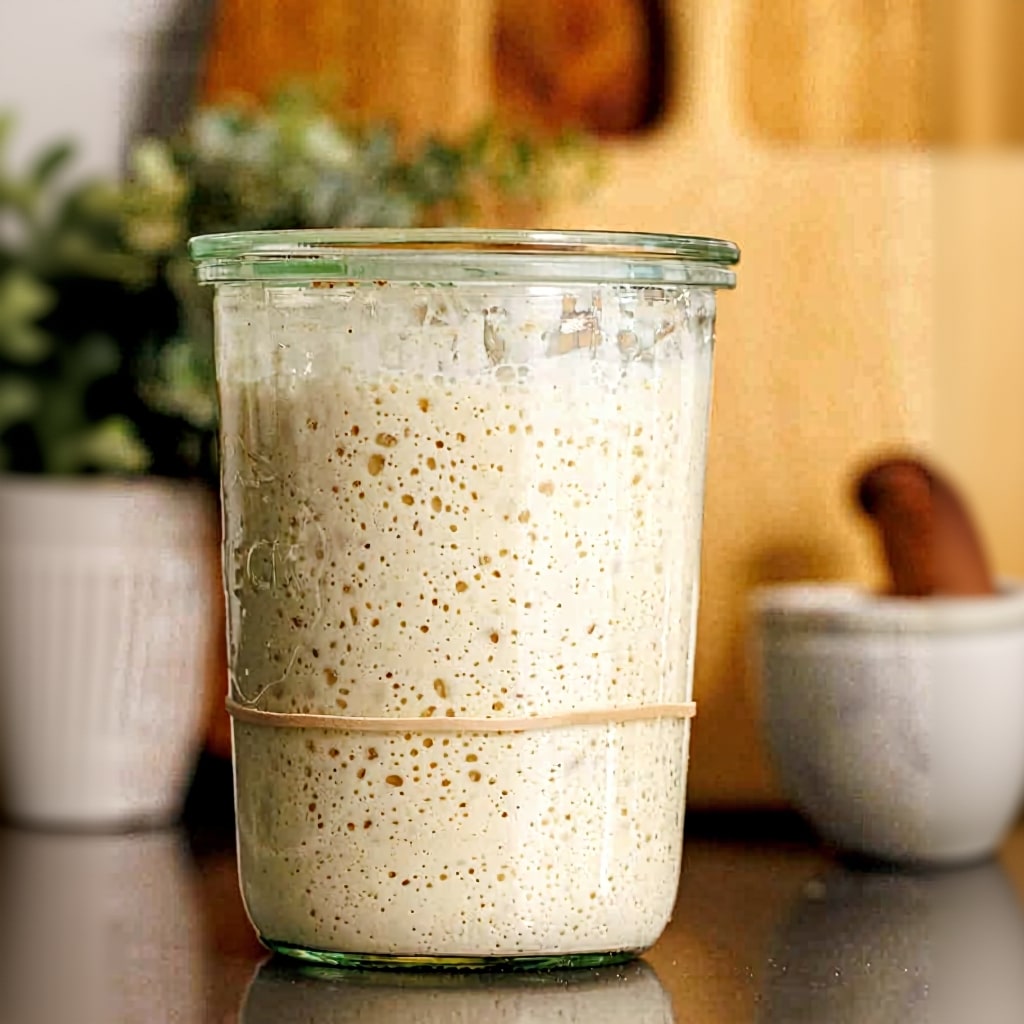
There’s nothing quite like the aroma of freshly baked bread wafting through your home. But imagine that bread, not just any bread, but a rustic, crusty loaf of homemade sourdough bread, boasting a complex, tangy flavor that only comes from a truly living ingredient. The secret to this culinary magic lies in a vibrant, bubbling entity: your very own sourdough starter.
The thought of cultivating a Sourdough Starter from Scratch might sound intimidating, conjuring images of complex chemistry experiments or ancient, arcane baking rituals. In reality, it’s a wonderfully simple and profoundly rewarding process, requiring just two humble ingredients: flour and water. If you’re eager to experience the unparalleled flavor of natural yeast and embark on a journey that connects you to generations of bakers, learning to build a sourdough starter from scratch is your first and most exciting step.
Expert Tip: Cultivating a sourdough starter is more about observation and patience than precise scientific adherence. Embrace the process!
This comprehensive guide is your essential blueprint for a thriving sourdough starter from scratch, designed for beginners. If you’re eager to experience the unparalleled flavor of natural yeast, learning to build a sourdough starter from scratch is your first step. We’ll demystify every step, from selecting your first ingredients to troubleshooting common issues, ensuring you’re confidently baking with your own natural yeast in no time.
What Exactly is a Sourdough Starter?
At its heart, a sourdough starter is a vibrant, symbiotic culture of wild yeast and lactic acid bacteria. Unlike commercial yeast, which is a single strain designed for consistent and rapid leavening, your starter harnesses the microorganisms naturally present on flour and in the air around us. Understanding its essence is the first step in cultivating a successful sourdough starter from scratch.
Think of it as a living pet. The wild yeast starter is responsible for the incredible rise in your bread, producing carbon dioxide gas as it consumes sugars in the flour. Simultaneously, the lactic acid bacteria produce acids that contribute to the distinctive tangy flavor and the unique texture of sourdough. This complex interplay of fermentation is what gives sourdough its characteristic depth and delightful chew, making it far superior to breads made with commercial yeast alone.
A sourdough culture is a living ecosystem in a jar, working tirelessly to transform simple flour and water into baking potential, infusing your bread with unparalleled flavor and texture.
Essential Equipment & Ingredients
Starting your sourdough starter from scratch doesn’t require a specialty store haul. You likely have most of what you need already! Gathering the right tools before you begin your sourdough starter from scratch journey ensures a smoother process.
The Only Two Ingredients You Need
- Flour: For kickstarting your sourdough culture, we highly recommend starting with whole wheat flour sourdough starter or rye flour starter. These flours are nutrient-dense and rich in microorganisms, giving your starter the best chance to become active quickly. Once established, you can transition to feeding with unbleached all-purpose or bread flour for ongoing maintenance.
- Water: This is crucial. Chlorine in tap water can inhibit the delicate wild yeast and bacteria you’re trying to cultivate. Always use filtered or dechlorinated water. To dechlorinate tap water, simply let it sit out in an open container for 12-24 hours, allowing the chlorine to evaporate.
Simple Tools for Success
- Container: A clear glass jar (such as a Mason jar or Weck jar) with a wide mouth is ideal. This allows you to easily observe your starter’s activity. Aim for at least a 1-quart (1-liter) capacity to give your starter room to grow after feeding.
- Kitchen Scale: A digital kitchen scale is arguably the most important tool. Sourdough baking thrives on precision, and measuring by weight (grams) ensures accuracy and consistency that volume measurements (cups) simply cannot provide.
- Spatula: A small silicone or rubber spatula is perfect for mixing ingredients thoroughly and scraping down the sides of your jar.
- Cover: Your starter needs to breathe but also be protected. A breathable cover like a coffee filter, cheesecloth secured with a rubber band, or a loose-fitting lid (not airtight) works perfectly.
Step-by-Step Guide: Your 7-Day Sourdough Starter from Scratch
Consistency and observation are your best friends on this journey to create your own **sourdough starter recipe**. Embrace the process, and soon you’ll have a vibrant sourdough culture ready for baking!
Day 1: Creating the Culture
- In your clean glass jar, combine 60g (¼ cup) of whole wheat or rye flour with 60g (¼ cup) of lukewarm (75-80°F / 24-27°C) filtered water.
- Mix thoroughly with your spatula until no dry streaks of flour remain and you have a thick, paste-like consistency.
- Cover the jar loosely and place it in a warm spot (75-80°F / 24-27°C) in your kitchen.
What to Expect: Don’t anticipate much visual activity in the first 24 hours. This initial mixture is the foundation of your sourdough starter from scratch.
Day 2: The First Feeding
- Discard all but 60g (about ¼ cup) of your starter. (Don’t worry, what is sourdough discard will be covered later!)
- Add 60g unbleached all-purpose or bread flour and 60g lukewarm filtered water to the remaining 60g of starter.
- Mix well, scrape down the sides, cover loosely, and return to your warm spot.
What to Expect: You might start to see a few tiny bubbles on the surface or through the sides of the jar. The smell might be slightly ‘funky’ – perhaps like old socks or mild vinegar. This is normal as different bacteria colonize.
Day 3 & 4: The ‘Lag Phase’ & Funky Smells
- Repeat the Day 2 feeding process every 24 hours: Discard all but 60g, add 60g flour, 60g water.
What to Expect: Often, activity will slow down during these days, a period known as the ‘lag phase.’ Don’t be discouraged if bubbles decrease or disappear. The smells might intensify to a strong, sometimes unpleasant, ‘gym socks’ or ‘acetone’ aroma. This is a battleground where various microorganisms are competing; stay consistent! Remember, consistency is paramount when developing your sourdough starter from scratch.
Day 5 & 6: Signs of Life!
- Continue the daily 1:1:1 feeding (60g starter: 60g flour: 60g water) every 24 hours.
- If your starter is becoming very active (rising significantly within 8-12 hours), consider feeding it twice a day (every 12 hours) to keep up with its hunger.
What to Expect: This is where the magic truly begins! Your sourdough starter day by day progress will show significant activity. You should see more consistent bubbling throughout the culture, and it will start to rise noticeably after feeding, then gradually fall. The smell will begin to transform into a more pleasant, yeasty, and mildly tangy aroma.
Day 7: Your Starter is Active and Ready!
- Perform one more feeding as usual.
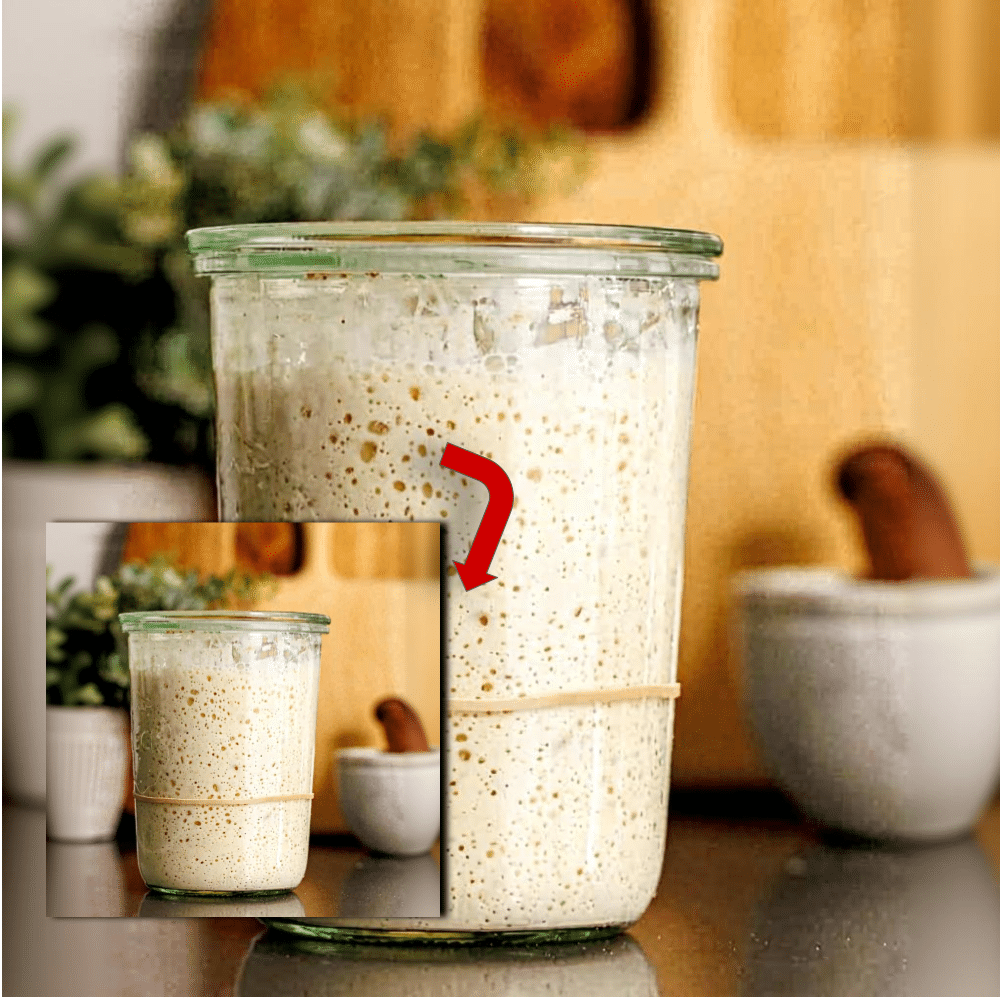
What to Expect: Within a few hours (typically 4-8, depending on temperature), your starter should reliably double or triple in volume, be full of large and small bubbles, and have a wonderfully pleasant, tangy scent. Congratulations! You’ve successfully cultivated a robust sourdough starter from scratch, and it’s now an active sourdough starter ready for baking with levain.
How to Know Your Sourdough Starter is Ready for Baking
Before diving into your first loaf of homemade sourdough bread, it’s crucial to confirm your starter is strong and active enough. Here are the key indicators:
- The Rise Test: After feeding, your starter should reliably double or even triple in volume within 4-8 hours. Mark the starting level on your jar with a rubber band or marker to track its growth.
- The Float Test: This classic test is a quick indicator of yeast activity. Drop a small spoonful of your fed, bubbly active sourdough starter into a glass of lukewarm water. If it floats, it’s full of enough carbon dioxide gas to leaven your dough, and it’s ready! If it sinks, it needs more time or another feeding.
- The Look and Smell: Your ready starter will be full of bubbles, with a beautiful web-like texture when stirred. It should have a pleasantly tangy, yeasty aroma, reminiscent of yogurt, ripe fruit, or good beer – never putrid or overly pungent.
Sourdough Starter Maintenance: Long-Term Care
Once you have an active sourdough starter from scratch, proper maintenance is key to its longevity. Your sourdough starter feeding schedule depends on how often you bake.
Feeding Your Mature Starter
- Room Temperature (Frequent Bakers): If you bake daily or every few days, keep your starter on the counter. Feed it 1-2 times per day (every 12-24 hours) with a 1:1:1 ratio (starter:flour:water) to keep it strong and active. This is how to feed sourdough starter for regular use.
- Refrigeration (Less Frequent Bakers): For less frequent baking (weekly or bi-weekly), store your starter in the fridge. Feed it, let it sit on the counter for 1-2 hours, then place it in the coldest part of your fridge. Feed it once a week, allowing it to warm up for a few hours before feeding, then returning it to the fridge. To ‘revive’ it for baking, take it out 1-2 days before you plan to bake and perform 2-3 consecutive feedings at room temperature. This is essential for proper sourdough starter maintenance.
Understanding Feeding Ratios
When you feed your sourdough starter, you’re essentially giving it fresh nutrients. Ratios like 1:1:1 (e.g., 50g starter, 50g flour, 50g water) are common. Higher ratios, like 1:2:2 or 1:3:3, mean more food for the starter, leading to slower fermentation and often a milder flavor. Experiment to find what works best for your schedule and desired flavor profile.
Troubleshooting Common Sourdough Starter Issues
Don’t panic if your starter isn’t behaving perfectly. Patience and understanding are your best tools when learning how to make a sourdough starter. Here’s a guide to common sourdough starter troubleshooting:
- Problem: Hooch (a dark liquid on top): This clear or dark liquid is alcohol, a byproduct of intense fermentation. It’s a sign that your starter is very hungry! What is hooch on sourdough starter? It simply means it’s time to feed. Solution: You can either stir it back in (for a more sour flavor) or pour it off before feeding. Then, feed your starter as usual, and consider increasing feeding frequency or ratio.
- Problem: No Bubbles / Inactivity:
- Cause: Too cold. Solution: Move your starter to a warmer spot (75-80°F / 24-27°C).
- Cause: Chlorinated water. Solution: Ensure you’re using filtered or dechlorinated water.
- Cause: Inconsistent feedings. Solution: Stick to a regular feeding schedule.
- Cause: Not enough time. Solution: New starters can take up to two weeks to become consistently active. Keep feeding!
- Problem: Mold (Fuzzy spots – pink, orange, green, black): This is the one true sign your starter is beyond saving. Mold typically appears as fuzzy, colored spots. Solution: Sadly, you must discard the entire starter and jar and start over with clean equipment. Prevention: Always use clean jars and tools, and ensure your cover is breathable but protective.
- Problem: It Smells Like Acetone or Nail Polish Remover: This is another strong indicator that your starter is very hungry and consuming its food too quickly, producing excess alcohol. Solution: Increase the frequency of your feedings (e.g., every 12 hours instead of 24) or increase your feeding ratio (e.g., 1:2:2 instead of 1:1:1).
What to Do With Sourdough Discard
When you prepare your starter for feeding, you’ll remove a portion – this is your sourdough discard. What is sourdough discard? It’s the unfed portion of your starter that you remove to keep the culture at a manageable size and concentration. But don’t let it go to waste!
Sourdough discard is packed with flavor and can be a fantastic ingredient in many recipes. Unlike active starter, discard won’t leaven your baked goods significantly, but it adds a wonderful tang. Some popular sourdough discard recipes include:
- Pancakes & Waffles
- Crackers
- Muffins & Scones
- Quick Breads (like banana bread or focaccia)
- Pizza Dough
Frequently Asked Questions (FAQ)
What is the best flour for a sourdough starter?
For initial creation, whole wheat flour sourdough starter or rye flour starter is highly recommended due to their high nutrient content and natural microbial activity. Once established, you can maintain it with unbleached all-purpose or bread flour.
How do I know if I killed my sourdough starter?
The primary sign of a dead or unsalvageable starter is the presence of visible mold (fuzzy green, black, pink, or orange spots). Strong hooch or inactivity can usually be remedied with consistent feeding and appropriate temperature adjustments; these do not mean your starter is dead.
Can I use tap water for my sourdough starter?
It’s best to avoid unpurified tap water as chlorine can inhibit the growth of your delicate wild yeast starter. Always use filtered or dechlorinated water. Simply leaving tap water out for 12-24 hours allows the chlorine to evaporate.
Why do I have to discard some of my starter?
Discarding helps manage the volume of your sourdough culture, preventing it from growing too large. More importantly, it ensures the remaining starter receives a fresh influx of nutrients without being overwhelmed by a large population of hungry microbes, thus keeping your active sourdough starter robust and healthy.
How long does it take to make a sourdough starter from scratch?
Typically, an active sourdough starter from scratch takes about 7 days to develop consistently. However, environmental factors like temperature can sometimes extend this process to 10-14 days. Patience is key!
What should my sourdough starter smell like?
A healthy sourdough starter should have a pleasant, yeasty, and tangy aroma, similar to plain yogurt, ripe fruit, or good beer. If it smells strongly of nail polish remover (acetone), foul, or rotten, it indicates it’s very hungry or possibly contaminated (though contamination is rare with proper care).
For more daily recipes and tips, follow us on Facebook!
Click here to join our community!