Ever opened your refrigerator to find your beautiful bunch of spinach wilted, your crisp bell peppers soft, or your vibrant berries sporting a fuzzy green coat—just days after your grocery run? You’re not alone. That moment of discovering spoiled produce isn’t just a minor annoyance; it’s a drain on your wallet and a quiet contributor to global food waste.
The average household wastes a significant amount of food annually, much of which is fresh produce. This doesn’t just hurt your budget; it carries a substantial environmental cost. But what if you could change that? What if you knew the right way to store produce, dramatically extending its shelf life and ensuring every bite is as fresh as possible?
This article is your definitive guide to proper produce storage. We promise to help you keep produce fresh longer, save money, eat healthier, and significantly reduce your carbon footprint. By mastering a few simple principles and understanding the specific needs of each fruit and vegetable, you can transform your kitchen into a haven of freshness and sustainable eating.
The Science of Freshness: Why Produce Spoils
To truly master food preservation and effectively reduce food waste, it helps to understand the fundamental factors that contribute to produce spoilage. A little knowledge about the ‘why’ behind the methods goes a long way in keeping your fruits and vegetables in peak condition.
Ethylene Gas: The Ripening Hormone
One of nature’s most potent ripening agents is ethylene gas, a natural plant hormone released by many fruits and vegetables. This gas triggers the ripening process in itself and neighboring produce. While essential for transforming a green banana into a sweet treat, it can also cause other produce to spoil rapidly if not managed correctly.
Common ethylene gas producing fruits and vegetables include apples, avocados, bananas, cantaloupe, peaches, pears, and tomatoes. Conversely, many types of produce are highly sensitive to ethylene, such as leafy greens, broccoli, carrots, and potatoes. The core rule for smart produce storage: Separate the producers from the sensitive.
The Enemies: Moisture, Air, and Temperature
- Moisture: Too much moisture leads to mold and rot. Too little causes wilting and shriveling. Finding the right balance is crucial.
- Air: Oxygen can degrade produce over time. However, some items need to “breathe” to prevent rot from trapped moisture.
- Temperature: Every fruit and vegetable has an ideal storage temperature. Refrigeration slows down spoilage, but some produce suffers chilling injury in the cold, while others thrive on the counter or in a cool, dark pantry.
The A-Z Guide: How to Store Every Type of Produce
This section is your practical vegetable storage chart and fruit storage life guide, offering actionable tips for maximizing the freshness of your groceries. Mastering the right way to store produce starts with specific knowledge.
Storing Vegetables
- Leafy Greens (Lettuce, Spinach, Kale): The secret to how to store leafy greens is dryness. Wash only when ready to eat, or if washing beforehand, use a salad spinner to dry thoroughly. Store in a rigid container lined with a dry paper towel. This also helps with how to keep salad fresh.
- Root Vegetables (Carrots, Beets, Radishes): Remove green tops (they pull moisture). Store unwashed in the crisper drawer, ideally in a loosely sealed bag with a corner open for airflow.
- Cruciferous Vegetables (Broccoli, Cauliflower, Brussels Sprouts): Store in the crisper drawer in an open or perforated bag.
- Alliums (Onions, Garlic, Shallots): Keep in a cool, dark, dry place with good airflow (like a pantry). Do NOT refrigerate. Keep away from potatoes; this is key for storing potatoes and onions.
- Potatoes & Sweet Potatoes: Store in a cool, dark, dry place. A paper bag or basket is ideal. Keep away from onions to prevent premature sprouting.
- Nightshades (Tomatoes, Bell Peppers, Eggplant): Store whole tomatoes on the counter until ripe, then refrigerate if desired. Peppers and eggplant go in the crisper drawer.
- Other Favorites (Celery, Asparagus, Cucumbers): Celery: wrap tightly in foil. Asparagus: trim ends, stand in a glass of water like flowers, cover loosely, and refrigerate. Cucumbers: store in a warmer part of the fridge (like the door) to avoid chilling injury.
Storing Fruits
Understanding how to store fruit correctly is just as important as vegetables.
- Berries (Strawberries, Blueberries, Raspberries): For how to keep berries fresh: do not wash until ready to eat. Store unwashed in a breathable container in the fridge. A quick vinegar rinse (1 part vinegar, 3 parts water), followed by thorough drying, can prevent mold.
- Stone Fruits (Peaches, Plums, Nectarines): Ripen on the counter in a single layer, then move to the fridge to extend life.
- Apples & Pears: Store in the crisper drawer, ideally away from other produce due to ethylene production.
- Citrus (Lemons, Limes, Oranges): Can be left on the counter for a week, but last much longer in the fridge’s crisper drawer.
- Melons (Watermelon, Cantaloupe): Store whole on the counter. Once cut, cover and refrigerate.
- Tropical Fruits (Bananas, Avocados, Mangoes): Ripen on the counter. To speed ripening, place in a paper bag. Refrigerate avocados once ripe to extend their life; this is a top storing avocados hack.
Storing Fresh Herbs
Knowing the right way to store produce like herbs can prevent waste and ensure vibrant flavors.
- Hardy Herbs (Rosemary, Thyme, Sage): Wrap loosely in a damp paper towel and place in a plastic bag in the fridge.
- Tender Herbs (Cilantro, Parsley, Mint): Treat like a bouquet: place stems in a jar with an inch of water. Cover loosely with a plastic bag and refrigerate.
- Basil: Unlike other tender herbs, basil prefers the counter. Store stems in water, uncovered, away from direct sunlight.
Common Produce Storage Mistakes (And How to Fix Them)
Even with the best intentions, it’s easy to fall into bad habits. Here are some common blunders and simple food storage hacks to correct them, ensuring your vegetable preservation efforts pay off.
- Mistake 1: Washing Everything Immediately.
The Fix: For most produce, excess moisture promotes mold. Wash just before use. The exception is leafy greens, provided they are dried completely (a salad spinner is key).
- Mistake 2: Storing Everything in the Fridge.
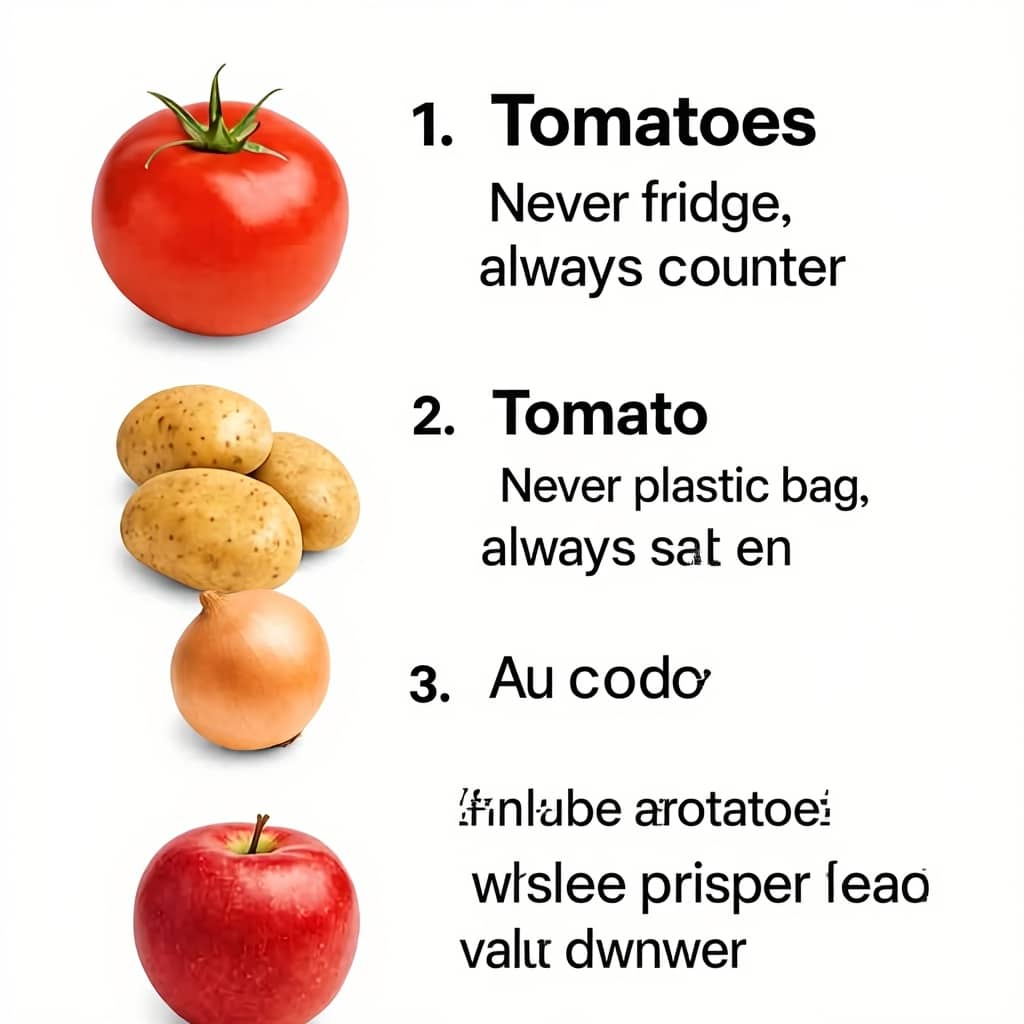
The Fix: Not all produce belongs in the cold. Keep room temperature produce like tomatoes, potatoes, onions, garlic, and unripe bananas/avocados on the counter or in the pantry.

- Mistake 3: Keeping Onions and Potatoes Together.
The Fix: Onions release gases that cause potatoes to sprout faster. Store them separately in cool, dark, well-ventilated spaces, as detailed in our storing potatoes and onions section.
- Mistake 4: Tossing Everything in the Crisper Drawer.
The Fix: Your crisper drawers are for humidity control. Use your crisper drawer settings: high-humidity for leafy greens/carrots, low-humidity for apples/peppers. Don’t let it become a jumbled, undifferentiated mess.
- Mistake 5: Using Airtight Sealed Bags for Everything.
The Fix: Some produce needs to breathe to prevent rot. Use perforated bags, keep bags slightly open, or select specialized containers that allow for some ventilation. Airflow is crucial for many items.
Pro Tools for Peak Freshness
While proper technique is paramount, a few clever tools can certainly elevate your produce storage game and are worth considering as you refine your refrigerator storage guide practices.
- Herb Savers: Keep herb stems hydrated while protecting leaves.
- Reusable Silicone Bags (e.g., Stasher): Reduce plastic waste and offer good breathability when left slightly ajar. These are among the best containers for produce.
- Salad Spinners: Essential for thoroughly drying leafy greens, preventing premature wilting and rot.
Frequently Asked Questions (FAQ)
Should you wash produce before storing it?
No, for most produce, washing before storing is generally discouraged. Excess moisture is the primary enemy, accelerating mold growth. The best practice is to wash fruits and vegetables just before use. The main exception is leafy greens, provided they are dried completely.
What produce should not be stored in the fridge?
Items that should generally not be stored in the refrigerator include: tomatoes, potatoes, sweet potatoes, onions, garlic, winter squash, and unripe bananas, avocados, and stone fruit.
How do you keep fruits and vegetables fresh longer without plastic?
Many eco-friendly alternatives exist! Use glass containers with loose-fitting lids, beeswax wraps for covering cut produce, damp cloth bags for greens, or simply store items like root vegetables loose in the crisper drawer or a cool pantry. For herbs, the “bouquet in water” method is plastic-free.
Which fruits and vegetables produce the most ethylene gas?
Major ethylene producers include: apples, avocados, bananas (especially ripe ones), cantaloupe, peaches, pears, and tomatoes. Always store these away from ethylene-sensitive produce.
Is it better to store vegetables in bags or containers?
It depends. Greens often do best in a hard-sided container to prevent bruising and provide space for a paper towel. Carrots and celery benefit from bags (perforated or slightly open) to retain moisture. The key is preventing excess moisture while allowing for some air circulation to avoid dehydration or mold.
Conclusion: Your Path to Fresher Food and Less Waste
Mastering the right way to store produce isn’t just about clever tricks; it’s about understanding the basic science of how fruits and vegetables behave. By separating ethylene producers, managing moisture levels, and storing items at their optimal temperatures, you unlock the full potential of your groceries.
The benefits are clear: you’ll save money by reducing food waste, enjoy better-tasting and more nutritious produce, and contribute to a more sustainable household. It’s a win-win for your pantry, your palate, and the planet. We encourage you to try just one new storage tip this week. See the difference it makes in your kitchen, and enjoy the satisfaction of truly fresh food, every time.
For more daily recipes and tips, follow us on Facebook!
Click here to join our community!