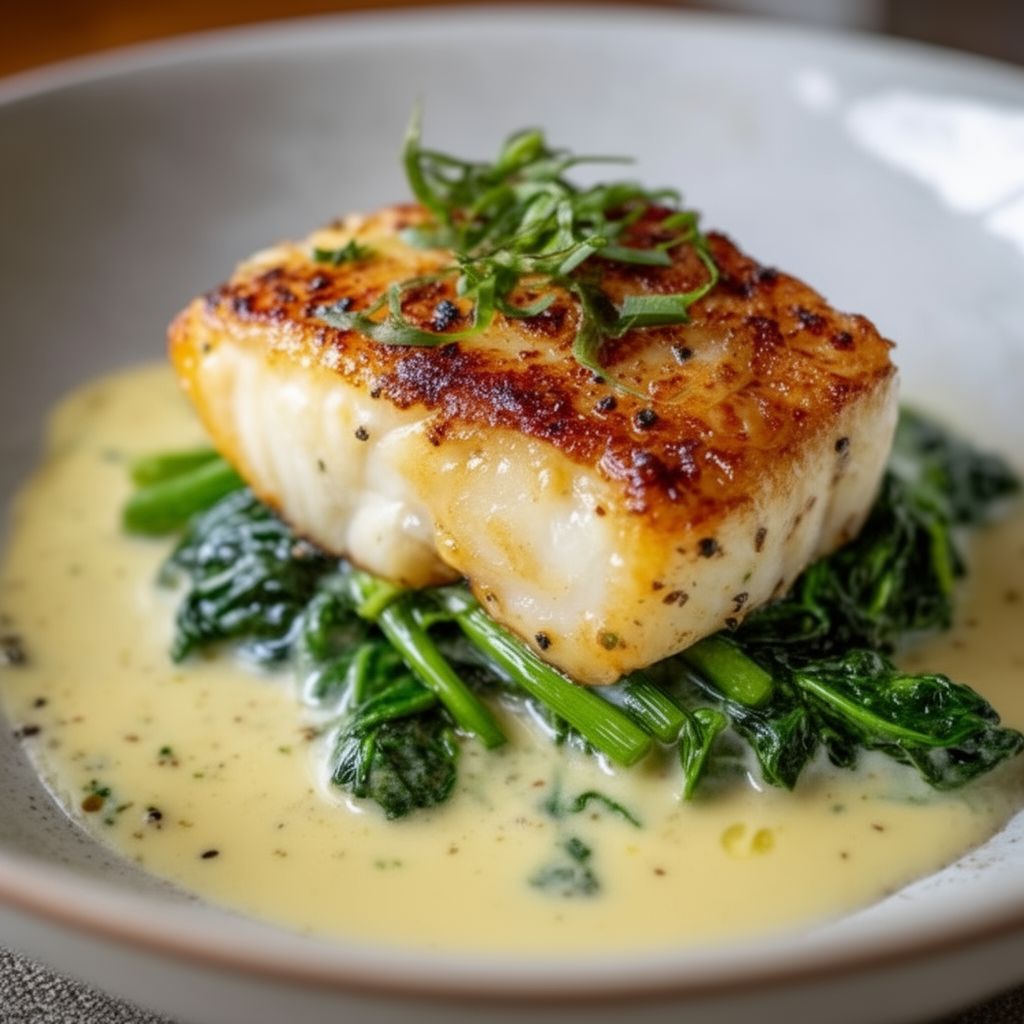
Perfect Pan Seared Halibut with Creamy Spinach and Lemon Beurre Blanc
There are some dishes that just *feel* special, a testament to technique and thoughtful flavor pairing. Today, we’re diving into one of those culinary triumphs: Pan Seared Halibut with a vibrant creamy spinach base and a luxurious lemon beurre blanc. This isn’t just another weeknight meal; it’s an experience, a chance to bring a little bit of fine dining right into your own kitchen.
Why You’ll Love This Pan Seared Halibut Recipe
Restaurant Quality at Home
Imagine a perfectly cooked piece of delicate white fish, its exterior boasting a beautiful golden crust, shattering just so under your fork, revealing tender, flaky flesh within. Mastering the pan sear on a quality halibut fillet truly elevates a simple seafood dinner into an impressive, restaurant-worthy creation. You’ll gain confidence in handling delicate fish, turning an ordinary meal into an extraordinary culinary achievement that will impress everyone at your table.
The Magic of Halibut Beurre Blanc
The secret weapon here is our exquisite lemon butter sauce, a traditional French beurre blanc. This rich, emulsified butter sauce is nothing short of magical. Its velvety texture and bright, tangy notes from fresh lemon and a hint of wine cut through the richness of the butter, creating an absolutely divine complement to the mild, sweet, and flaky nature of the halibut fillets. It’s a symphony of flavors that will have you reaching for seconds.
Ingredients You’ll Need
Gathering high-quality ingredients is the first step towards culinary success. For this impressive dish, every component plays a crucial role in building layers of flavor and texture.
Selecting the Best Halibut
The star of our show is, of course, the halibut. When selecting your halibut fillets, aim for pieces that are fresh, firm, and have a pearly sheen. Wild-caught halibut is often preferred for its superior flavor and texture. Critically, ensure your fillets are at least 1-inch thick. Thicker fillets allow for a proper, deep sear and a beautiful golden crust without the risk of overcooking the center, keeping the fish moist and tender. Avoid overly thin pieces, as they can quickly become dry.
The Creamy Spinach Base
Beneath our beautifully seared fish lies a bed of comforting, creamy spinach. You’ll need fresh spinach (either baby spinach or larger leaves), a touch of minced garlic, and, most importantly, heavy cream. The cream reduces slightly as it cooks with the leafy greens, creating a rich, velvety foundation that provides a wonderful balance to the bright acidity of our lemon beurre blanc. A pinch of nutmeg can also elevate the flavor profile of the spinach.
The Lemon Beurre Blanc Components
Crafting a classic beurre blanc requires a few key elements, each contributing to its iconic flavor and texture:
- Dry White Wine: A crisp, dry white wine like Sauvignon Blanc or Pinot Grigio provides the necessary acidity and depth for the reduction.
- Fresh Lemon Juice: Essential for that bright, zesty tang that makes the sauce so irresistible and cuts through the richness.
- Minced Shallots: These aromatic alliums add a delicate, sweet onion flavor to the reduction, forming the base of the sauce.
- High-Quality Cold Butter: This is non-negotiable. Cold, unsalted butter, cut into cubes, is slowly whisked into the reduction off the heat. The cold temperature helps emulsify the sauce, creating its signature creamy, stable texture.
Master the Technique: How to Achieve the Perfect Golden Crust
The perfect sear is what elevates this dish from good to unforgettable. It’s all about creating that irresistible golden crust that locks in moisture and adds incredible flavor. Here’s how to master it:
Dry the Fish Completely
This is arguably the most crucial step for a superior sear. Moisture is the ultimate enemy of browning. If your fish is wet, it will steam rather than sear, resulting in a soggy, pale exterior instead of a beautiful crust. Use several layers of paper towels to pat the halibut fillets absolutely dry on all sides. You want them as dry as possible!
Choose the Right Pan and Oil
For the best results, you need a pan that retains heat exceptionally well. A heavy-bottomed cast iron fish skillet or a high-quality stainless steel skillet is ideal. These pans provide consistent, even heat, which is vital for a uniform sear. Pair your pan with a high-smoke-point oil, such as avocado oil, grapeseed oil, or canola oil. Olive oil has a lower smoke point and can burn, imparting an unpleasant flavor.
Don’t Touch It!
Once your seasoned halibut hits the hot oil, resist the urge to move it. This is a critical rule of pan-searing. Let the fish sit undisturbed for 3 to 4 minutes on the first side. This allows the protein to naturally develop that beautiful crust and release from the pan without tearing. Patience is truly a virtue here. Moving it too soon will disrupt the browning process and can cause the fish to stick.
Step-by-Step Instructions
Ready to bring this culinary masterpiece to life? Follow these steps for an unforgettable seafood dinner.
Prepping the Fish
- Remove your halibut fillets from the refrigerator about 15-20 minutes before cooking. Allowing them to rest at room temperature helps them cook more evenly.
- Generously pat each fillet completely dry with paper towels. Season both sides with salt and freshly ground black pepper.
Sautéing the Creamy Spinach
- Heat a medium-sized skillet over medium heat. Add a tablespoon of olive oil or butter.
- Once hot, add minced garlic and sauté for 30 seconds until fragrant.
- Add the fresh spinach to the skillet. It will seem like a lot, but it will quickly wilt down. Cook, stirring occasionally, until the spinach has fully wilted, about 2-3 minutes.
- Pour in the heavy cream. Stir well and let it simmer gently for 2-3 minutes, allowing the cream to reduce slightly and beautifully coat the spinach. Season with salt, pepper, and a pinch of nutmeg to taste. Keep warm.
Crafting the Emulsified Beurre Blanc
- In a small, heavy-bottomed saucepan, combine the dry white wine, fresh lemon juice, and minced shallots.
- Bring to a simmer over medium-high heat and reduce until only about 1-2 tablespoons of liquid remain. This reduction concentrates the flavors and is crucial for the sauce’s foundation.
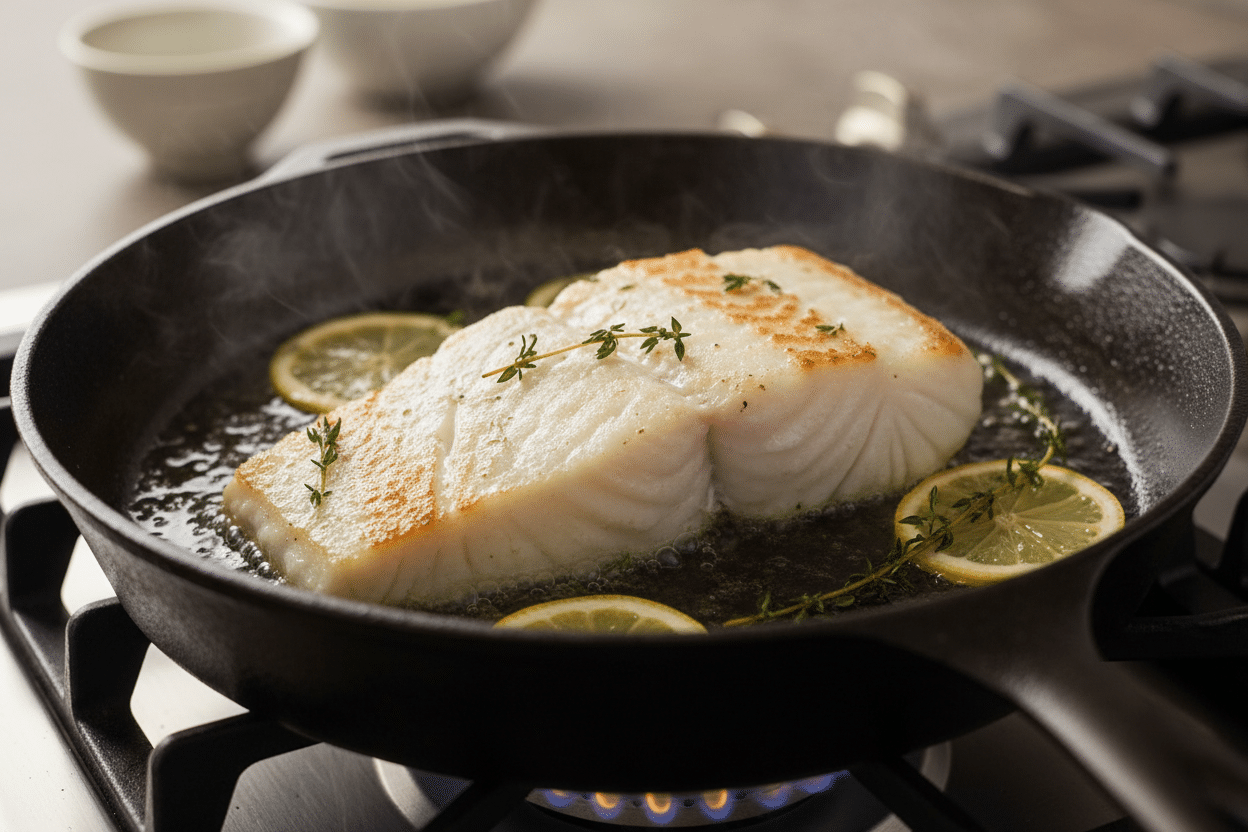
- Remove the saucepan from the direct heat. Begin whisking in the cold, cubed butter, one cube at a time. Whisk continuously until each cube is fully incorporated and the sauce is smooth and emulsified before adding the next.
- If the sauce becomes too cool and thick, you can briefly return it to very low heat (or a warm spot, not directly on the burner) for a few seconds, whisking constantly. Be careful not to let it get too hot, as it can break.
- Season the beurre blanc with a pinch of salt and a grind of white pepper. Keep warm off the heat, whisking occasionally.
Searing the Halibut
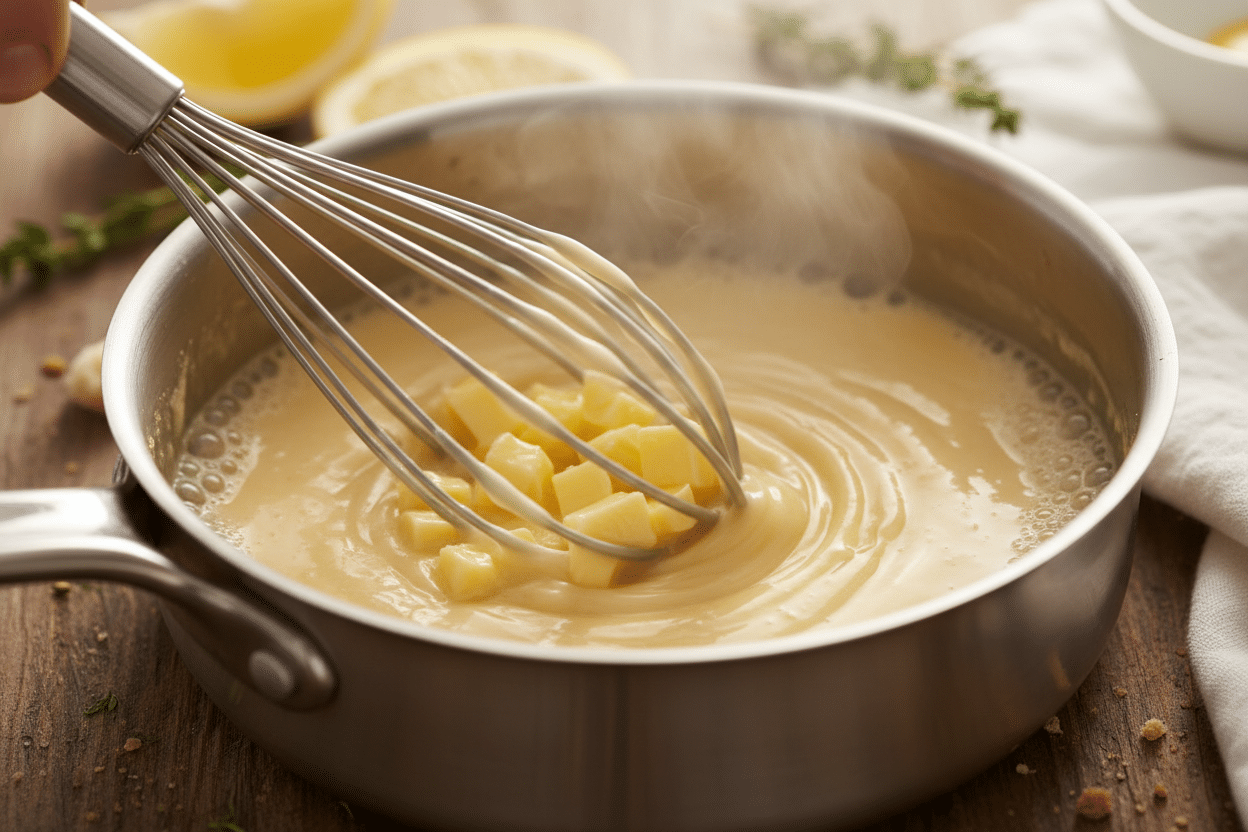
- Heat your chosen cast iron fish or stainless steel skillet over medium-high heat. Add 1-2 tablespoons of high-smoke-point oil. Heat until the oil is shimmering and just beginning to smoke slightly – this indicates it’s hot enough.
- Carefully place the seasoned halibut fillets skin-side down (if skin-on) or presentation side down into the hot oil. Ensure there’s enough space between fillets; cook in batches if necessary to avoid overcrowding, which can lower the pan temperature and prevent a good sear.
- Sear undisturbed for 3 to 4 minutes, until a beautiful golden crust forms and the fish naturally releases from the pan.
- Flip the fillets and continue to cook for another 2-4 minutes, depending on thickness, until the internal temperature reaches the sweet spot of 130-135°F when measured with an instant-read thermometer. This will result in perfectly flaky, moist fish.
- Carefully transfer the seared halibut to a plate. Let it rest for a minute or two before serving.
Plating Your Masterpiece
To serve, create a bed of the creamy spinach on each plate. Gently place a seared halibut fillet on top of the spinach. Drizzle generously with the exquisite lemon beurre blanc. Garnish with a fresh lemon wedge and a sprinkle of chopped fresh parsley or chives for color and freshness.
Cooking Tips and Variations
Elevate your cooking experience with these pro tips and ideas for customization.
Temperature and Doneness
For truly perfect fish, an instant-read thermometer is your best friend. Halibut is cooked through when its internal temperature reaches 130-135°F (54-57°C) for optimal flakiness and tenderness. Overcooked fish becomes dry and tough, so pull it off the heat just as it hits this range. Remember, it will continue to cook slightly from residual heat once removed from the pan.
Ingredient Swaps
- Other White Fish: This technique isn’t limited to halibut. You can apply the same pan-searing method to other firm white fish recipe favorites like cod, sea bass, grouper, or even thick salmon fillets. Adjust cooking times based on thickness.
- Different Greens: While spinach is classic for this dish, feel free to experiment with other leafy greens for your creamy base. Swiss chard, kale (blanched first to tenderize), or even arugula for a peppery kick could be delightful.
- Herb Variations for Beurre Blanc: For a different twist, consider infusing your beurre blanc reduction with a sprig of fresh thyme or tarragon before whisking in the butter.
Frequently Asked Questions
How do I know when the halibut is done?
The best way to tell is by using an instant-read thermometer. Look for an internal temperature of 130-135°F (54-57°C). Visually, the fish should be opaque throughout and flake easily with a fork when gently pressed. If it’s still translucent in the center, it needs a little more time.
Can I make beurre blanc ahead of time?
Traditional beurre blanc is best made just before serving, as it can sometimes separate or become less stable when reheated. However, you can prepare the shallot, wine, and lemon reduction ahead of time and store it in the refrigerator. When ready to serve, gently reheat the reduction and then proceed with whisking in the cold butter as directed. If it does separate, a tiny bit of hot water or cream, whisked vigorously, can sometimes bring it back together.
Why did my fish stick to the pan?
There are a few common culprits. The most frequent reason is not drying the fish completely before placing it in the pan. Moisture causes sticking. Another reason could be that your pan wasn’t hot enough when the fish went in, or you moved the fish too soon. Ensure your skillet halibut is cooked in a properly heated pan with sufficient oil, and resist the urge to flip until that beautiful golden crust has fully formed and the fish naturally releases.
We hope you enjoy creating and savoring this elegant pan-seared halibut dish. For more delicious recipes, cooking tips, and culinary inspiration, be sure to follow us!
Follow us on Facebook: https://www.facebook.com/profile.php?id=61568538666337
Pan Seared Halibut with Lemon Beurre Blanc
Ingredients
- 2 fillets Halibut fillets 1-inch thick, about 6 oz each
- 1 pinch Kosher salt and black pepper
- 2 tbsp Avocado oil
- 5 oz Fresh baby spinach
- 1/4 cup Heavy cream
- 1/4 cup Dry white wine
- 1 tbsp Fresh lemon juice
- 1 tbsp Minced shallot
- 4 tbsp Cold unsalted butter cut into cubes
- 1 tbsp Fresh dill or parsley chopped for garnish
Instructions
- Remove the halibut from the refrigerator and let it rest at room temperature for 15 minutes. Pat the fillets completely dry with paper towels. Season both sides generously with salt and black pepper.
- In a small saucepan over medium heat, combine the dry white wine, fresh lemon juice, and minced shallot. Simmer until the liquid is reduced to approximately 1 tablespoon.
- Reduce the heat to the lowest possible setting. Whisk in the cold butter cubes one at a time, allowing each cube to fully emulsify into the sauce before adding the next. Remove from heat and keep the beurre blanc warm.
- In a separate skillet over medium heat, add the fresh baby spinach and toss until just wilted. Stir in the heavy cream, season lightly with salt and pepper, and simmer for 1 to 2 minutes until slightly thickened. Transfer to a bowl and keep warm.
- Wipe out the skillet and place it over medium-high heat. Add the avocado oil and heat until shimmering and just beginning to smoke.
- Carefully place the halibut fillets in the skillet. Press down gently with a fish spatula for a few seconds to ensure even contact. Sear without moving the fish for 3 to 4 minutes to develop a golden brown crust.
- Flip the fillets carefully and cook for an additional 2 to 3 minutes on the other side, or until the internal temperature reaches 130-135°F and the fish flakes easily with a fork.
- Divide the creamy spinach between two serving plates. Top each with a seared halibut fillet, drizzle generously with the warm lemon beurre blanc, and garnish with fresh dill or parsley.
For more daily recipes and tips, follow us on Facebook!
Click here to join our community!