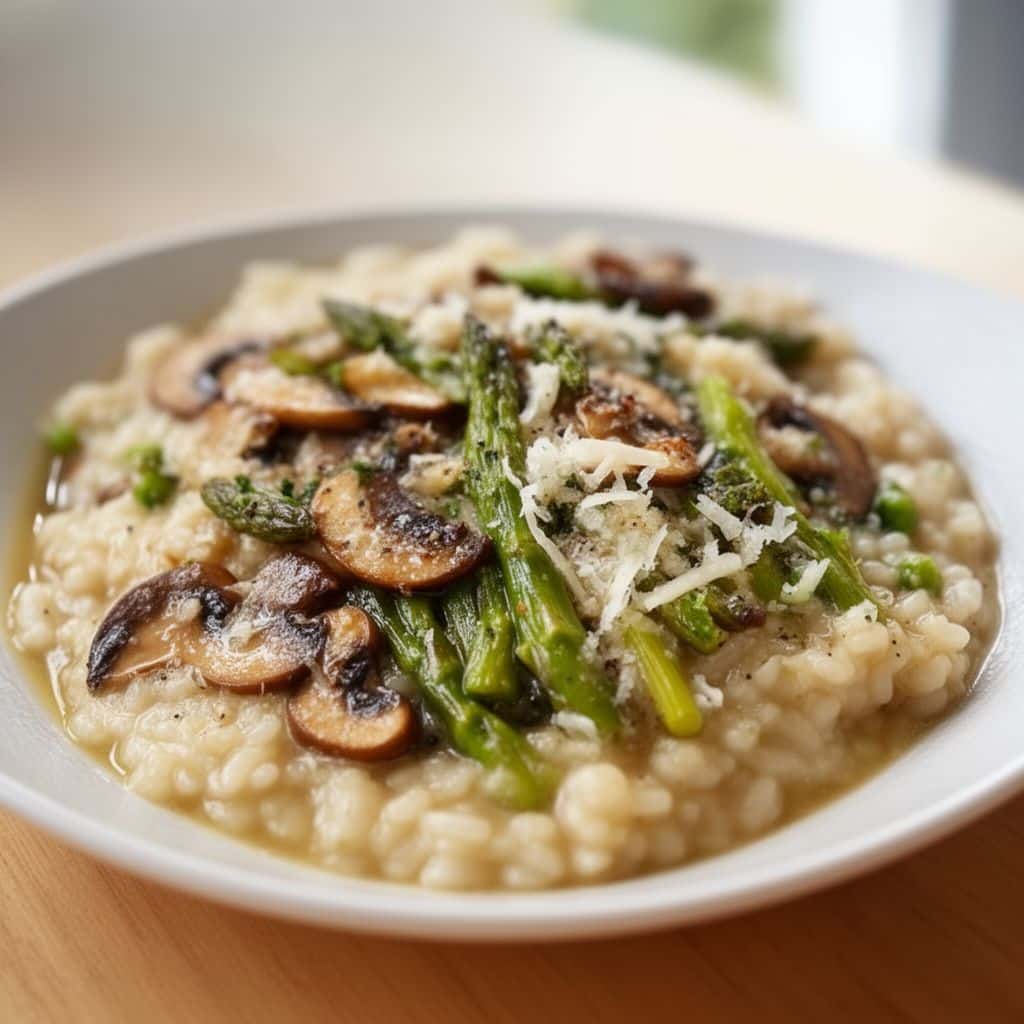
Creamy Mushroom Asparagus Risotto Recipe
There are few dishes that evoke the warmth and comforting embrace of home quite like a perfectly executed risotto. Among the myriad of delightful variations, the Mushroom Asparagus Risotto stands out as a true culinary star, blending earthy richness with the vibrant freshness of spring. This dish isn’t just an elegant Italian classic; it’s a versatile masterpiece that can transform a simple weeknight dinner into a gourmet experience or impress guests at your next gathering. With its fresh flavors brought by crisp asparagus and tender peas, perfectly complementing the deep, umami notes of sautéed mushrooms, this risotto is a testament to the magic of simple, quality ingredients.
Imagine a spoonful of luxuriously creamy rice, each grain infused with savory broth and the subtle sweetness of spring vegetables. That’s the promise of this exceptional Mushroom Asparagus Risotto. It’s a dish that celebrates seasonal produce while delivering profound satisfaction, making it an ideal choice for anyone seeking exquisite Italian comfort food that truly nourishes the soul.
Why You’ll Love This Spring Vegetable Risotto
Risotto often carries a reputation for being complicated or time-consuming, but we’re here to bust that myth! This particular spring vegetable risotto is not only incredibly rewarding but also surprisingly approachable for home cooks. Here’s why it’s destined to become a staple in your kitchen:
- Rich & Creamy Texture: The secret to risotto’s signature luxurious mouthfeel lies in the rice itself. As you stir, the special starch in Arborio rice is gradually released, creating a naturally thick, velvety sauce that coats every grain. This means you achieve an incredibly rich and satisfying creaminess without needing to rely heavily on added cream, making it a delightfully wholesome experience. It’s the hallmark of a truly authentic creamy arborio rice recipe.
- Quick & Approachable: Forget spending hours over the stove. While risotto does require your attention, the active cooking time for this dish is surprisingly brief. From start to finish, you’re looking at about 45 minutes – a perfect timeframe for an impressive yet easy vegetarian dinner that tastes like it took much longer. Mastering how to cook risotto is a skill worth having, and this recipe makes it simple.
- Vegetarian Comfort Food: In a world brimming with options, sometimes the most satisfying meals are those that lean into wholesome, plant-based ingredients. This Mushroom Asparagus Risotto provides a deeply satisfying, meat-free option that doesn’t compromise on flavor or heartiness. It’s brimming with earthy mushrooms and vibrant spring vegetables, making it one of the most beloved vegetarian risotto ideas.
Key Ingredients for the Perfect Risotto
The beauty of risotto lies in its simplicity, but selecting the right ingredients is paramount to achieving that exquisite, restaurant-quality taste and texture. Each component plays a vital role in creating this irresistible dish.
Best Rice for Risotto (Arborio vs. Carnaroli)
When it comes to risotto, not all rice is created equal. You simply must use a short-grain, high-starch rice variety. These specialized grains are designed to absorb liquid slowly while releasing their starches, which is crucial for that characteristic creamy texture.
- Arborio Rice: This is the most widely available and commonly used risotto rice. It has a slightly rounded grain and excellent starch content, making it forgiving and reliable for achieving a beautifully creamy consistency. It’s an excellent choice for any home cook looking to master a creamy arborio rice recipe.
- Carnaroli Rice: Often referred to as the “king of risotto rice,” Carnaroli has a longer grain and even higher starch content than Arborio. It holds its shape incredibly well during cooking, resulting in a risotto that is both creamy and wonderfully toothsome. While sometimes harder to find and a bit more expensive, it’s worth seeking out for a truly premium experience.
Regardless of your choice, avoid long-grain or medium-grain rice varieties like basmati or jasmine, as they won’t yield the desired creaminess or texture.
Choosing the Right Mushrooms and Asparagus
The star vegetables in our Mushroom Asparagus Risotto deserve careful selection to ensure maximum flavor and tenderness.
- Best Mushrooms for Risotto: For a deep, earthy flavor, we recommend using cremini (also known as baby bella) mushrooms. Their robust flavor holds up beautifully against the creamy rice. Shiitake mushrooms also work wonderfully, adding a distinct umami note. You can even mix varieties for a more complex profile. Always ensure your mushrooms are firm, free of blemishes, and have a fresh, earthy scent.
- Asparagus Tips: Look for firm, bright green asparagus spears with tightly closed tips. To ensure a tender bite throughout, snap off the woody ends. The easiest way to do this is to hold a spear by both ends and bend it gently; it will naturally break where the tough, fibrous part meets the tender stem. Cut the tender parts into 1-inch pieces.
Step-by-Step Instructions: How to Cook Risotto
Mastering how to cook risotto is a skill that comes with practice, but following these key steps will guide you to success. The process is less about complexity and more about patience and attention to detail. This method will help you achieve the perfect parmesan mushroom risotto every time.
Prepping Your Veggies
To ensure your vegetables are perfectly cooked and add vibrant flavor without becoming mushy, it’s essential to prepare them separately. This simple step is key to a superior spring vegetable risotto.
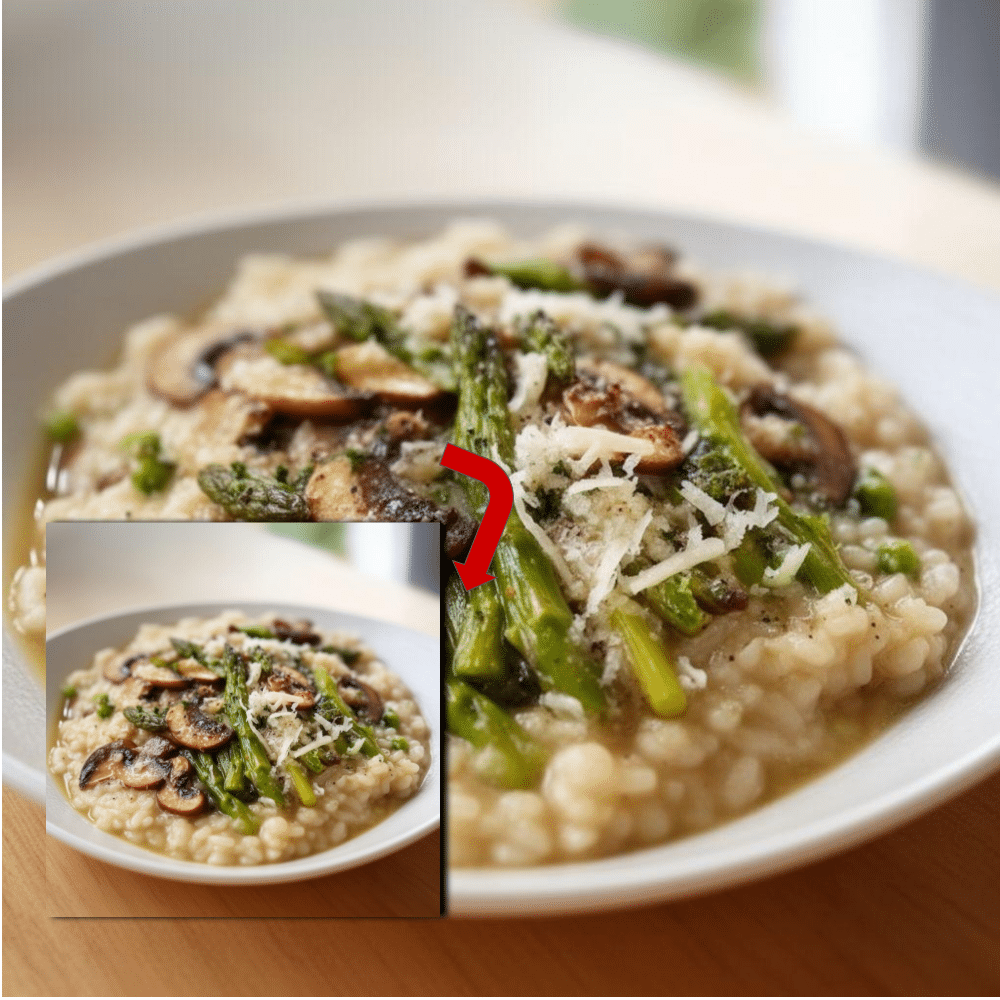
- Begin by gently sautéing your sliced mushrooms in a touch of olive oil until they are beautifully golden brown and have released their moisture. This concentrates their flavor. Remove them from the pan and set aside.
- Next, quickly sauté your cut asparagus pieces and peas (if using fresh) in the same pan for just 2-3 minutes, until they are bright green and slightly tender-crisp. You want them to retain a bit of their bite. Remove and set them aside with the mushrooms.
- Why this step is important: Adding these delicate vegetables at the end of the risotto cooking process ensures they don’t overcook, preserving their vibrant color, fresh texture, and distinct flavors.
The Art of Stirring and Adding Broth
This is where the magic of risotto truly happens, transforming simple rice and broth into a luxurious, creamy dish. This technique is central to creating an authentic creamy arborio rice recipe.
- Once your aromatics (like finely chopped onion or shallots) are softened in olive oil or butter, add your risotto rice. Toast the rice for about 1-2 minutes, stirring constantly, until the edges of the grains become translucent but the center remains opaque. This nutty aroma is a sign of flavor development.
- Pour in a splash of dry white wine (if using) and stir until it’s completely absorbed.
- Now, the cardinal rule of risotto: begin adding warm broth, one ladleful (about ½ to ¾ cup) at a time. Stir frequently, but not constantly, allowing the liquid to be almost fully absorbed by the rice before adding the next ladleful.
- This continuous, gentle friction as you stir releases the starches from the rice grains, which is precisely what creates that famous creamy consistency without the need for heavy cream.
- Continue this process for approximately 18-20 minutes, or until the rice is al dente – tender to the bite but still retaining a slight firmness in the center. Taste a grain periodically to check for doneness.
Expert Tips for Creamy, Restaurant-Quality Risotto
Achieving a truly exceptional Mushroom Asparagus Risotto is all about perfecting a few simple techniques. These expert tips will elevate your dish from good to absolutely glorious, making your easy vegetarian dinner taste like it came from a five-star kitchen.
- Always use heated broth: This is a non-negotiable step. Adding cold broth to hot rice will shock the grains, lower the cooking temperature, and disrupt the even cooking process, leading to a less creamy and consistent result. Keep your broth simmering gently in a separate pot throughout the cooking process.
- Toast the rice before adding liquid: After sautéing your aromatics, add the dry rice grains and cook, stirring constantly, for 1-2 minutes until the edges of the grains turn translucent. This step, known as tostatura, helps to seal the exterior of the rice, allowing it to absorb liquid more evenly and enhancing its nutty flavor profile.
- Do not wash the rice beforehand: Unlike other rice preparations, you absolutely want to preserve the surface starch on risotto rice. Washing it away would prevent the grains from releasing the necessary starches to create that signature creamy sauce.
- Remove the pot from the heat before finishing (the ‘mantecatura’ step): This is the final, crucial flourish that brings everything together. Once the rice is al dente, take the pot off the heat. Vigorously stir in a generous knob of cold butter and a hefty handful of freshly grated Parmesan cheese. The residual heat will melt them, creating an incredibly silky, emulsified sauce. This process is called mantecatura, and it’s the secret to an incredibly rich and velvety parmesan mushroom risotto.
Delicious Variations and Protein Additions
While our Mushroom Asparagus Risotto is a masterpiece on its own, it also serves as a fantastic canvas for culinary creativity. Here are some ideas to customize your dish and make it truly your own, solidifying its place among versatile vegetarian risotto ideas and beyond.
- Add Meat: For those who desire a heartier meal, this risotto pairs beautifully with additional proteins. Consider topping it with perfectly pan-seared scallops for an elegant touch, succulent grilled chicken breast, or juicy sautéed shrimp. Each option adds a wonderful layer of flavor and texture that complements the creamy risotto base.
- Vegan Adaptation: It’s incredibly easy to transform this recipe into a delicious vegan delight. Simply swap out the butter for a good quality vegan butter or olive oil. For the finishing touch, replace the Parmesan cheese with a generous sprinkle of nutritional yeast, which offers a cheesy, umami flavor, or use your favorite brand of vegan Parmesan. Ensure your vegetable broth is also dairy-free.
- Herb Upgrades: Fresh herbs are a simple way to brighten and enhance the flavors of your risotto. Finish the dish with a generous scattering of fresh parsley or basil for a burst of herbaceous freshness. A hint of lemon zest grated over the top just before serving can also add a delightful zing that cuts through the richness and lifts the overall flavor profile.
Frequently Asked Questions
Can I store and reheat leftover risotto?
Yes, you can absolutely store and reheat leftover risotto, although its texture will change slightly from its freshly made, creamy state. Store any leftovers in an airtight container in the refrigerator for up to 3 days. To reheat, gently warm the risotto on the stovetop over low heat, adding a splash of vegetable broth or water and stirring frequently. This helps to rehydrate the rice and restore some of its creamy consistency. Avoid microwaving if possible, as it can dry out the rice.
What is the best wine substitute for risotto?
If you prefer not to use white wine, or don’t have any on hand, you have excellent alternatives. The primary role of the wine in risotto is to add acidity and depth of flavor. You can substitute the wine with an equal amount of extra vegetable broth, combined with a splash (about 1-2 teaspoons per half cup of wine substitute) of white wine vinegar or fresh lemon juice. This will provide the necessary acidity to balance the richness of the dish without compromising flavor.
Is this recipe gluten-free?
Yes, this Mushroom Asparagus Risotto recipe is naturally gluten-free! All the core ingredients—rice, fresh vegetables, broth, and Parmesan cheese—are free from gluten. Always double-check your broth label to ensure it’s certified gluten-free, especially if you or your guests have severe gluten sensitivities or celiac disease. This makes it a perfect, inclusive option for those with dietary restrictions.
Embrace the joy of cooking with this irresistible Mushroom Asparagus Risotto. It’s a dish that embodies the elegance of Italian cuisine while being completely accessible to the home cook. With its rich, creamy texture and vibrant spring flavors, it’s bound to become a favorite. So gather your ingredients, take a deep breath, and get ready to create something truly special!
For more delicious recipes and culinary inspiration, be sure to follow our Facebook page: https://www.facebook.com/profile.php?id=61568538666337. We love sharing our passion for food with you!
Mushroom and Asparagus Risotto with Peas
Ingredients
- 1 cup Arborio rice Do not rinse before using.
- 4 cups Vegetable broth Kept warm on a separate burner.
- 8 oz Mushrooms Cremini or button, sliced.
- 1 bunch Asparagus Woody ends removed, cut into 1-inch pieces.
- 1/2 cup Green peas Fresh or thawed from frozen.
- 1/2 cup Parmesan cheese Freshly grated.
- 2 tbsp Butter Divided use.
- 1 tbsp Olive oil
- 1 small Onion Finely diced.
- 2 cloves Garlic Minced.
- 1/2 cup Dry white wine Such as Pinot Grigio or Sauvignon Blanc.
- 1/2 tsp Salt Adjust to taste.
- 1/4 tsp Black pepper Freshly cracked.
Instructions
- Warm the vegetable broth in a small saucepan over low heat. Keep it warm throughout the cooking process.
- In a large heavy-bottomed skillet or Dutch oven, heat the olive oil and 1 tablespoon of butter over medium-high heat.
- Add the sliced mushrooms and sauté for about 5 minutes until golden brown.
- Add the chopped asparagus and green peas to the skillet. Cook for 3 minutes until the asparagus is bright green and just tender. Transfer the cooked vegetables to a plate and set aside.
- Reduce the heat to medium. Melt the remaining 1 tablespoon of butter in the skillet. Add the diced onion and sauté for 3 minutes until translucent. Stir in the minced garlic and cook for 1 minute until fragrant.
- Add the Arborio rice to the skillet. Stir constantly for 2 minutes to toast the rice grains lightly.
- Pour in the white wine. Stir continuously until the liquid is completely absorbed by the rice.
- Ladle about 1/2 cup of the warm vegetable broth into the rice. Stir frequently and gently until the broth is almost entirely absorbed.
- Continue adding broth one ladle at a time, allowing each addition to be absorbed before adding the next. Repeat this process for 20 to 25 minutes, until the rice is creamy and al dente.
- Remove the skillet from the heat. Stir in the freshly grated Parmesan cheese, salt, and black pepper.
- Gently fold the cooked mushrooms, asparagus, and peas back into the risotto. Serve immediately.
For more daily recipes and tips, follow us on Facebook!
Click here to join our community!