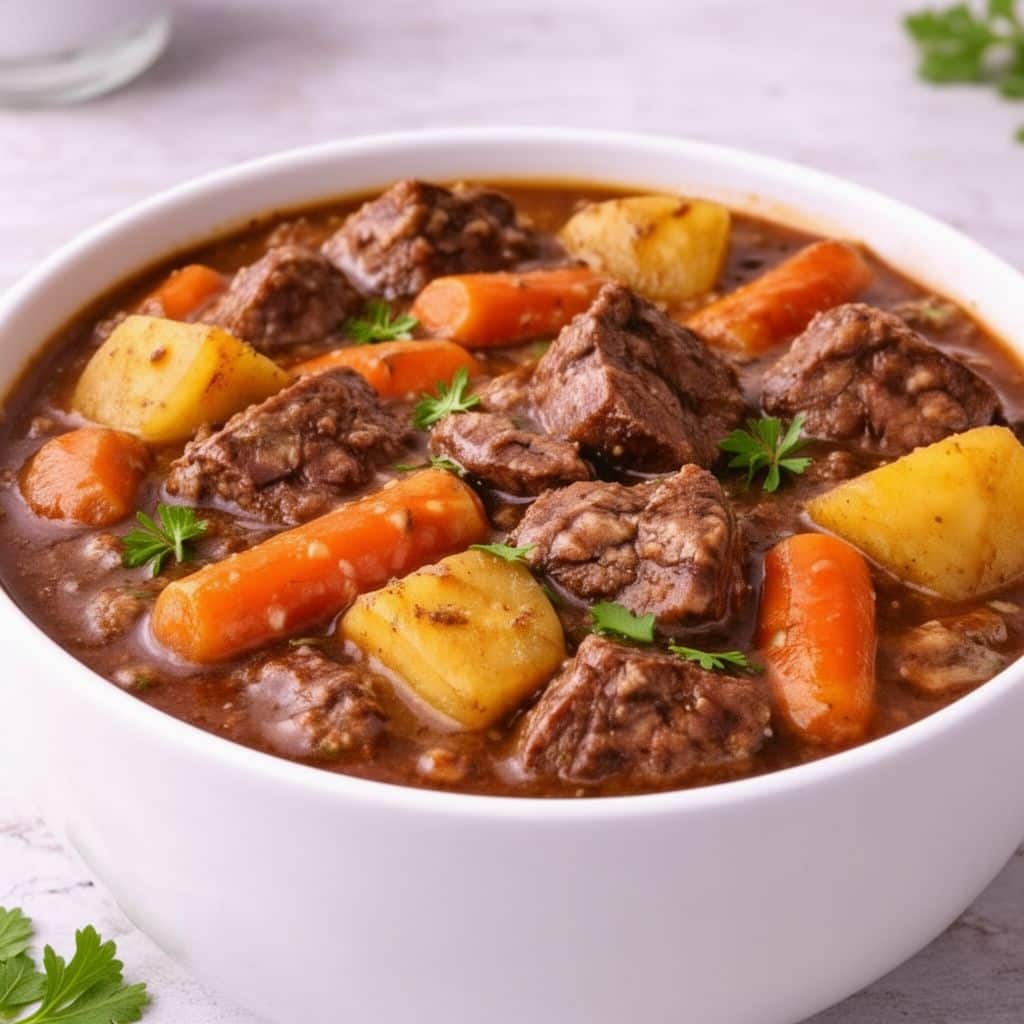
There are some dishes that just wrap you in a warm hug, and a classic Beef Stew Recipe is undeniably at the top of that list. Imagine a chilly evening, the aroma of savory beef and vegetables wafting through your home, promising a meal that’s both deeply satisfying and incredibly easy to clean up after. That’s the magic of this culinary masterpiece!
This isn’t just a meal; it’s an experience. Perfect for comforting winter meals or any time you crave something truly nourishing, a hearty beef stew transforms simple ingredients into an extraordinary feast. It’s a quintessential example of one-pot family dinners, minimizing fuss while maximizing flavor. The slow simmering process tenderizes the beef to perfection, creating a rich, flavorful gravy that coats every morsel of vegetable. It’s the kind of dish that brings everyone to the table, eager for a bowl of pure deliciousness.
Essential Ingredients for Hearty Beef Stew
Crafting the perfect beef stew begins with selecting the right components. Quality ingredients are the foundation for that deep, complex flavor we all crave.
Choosing the Best Cut of Beef
For a truly melt-in-your-mouth experience, the best cut of meat for stew is crucial. We’re looking for beef that benefits from long, slow cooking, breaking down connective tissues to become incredibly tender. Forget lean, quick-cooking cuts here!
- Chuck Roast: This is my absolute favorite. Cut into 1-2 inch cubes, chuck roast boasts excellent marbling, which translates to incredible flavor and tenderness when braised. It’s the superstar of many beef stew meat recipes.
- Short Ribs: While often cooked on the bone, boneless short ribs, cut into chunks, also offer a rich, gelatinous texture that enriches the stew beautifully.
- Round or Rump Roast: These can work but tend to be leaner. If using, ensure a very long, slow simmer to prevent dryness.
Expert Tip: Don’t opt for pre-cut “stew meat” unless you know its origin. Often, it can be a mix of various cuts, some of which might not be ideal for stewing. Buying a chuck roast and cubing it yourself ensures consistency and quality.
Potatoes, Carrots, and Aromatics
Beyond the beef, a symphony of vegetables and aromatics contributes to the stew’s hearty profile. These are the classic components that make up truly hearty beef stew ingredients:
- Potatoes: Russet or Yukon Gold potatoes are excellent choices. They hold their shape well and absorb the stew’s flavors beautifully. Cut them into 1-inch chunks.
- Carrots: Sweet and earthy, carrots add both color and flavor. Chop them into rounds or half-moons.
- Onions & Garlic: The foundational aromatics. Sautéing these until fragrant creates the base layer of flavor for your rich gravy.
- Celery: Often overlooked, celery adds a subtle savory note and depth.
- Tomato Paste: A small amount adds umami and color, helping to thicken and enrich the broth.
- Broth or Stock: Beef broth is preferred for maximum flavor. A good quality broth makes all the difference.
- Red Wine (Optional but Recommended): A splash of dry red wine (like Cabernet Sauvignon or Merlot) adds incredible depth and complexity. Don’t worry, the alcohol cooks off!
- Herbs: Fresh rosemary and thyme are non-negotiable for that authentic homestyle flavor. Bay leaves also contribute significantly.
Step-by-Step Preparation Guide
Creating a truly magnificent Beef Stew Recipe involves a few key steps that build flavor layer by layer.
Searing the Beef for Maximum Flavor
This is arguably the most critical step for a deeply flavorful stew. Don’t skip it!
- Pat Dry and Season: Pat your beef cubes very dry with paper towels. This helps achieve a better sear. Season generously with salt and freshly ground black pepper.
- Heat the Pan: In a heavy-bottomed pot or a dutch oven beef stew pot, heat a tablespoon or two of high-smoke-point oil (like canola or grapeseed) over medium-high heat until shimmering.
- Sear in Batches: Add the beef in a single layer, ensuring not to overcrowd the pan. Work in batches to allow proper browning. Sear for 2-3 minutes per side until a beautiful, deep brown crust forms. This caramelization creates incredible depth of flavor.
- Remove Beef: Once seared, remove the beef and set aside. Don’t clean the pot; those browned bits (fond) are flavor gold!
Simmering for Tender Meat and Rich Gravy
Now, we bring everything together for the magical transformation.
- Sauté Aromatics: In the same pot, add a little more oil if needed, then add chopped onions, carrots, and celery. Sauté until softened, scraping up those browned bits from the bottom of the pot. Stir in minced garlic and tomato paste, cooking for another minute until fragrant.
- Deglaze (if using wine): Pour in red wine (if using), scraping the bottom of the pot vigorously to release all the flavorful fond. Let it simmer for a few minutes until reduced by half.
- Add Liquids and Beef: Stir in beef broth, ensuring there’s enough liquid to mostly cover the beef. Return the seared beef to the pot. Add fresh herbs (rosemary, thyme) and bay leaves.
- Slow Simmer: Bring the mixture to a gentle simmer, then reduce the heat to low, cover, and cook for 2 to 2.5 hours, or until the beef is fork-tender. Check periodically to ensure it’s not sticking and add a little more broth or water if needed.
- Add Vegetables: After the beef has become tender, add the cubed potatoes and any remaining carrots. Continue to simmer, covered, for another 30-45 minutes, or until the vegetables are tender.
- Adjust Seasoning: Taste and adjust salt and pepper as needed. Remove bay leaves and herb sprigs before serving.
Variations and Cooking Tips
While the classic Beef Stew Recipe is wonderful as is, there are always ways to adapt it to your preferences or cooking equipment.
Slow Cooker and Instant Pot Adaptations
For those busy days, a slow cooker beef stew or an Instant Pot version can be a lifesaver.
- Slow Cooker: After searing the beef and sautéing the aromatics (highly recommended for flavor, even in a slow cooker), transfer everything to your slow cooker. Add liquids and herbs. Cook on low for 6-8 hours or on high for 3-4 hours. Add potatoes and carrots for the last 1.5-2 hours of cooking on low, or 1 hour on high.
- Instant Pot: Use the Sauté function to sear beef and sauté aromatics. Add liquids and beef. Cook on High Pressure for 35-45 minutes for chuck roast, followed by a natural pressure release for 10-15 minutes, then quick release any remaining pressure. Add potatoes and carrots, then cook on High Pressure for another 5-7 minutes with a quick release.
How to Thicken Beef Stew
Sometimes, despite all efforts, your stew might be a little thinner than desired. Here’s how to thicken beef stew effectively:
- Flour Slurry: Whisk together 2 tablespoons of all-purpose flour with ¼ cup of cold water until smooth. Slowly whisk this into your simmering stew. Cook for another 5-10 minutes, stirring occasionally, until the stew thickens to your liking.
- Cornstarch Slurry: For a gluten-free option, mix 1 tablespoon of cornstarch with 2 tablespoons of cold water to form a slurry. Whisk it into the simmering stew and cook until thickened.
- Reduce: For a natural thickening, simply remove the lid during the last 30 minutes of cooking and allow the stew to simmer uncovered. This will evaporate excess liquid, concentrating the flavors and thickening the sauce.
- Mashed Potatoes: If you have extra cooked potatoes, mashing a small portion and stirring it into the stew can provide a lovely, creamy thickness without altering the flavor.
Storing, Freezing, and Reheating
This Beef Stew Recipe is fantastic for meal prep! It often tastes even better the next day as the flavors meld.
- Storing: Allow the stew to cool completely. Transfer to airtight containers and refrigerate for up to 3-4 days.
- Freezing: Beef stew freezes exceptionally well. Divide cooled stew into freezer-safe containers or heavy-duty freezer bags, leaving some headspace. Freeze for up to 3 months. Thaw overnight in the refrigerator before reheating.
- Reheating: Gently reheat on the stovetop over medium-low heat, stirring occasionally, until heated through. You might need to add a splash of beef broth or water to adjust consistency, as it can thicken in the fridge.
Frequently Asked Questions (FAQ)
Here are some common questions to help you master your Beef Stew Recipe:
What is the secret to tender beef stew?
The secret to achieving truly tender beef in your stew lies in two key factors: choosing the right cut of meat and slow, prolonged cooking. Cuts like chuck roast, which are rich in connective tissue, break down beautifully over a low heat, transforming into succulent, fall-apart tender pieces. Searing the beef first also locks in moisture and flavor, contributing to a better overall texture.
Can I make beef stew ahead of time?
Absolutely! Beef stew is one of those magical dishes that often tastes even better the next day. Preparing it ahead of time allows the flavors to deepen and meld together. Simply follow the recipe, allow it to cool completely, then refrigerate in an airtight container. Reheat gently on the stovetop or in the microwave when you’re ready to serve.
What spices are best for beef stew?
For a classic homestyle beef stew, the best spices and herbs are fresh rosemary, fresh thyme, and bay leaves. These provide a robust, earthy, and aromatic foundation. Beyond these, simple salt and freshly ground black pepper are essential. Some recipes also benefit from a pinch of paprika for color and a subtle smoky note, or a dash of Worcestershire sauce for added umami depth.
Why is my beef stew meat tough?
If your beef stew meat is tough, it’s almost always due to insufficient cooking time or cooking at too high a temperature. Tough cuts like chuck need time for their collagen to break down into gelatin. If you rush the process or cook too aggressively, the meat will seize up. Ensure a very low, slow simmer and cook until the beef easily yields to a fork, adding more liquid if necessary to keep it submerged.
What goes well with beef stew?
Beef stew is a complete meal on its own, but it pairs wonderfully with a few simple sides. Crusty bread or warm dinner rolls are perfect for soaking up every last drop of that delicious gravy. A simple green salad with a light vinaigrette offers a fresh contrast, while mashed potatoes (if not already in the stew) or a side of steamed green beans can also be lovely additions.
There you have it – the ultimate guide to creating a heartwarming, unforgettable Beef Stew Recipe that will become a staple in your home. This comforting classic is more than just food; it’s a moment shared, a memory made, and a hug in a bowl.
Join our community of food lovers for daily inspiration and delicious recipes! Follow us on Facebook: https://www.facebook.com/profile.php?id=61568538666337

Classic Homestyle Beef Stew
Ingredients
- 2 lbs Beef chuck roast cut into 1-inch cubes
- 1.5 lbs Yukon gold potatoes cubed
- 3 Large carrots peeled and sliced thick
- 1 Large yellow onion diced
- 4 cups Beef broth low sodium
- 2 tbsp Tomato paste
- 1/4 cup All-purpose flour
- 2 tbsp Olive oil
- 2 tbsp Fresh parsley chopped
Instructions
- Toss the beef cubes with flour, salt, and black pepper until evenly coated.
- Heat olive oil in a large Dutch oven over medium-high heat. Add the beef and brown on all sides, then remove and set aside.
- In the same pot, add onions and carrots. Sauté until softened, about 5 minutes.
- Stir in the tomato paste and beef broth, scraping the bottom of the pot to release any browned bits.
- Return the beef to the pot, bring to a boil, then reduce heat to low. Cover and simmer for 1 hour.
- Add the cubed potatoes to the pot. Cover and simmer for an additional 45 to 60 minutes until both the beef and vegetables are fork-tender.
- Garnish with fresh chopped parsley before serving hot.
For more daily recipes and tips, follow us on Facebook!
Click here to join our community!