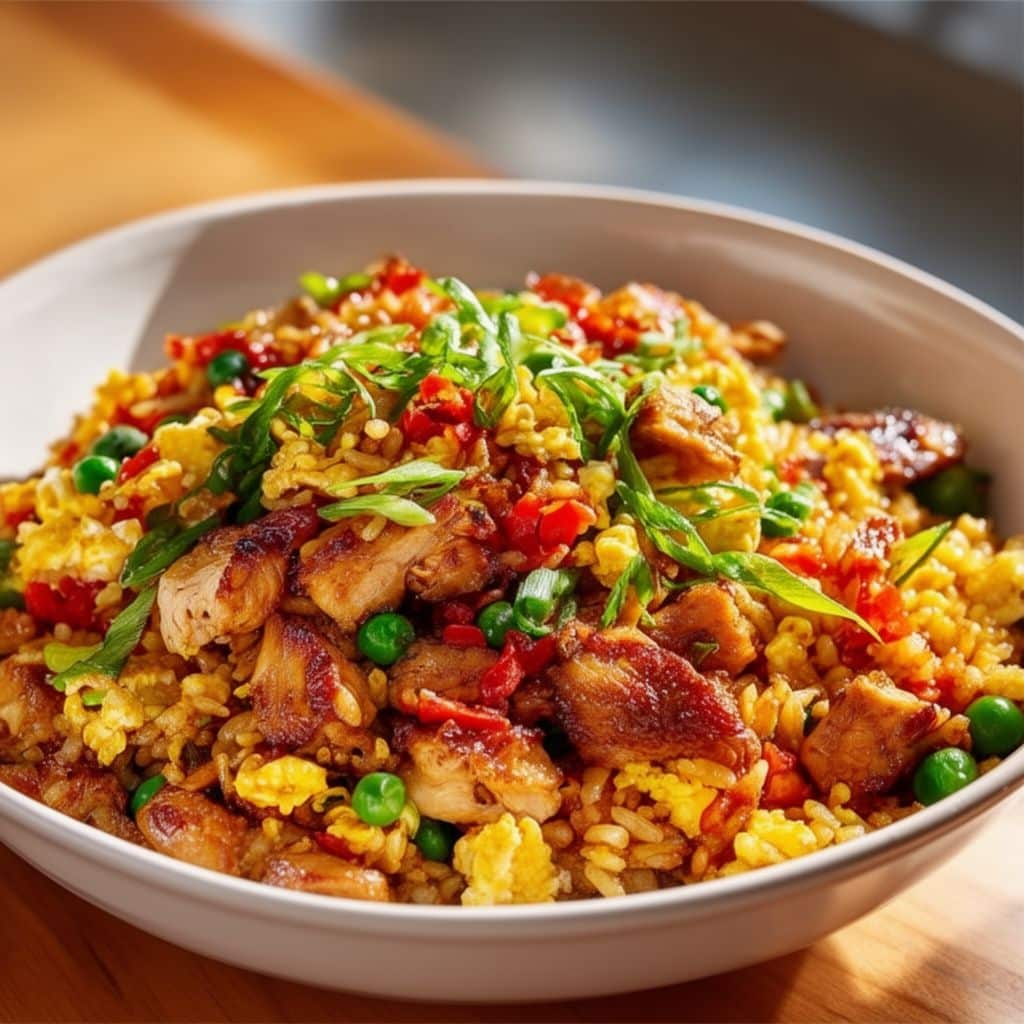
Chicken Fried Rice: The Ultimate Homemade Takeout Experience
There’s a reason chicken fried rice is a universal comfort food. That irresistible combination of tender chicken, vibrant vegetables, fluffy rice, and savory sauces is a symphony for the taste buds. It’s the ultimate quick weeknight dinner, often calling our names after a long day. But what if I told you that creating an authentic, flavor-packed, takeout style fried rice experience at home isn’t just possible, but often faster, healthier, and undeniably more delicious than waiting for delivery?
Forget soggy, bland imitations. Today, we’re diving deep into the art and science of crafting the perfect homemade fried rice. We’ll uncover the secrets to achieving that coveted wok-hei (the “breath of the wok”), learn crucial wok stir-fry techniques, and master the balance of flavors that will make this dish a regular in your rotation. Prepare to transform humble ingredients into a spectacular meal that will have everyone asking for seconds. This isn’t just an easy chicken fried rice recipe; it’s your new culinary superpower!
The Secret to Flavorful Chicken Fried Rice
The magic of truly great fried rice lies in a combination of precise technique and smart seasoning. It’s not just about throwing ingredients into a pan; it’s about understanding how each component interacts with high heat to build layers of flavor and texture. Think of that slightly crispy, smoky edge you get from a good hibachi style fried rice – that’s what we’re aiming for.
The key here is high-heat stir-frying. This intense heat is what quickly sears ingredients, preventing them from steaming and becoming mushy. It’s also responsible for creating those delightful browned bits and that signature “wok-hei” that elevates the dish from good to unforgettable. We’re balancing savory depth from soy sauce and umami notes from optional oyster sauce with a delicate touch of sweetness and salt, ensuring every bite is perfectly seasoned and deeply satisfying.
“Great fried rice isn’t just cooked; it’s choreographed. Every ingredient has its moment on the stage of intense heat.”
Essential Ingredients Breakdown
While the technique is crucial, the quality and preparation of your ingredients lay the foundation for an exceptional homemade fried rice. Let’s break down each component:
The Best Rice for Stir-Frying
This is perhaps the most critical component, and often where many home cooks go wrong. For truly spectacular results, you MUST use chilled, day-old cooked rice. Freshly cooked rice is too moist and will inevitably turn your fried rice into a sticky, clumpy mess. Day-old rice dries out slightly in the refrigerator, allowing the grains to separate beautifully when stir-fried, giving you that perfect individual grain texture.
As for varieties, long-grain Jasmine rice is a superb choice for its fragrant aroma and distinct grains. Medium-grain white rice also works well, offering a slightly chewier texture. Avoid short-grain or sticky rice varieties, as they are naturally too moist for fried rice.
The Perfect Protein
Our star protein, chicken, needs a little attention to ensure it cooks quickly and evenly. Dice your chicken breast or thighs into uniform, bite-sized pieces, roughly 1/2 to 3/4 inch cubes. Uniformity ensures every piece cooks at the same rate, preventing some from drying out while others are still raw.
For an extra touch of tenderness reminiscent of restaurant-style chicken, consider a quick velveting technique. Toss the diced chicken with a teaspoon of cornstarch, a splash of soy sauce, and a tiny bit of oil for about 15-20 minutes. This creates a protective coating that keeps the chicken incredibly moist as it cooks.
Fresh and Crisp Veggies
Colorful vegetables not only add essential nutrients but also bring delightful crunch, freshness, and visual appeal to your fried rice. The classics are non-negotiable for an authentic takeout style fried rice experience: vibrant green peas and finely diced red bell pepper. These cook quickly and add natural sweetness and texture.
Green onions, added in two stages, are also essential. The white parts go in with the aromatics, while the green tops are stirred in at the very end for a fresh, pungent finish.
The Binders and Flavor Enhancers
These are the elements that tie everything together, adding richness, depth, and that irresistible umami punch.
- Scrambled Eggs: Softly scrambled eggs are a hallmark of fried rice, adding wonderful texture and richness. They absorb flavors beautifully and create delightful pockets throughout the dish.
- Soy Sauce: The foundation of all savory Asian cooking. Use a good quality light soy sauce for flavor and color, and a touch of dark soy sauce for a deeper hue if desired.
- Toasted Sesame Oil: A finishing oil, added right at the end. Its intense, nutty aroma is potent, so use sparingly – a little goes a long way to add depth.
- Oyster Sauce (Optional but Recommended): For that extra layer of umami and a subtle sweetness, oyster sauce is a secret weapon. It’s what gives many restaurant fried rice dishes their distinctive savory depth.
- White Pepper & Salt: Don’t underestimate these. White pepper adds a unique, subtle spice, and salt is vital for seasoning the rice itself, not just relying on soy sauce.
Step-by-Step: How to Make Chicken Fried Rice
Precision and speed are key when making fried rice. Have everything ready before you even turn on the stove.
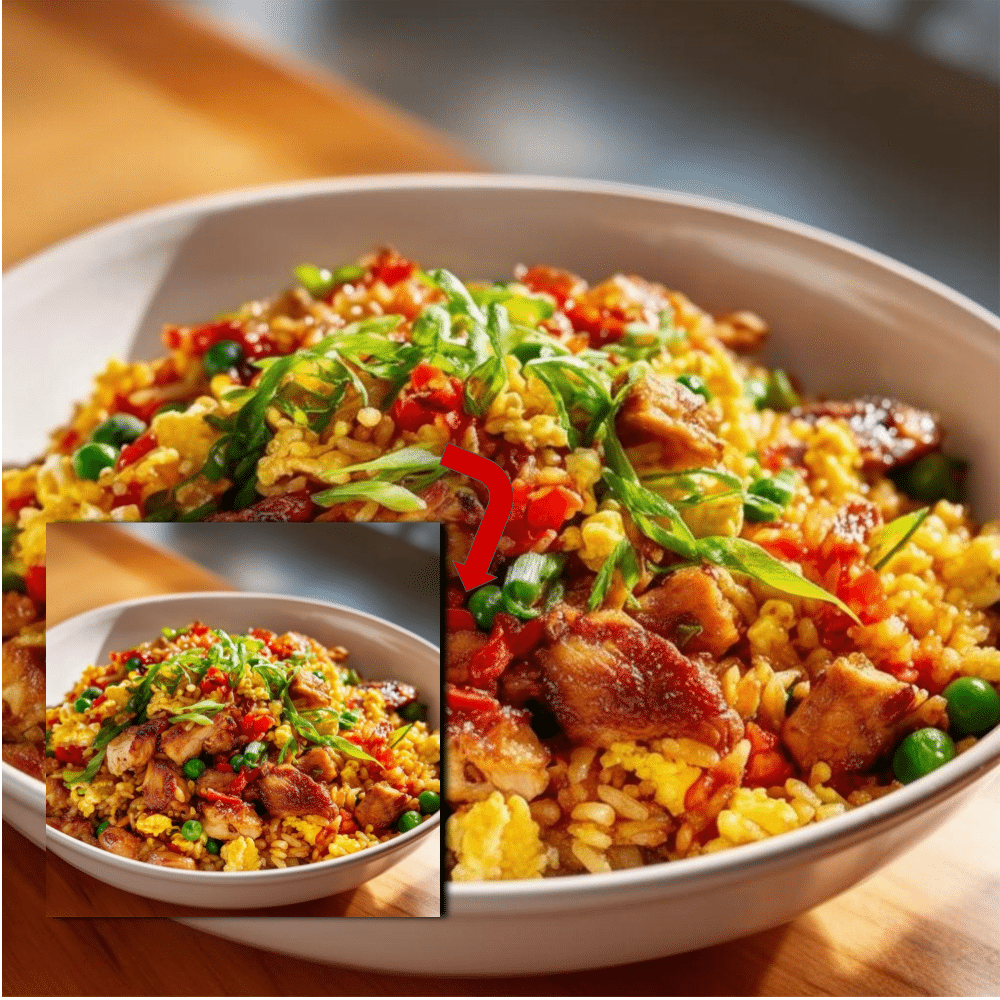
1. Prep is Key (Mise en Place)
This cannot be stressed enough. Fried rice cooking is fast, so there’s no time to chop while ingredients are in the wok. Have all your vegetables diced, sauces measured, chicken cut, and day-old rice fluffed and ready to go. Seriously, this step makes or breaks the experience.
- Dice chicken into 1/2 to 3/4-inch pieces.
- Finely dice red bell pepper.
- Chop green onions, separating white and green parts.
- Have green peas ready.
- Whisk eggs with a pinch of salt and pepper.
- Mix all sauces (soy sauce, oyster sauce if using, a dash of sugar) in a small bowl.
- Ensure your day-old rice is fluffed and free of clumps.
2. Cooking the Protein
Heat your wok or a large, heavy-bottomed skillet over high heat until it’s smoking slightly. Add a tablespoon of high-smoke-point oil (like canola, vegetable, or grapeseed). Add the diced chicken in a single layer, ensuring not to overcrowd the pan. Sear the chicken for 2-3 minutes until golden brown and cooked through, tossing occasionally. Remove the chicken from the wok and set aside on a plate.
3. Sautéing the Aromatics and Veggies
Add a little more oil to the hot wok if needed. Toss in the white parts of the green onions, diced red bell pepper, and green peas. Stir-fry for 1-2 minutes until the vegetables are slightly softened but still have a crisp bite. Keep the heat high to prevent them from steaming.
4. The Egg Scramble
Push the vegetables to one side of the wok, creating an empty space. Add a tiny bit more oil to the empty spot. Pour in the whisked eggs and let them cook undisturbed for about 15-20 seconds until the edges just begin to set. Then, gently scramble the eggs, breaking them into small pieces. Once cooked through, mix them into the vegetables.
5. Bringing It All Together
Now for the star: the day-old rice. Add the fluffed rice to the wok with the vegetables and eggs. Break up any clumps with your spatula. Pour the premixed sauce over the rice. Add the cooked chicken back into the wok. Over high heat, vigorously toss and stir-fry everything together for 3-5 minutes. The goal is to ensure every grain of rice is coated in sauce and heats through, slightly crisping up against the hot wok. Add the green parts of the green onions and a drizzle of toasted sesame oil, then toss once more.
Pro Tips for Wok Cooking
Mastering the wok takes practice, but these tips will help you achieve that authentic flavor and texture:
- Manage Heat & Don’t Overcrowd: This is critical for preventing steamed ingredients. If your wok starts to cool down, remove some ingredients, reheat the wok, then add them back. Cook in batches if necessary, especially if you’re making a larger quantity. A crowded wok means lower temperature and less effective stir-frying.
- The Oil Pass-Through Technique: Many restaurants use this. Instead of adding oil to the bottom, they add it to the sides of the hot wok, letting it “pass through” the hot surface before reaching the food. This evenly coats the wok and helps prevent sticking.
- Seasoning Beyond Soy Sauce: While soy sauce is essential, don’t rely on it as your sole seasoning. Add a pinch of salt directly to the rice as you’re stir-frying, along with a dash of white pepper. This ensures a balanced flavor profile without making the dish overly salty from too much soy sauce.
- Keep Moving: Stir-frying is an active cooking method. Keep your ingredients moving constantly to ensure even cooking and prevent burning.
Variations and Customizations
Once you’ve mastered this easy chicken fried rice recipe, the possibilities for customization are endless. Feel free to unleash your inner hibachi chef!
- Swapping Proteins: This recipe is incredibly versatile. Replace chicken with shrimp (add towards the end, as it cooks quickly), thinly sliced beef, or firm tofu cubes.
- Adding Extra Vegetables: Carrots (diced small), corn kernels, broccoli florets (blanched first), or even a handful of spinach can be excellent additions. Just ensure they are chopped to a uniform size and cook quickly.
- Spice It Up: For those who love a kick, a dash of chili crisp, sriracha, or a pinch of red pepper flakes can be added during the final stir-fry.
What to Serve with Chicken Fried Rice
While this dish is a complete meal in itself, a few simple additions can elevate the experience. Fresh, crisp cucumber slices offer a perfect cooling counterpoint to the savory richness of the fried rice. For a more elaborate spread, consider pairing it with a light egg drop soup or some crispy spring rolls for that full takeout-style feast at home.
Storage, Freezing, and Reheating
One of the best things about homemade fried rice is how well it keeps. Leftover fried rice will last safely in an airtight container in the refrigerator for up to 3-4 days. It also freezes beautifully: portion out cooled fried rice into freezer-safe bags or containers and freeze for up to 2-3 months.
To reheat, sprinkle a tablespoon of water over a portion of fried rice in a microwave-safe bowl, cover, and microwave until heated through. Alternatively, reheat in a hot pan or wok with a tiny bit of oil, stirring frequently, until warmed and slightly crisped again. This splash of water helps prevent the rice from drying out and keeps it wonderfully fluffy.
Conclusion
You now possess the knowledge and techniques to create truly spectacular chicken fried rice right in your own kitchen. From understanding the importance of day-old rice to mastering high-heat wok stir-fry techniques, you’re well on your way to becoming a fried rice connoisseur. This isn’t just a recipe; it’s a foundation for countless delicious meals, proving that the best takeout experience can often be found at home.
We encourage you to experiment, make it your own, and savor the incredible flavors you’ve created. We’d love to see your wok creations! Share your culinary triumphs with us using #chickenfriedrice on social media. For more incredible recipes, cooking tips, and behind-the-scenes fun, be sure to follow us on Facebook: https://www.facebook.com/profile.php?id=61568538666337
Easy Chicken Fried Rice
Ingredients
- 3 cups Cooked white rice Must be chilled and day-old
- 1 lb Boneless, skinless chicken breasts Diced into bite-sized pieces
- 2 Large eggs Lightly beaten
- 1/2 cup Green peas Frozen or fresh
- 1/2 cup Red bell pepper Diced
- 3 Green onions Chopped
- 3 tbsp Soy sauce Low-sodium preferred
- 1 tsp Toasted sesame oil
- 2 tbsp Vegetable oil Divided use
- 1/2 tsp Salt To taste
- 1/4 tsp Black pepper To taste
Instructions
- Heat 1 tablespoon of vegetable oil in a large wok or skillet over medium-high heat.
- Add the diced chicken to the wok, season with salt and black pepper, and stir-fry for 4-5 minutes until golden brown and cooked through. Remove the chicken to a plate and set aside.
- In the same wok, add the remaining 1 tablespoon of oil. Add the diced red bell pepper and green peas. Sauté for 2-3 minutes until tender.
- Push the vegetables to one side of the wok. Pour the beaten eggs onto the empty side and cook, stirring gently, until fully scrambled.
- Add the chilled day-old rice and the cooked chicken back into the wok. Pour the soy sauce and toasted sesame oil over the top.
- Stir-fry everything together for 3-5 minutes, breaking up any clumps of rice, until the rice is heated through and evenly coated in the sauce.
- Stir in the chopped green onions and remove from heat.
- Serve immediately, accompanied by fresh cucumber slices.
For more daily recipes and tips, follow us on Facebook!
Click here to join our community!