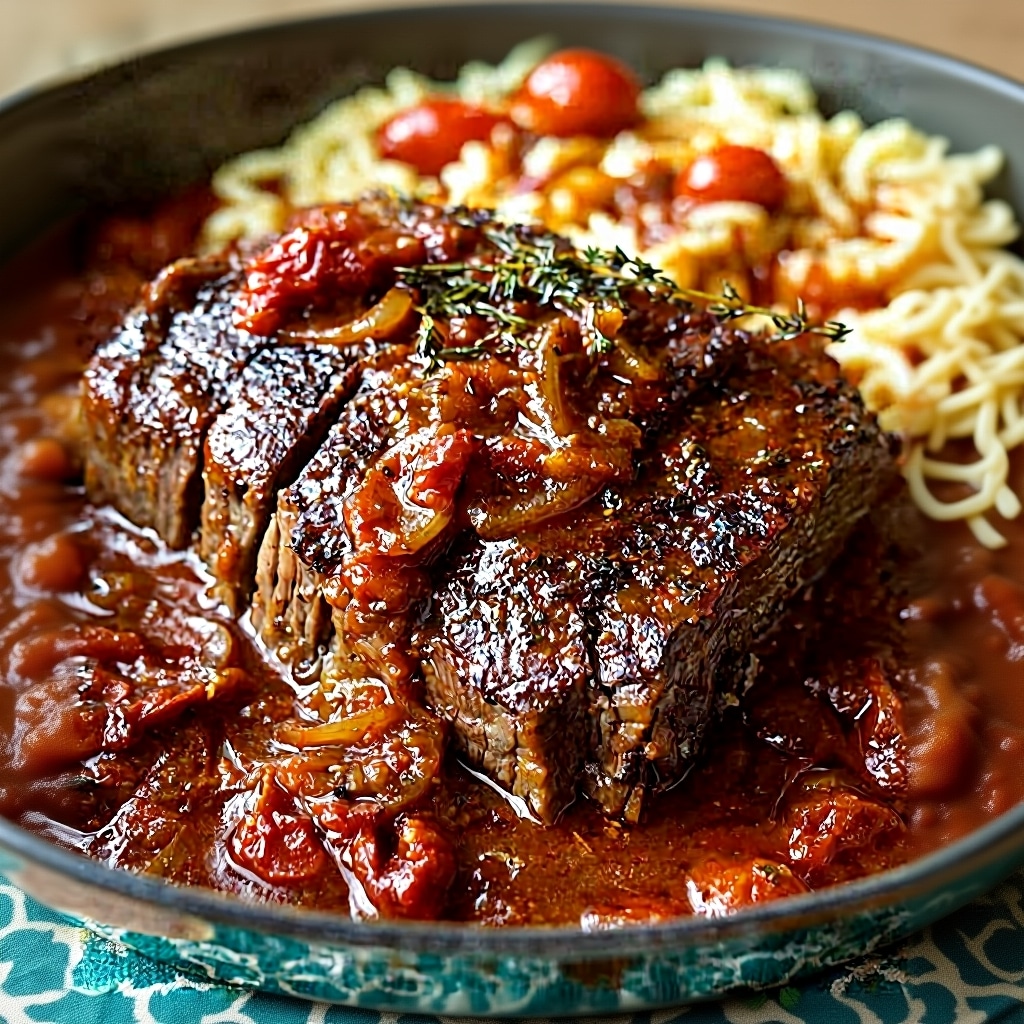
There’s a special kind of magic that happens when humble ingredients are transformed by time and warmth into something extraordinary. Few dishes capture this culinary alchemy better than a perfectly Braised Beef Roast. Imagine a rich, savory aroma wafting through your home, promising a meal that’s both comforting and deeply satisfying. This isn’t just dinner; it’s an experience, a celebration of slow cooking that brings people together.
The timeless combination of succulent beef, sweet onions, and bright tomatoes forms a foundation for a gravy that’s pure gold. It’s a classic pairing that speaks to the soul, creating layers of flavor that only deepen with a gentle, extended simmer. In this article, we’ll dive into the art of braising, a technique that turns tougher cuts of meat into spoon-tender masterpieces, resulting in a dish that will become a cherished staple in your kitchen repertoire.
Why This Braised Beef Roast Recipe Works
This particular Braised Beef Roast recipe isn’t just about following steps; it’s about understanding the synergy of ingredients and techniques that elevate a simple cut of beef into an unforgettable meal. Here’s why this method consistently delivers exceptional results:
Flavor Depth: The Rich Gravy Unveiled
The journey to profound flavor begins long before the beef even hits the braising liquid. Searing the beef until a deep, crusty brown develops creates what chefs call ‘fond’ – caramelized bits stuck to the bottom of the pan. This fond, rich in complex flavors, is then deglazed, becoming the very heart of your incredible sauce. As the beef slowly braises, it releases its own savory juices, mingling with the tomatoes, onions, and herbs. The result is a gravy so rich and multifaceted, it’s virtually a meal in itself. This process is key to achieving that signature beef with tomato onion gravy that coats every strand of meat beautifully.
Texture: From Tough to Melt-in-Your-Mouth Tenderness
Braising is a culinary superpower, particularly when it comes to cuts like chuck roast. These cuts are often more affordable but possess connective tissues that, with proper low and slow cooking, break down into gelatin. This transformation is what turns a firm piece of beef into utterly melt-in-your-mouth tenderness. The long, moist heat essentially confits the beef, making it so tender it can be effortlessly shredded with a fork. This is the secret to a truly tender pot roast recipe.
Versatility: A Dish for Any Occasion
One of the unsung heroes of this Braised Beef Roast is its incredible versatility. While it makes for an impressive sunday beef dinner, its adaptability means it can grace your table in numerous ways. Ladle it generously over creamy mashed potatoes for classic comfort, serve it alongside polenta for a rustic Italian touch, or, for a truly decadent experience, toss the glorious shredded beef with tomatoes with wide, hearty pasta like pappardelle or rigatoni for an authentic slow cooked beef ragu. The rich sauce also makes for a fantastic hearty beef pasta sauce.
Essential Ingredients for the Perfect Roast
Great dishes begin with great ingredients. For a Braised Beef Roast that truly sings, focus on quality and selecting the right components.
The Meat: Chuck Roast is King
Why chuck roast is the gold standard for braising: For braising, you want a cut that benefits from long, slow cooking. Chuck roast, taken from the shoulder of the beef, is packed with connective tissue and a good amount of fat, both of which render beautifully during a long braise. This is precisely what transforms it into that sought-after tender, succulent texture. It’s forgiving, flavorful, and relatively inexpensive, making it the ideal choice for this kind of preparation. It’s the undisputed champion for creating an incredible dutch oven chuck roast.
Selecting the right marbling: Look for a chuck roast with good marbling – those tiny flecks of fat interspersed throughout the lean meat. This marbling contributes significantly to the flavor and juiciness of the final dish. A well-marbled piece will yield a more flavorful and tender result.
The Aromatics: Building the Flavor Foundation
The importance of onions and garlic: These two are the unsung heroes of almost any savory dish, and especially this one. Onions, when slowly caramelized, develop a deep sweetness that complements the savory beef and tart tomatoes. Garlic adds a pungent warmth that is essential for building a robust flavor base.
Using fresh thyme for herbal brightness: While dried herbs can work, fresh thyme sprigs infuse the braising liquid with an earthy, slightly citrusy note that cuts through the richness of the beef and tomatoes. Its delicate flavor adds a layer of sophistication without overpowering the dish.
Quality of canned tomatoes: Since tomatoes are such a central component of the sauce, their quality matters. Opt for good quality crushed tomatoes or whole peeled San Marzano tomatoes, which are renowned for their sweet, balanced flavor and lower acidity. These will ensure your beef with tomato onion gravy has the best possible foundation.
Step-by-Step Cooking Instructions
Mastering beef braising techniques is simpler than you might think. Follow these steps for a truly phenomenal Braised Beef Roast.
1. Searing the Beef
This first step is non-negotiable for maximum flavor.
Locking in flavor with a hard sear: Pat your chuck roast very dry with paper towels. Heat a generous amount of high-smoke-point oil (like grapeseed or avocado oil) in a heavy-bottomed pot or Dutch oven over medium-high heat until shimmering. Sear the beef on all sides until a deep, dark brown crust forms. This crust is packed with flavor (the Maillard reaction) and will contribute immensely to the overall depth of your sauce. Do not overcrowd the pot; sear in batches if necessary.
Deglazing the pan to capture the fond: Once the beef is seared and removed from the pot, you’ll notice those flavorful brown bits (fond) stuck to the bottom. Add a splash of broth or red wine to the hot pot and scrape vigorously with a wooden spoon to loosen all the fond. This liquid, now infused with caramelized flavors, becomes an incredible base for your sauce.
2. Building the Tomato-Onion Sauce
Layering flavors is key to a complex sauce.
Layering flavors with aromatics: In the same pot, add your sliced onions and sauté them slowly until they are softened and caramelized, about 8-10 minutes. This slow cooking allows their natural sugars to develop. Add minced garlic and fresh thyme, cooking for just another minute until fragrant. Avoid burning the garlic.

Balancing acidity and savoriness: Stir in the quality canned tomatoes, beef broth, and any reserved deglazing liquid. Add a bay leaf. Season generously with salt and freshly ground black pepper. Taste and adjust. If the sauce seems too acidic, a pinch of sugar can help balance it. Return the seared beef to the pot, ensuring it is mostly submerged in the liquid.
3. The Low and Slow Braise
Patience is a virtue here, leading to ultimate tenderness.
Oven temperature and timing strategies: Preheat your oven to a consistent 300°F (150°C). Cover your Dutch oven tightly with its lid. Place it in the preheated oven and let it braise for a minimum of 3 to 4 hours, or even longer for a larger cut. The low temperature ensures a gentle simmer, preventing the meat from drying out and allowing the connective tissues ample time to break down.
How to tell when the meat is truly done: The beef is done when it is fork-tender. You should be able to effortlessly pull it apart with a fork, and it should offer little to no resistance. If it’s still tough, it simply needs more time. Don’t rush it! This stage is crucial for achieving that characteristic shredded beef with tomatoes texture.
Expert Tips for Success
Even the most straightforward recipes benefit from a few insider tricks. These tips will ensure your Braised Beef Roast is nothing short of spectacular.
Room Temperature Meat: Tempering Before Searing: Always take your chuck roast out of the refrigerator at least an hour before you plan to sear it. Allowing the meat to come closer to room temperature ensures a more even sear and prevents the exterior from burning before the interior has a chance to brown properly. This also contributes to a more tender final product.
Don’t Rush: Why the Stall Point Matters: Braising is a lesson in patience. There might be a “stall point” where the internal temperature of the meat seems to plateau. This is normal and actually indicative of the collagen breaking down. Resisting the urge to crank up the heat during this period is crucial. Trust the process; the low and slow method is what delivers the desired tenderness. As the old adage goes, “Good food takes time.”
Resting: Letting the Juices Redistribute: Once your Braised Beef Roast is out of the oven and fork-tender, resist the immediate urge to shred it. Remove the beef from the sauce and let it rest on a cutting board, lightly tented with foil, for at least 15-20 minutes. This resting period allows the juices to redistribute throughout the meat, resulting in a more moist and flavorful dish. You can then shred it directly into the sauce or serve it in larger chunks.
“The secret to an unforgettable braise isn’t just in the ingredients, but in the patience to let time and gentle heat work their magic. Every hour in the oven adds another layer of tenderness and depth.”
Serving Suggestions
Now that your incredible Braised Beef Roast is ready, let’s explore how to best showcase its magnificent flavors.
Pairing with pappardelle or rigatoni: The rich, luscious slow cooked beef ragu is an absolute dream tossed with wide, hearty pasta like pappardelle, fettuccine, or rigatoni. The broad surface areas of these pasta shapes are perfect for catching all that glorious sauce and tender shredded beef with tomatoes. Garnish with fresh parsley and a generous grating of Parmigiano-Reggiano.
Side dish ideas: Roasted vegetables or crusty bread: For a more traditional presentation, serve your tender pot roast recipe alongside creamy mashed potatoes, polenta, or even soft gnocchi to soak up every last drop of the savory gravy. Roasted root vegetables like carrots, parsnips, and potatoes, cooked until caramelized, also make excellent accompaniments. Don’t forget a loaf of crusty bread for dipping!
Wine pairings for a rich beef dinner: A robust red wine will complement the richness of the beef and tomato sauce beautifully. Consider a Cabernet Sauvignon, Merlot, Chianti Classico, or a Zinfandel. Their tannins and dark fruit notes stand up well to the intensity of the dish, making for a truly memorable sunday beef dinner.
Frequently Asked Questions (FAQ)
Can I make this in a slow cooker or Instant Pot?
Yes, you absolutely can! For a slow cooker, follow the searing and sauce-building steps as described, then transfer everything to the slow cooker and cook on low for 6-8 hours or on high for 3-4 hours, until the beef is fork-tender. For an Instant Pot, use the sauté function to sear the beef and build the sauce, then pressure cook on high for 60-75 minutes for a 3-4 lb chuck roast, followed by a natural pressure release. Adjust liquid amounts as needed for the Instant Pot (usually less).
How do I store and reheat leftovers?
Store leftover Braised Beef Roast and its sauce in an airtight container in the refrigerator for up to 3-4 days. To reheat, gently warm on the stovetop over medium-low heat, adding a splash of beef broth or water if the sauce has thickened too much. You can also reheat individual portions in the microwave.
Can I freeze the sauce and meat?
Yes, this dish freezes exceptionally well, making it perfect for meal prep! Allow the braised beef and sauce to cool completely. Transfer to freezer-safe containers or heavy-duty freezer bags, removing as much air as possible. It can be frozen for up to 3 months. Thaw overnight in the refrigerator before reheating gently on the stovetop.
Tender Braised Beef Roast with Tomato Herb Gravy
Ingredients
- 3-4 lbs beef chuck roast boneless, excess fat trimmed
- 2 tbsp olive oil divided
- 2 large yellow onions roughly chopped
- 4 cloves garlic minced
- 28 oz crushed tomatoes canned
- 1 cup beef broth low sodium
- 1 tbsp fresh thyme leaves or 1 tsp dried thyme
- 1 lb pasta pappardelle, rigatoni, or penne
- 1 tsp salt plus more to taste
- 1/2 tsp black pepper freshly cracked
Instructions
- Preheat your oven to 325°F (163°C) and arrange the rack in the lower middle position.
- Pat the beef roast dry with paper towels and season generously on all sides with salt and black pepper.
- Heat 1 tablespoon of olive oil in a large Dutch oven over medium-high heat. Sear the beef roast for 4-5 minutes per side until a deep brown crust forms. Remove the beef and set aside on a plate.
- Reduce heat to medium and add the remaining tablespoon of olive oil. Add the chopped onions and sauté for 5-6 minutes until softened and beginning to brown.
- Add the minced garlic and thyme, cooking for another minute until fragrant.
- Pour in the beef broth to deglaze the pan, scraping up any browned bits from the bottom with a wooden spoon.
- Stir in the crushed tomatoes and bring the mixture to a simmer.
- Return the seared beef roast (and any accumulated juices) to the pot. The liquid should come about halfway up the sides of the meat. Spoon some sauce over the top.
- Cover the Dutch oven with a tight-fitting lid and transfer to the preheated oven. Braise for 3 to 3.5 hours, or until the beef is fork-tender and pulls apart easily.
- When the beef is nearly done, cook the pasta in salted water according to package directions until al dente; drain.
- Remove the beef from the pot. Shred it into large chunks or slice it against the grain. Return the meat to the sauce to coat.
- Serve the braised beef and tomato-onion gravy generously over the cooked pasta.
For more daily recipes and tips, follow us on Facebook!
Click here to join our community!