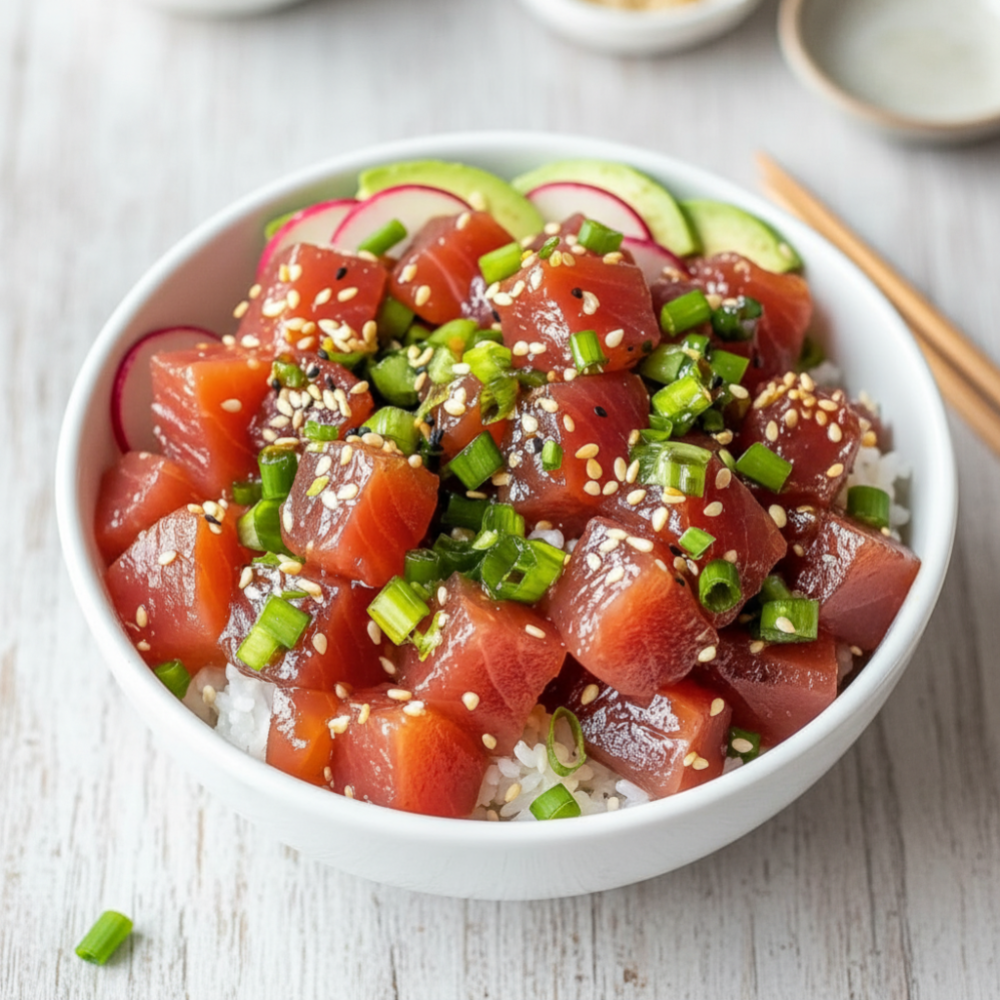
There’s something truly magical about a perfectly crafted poke bowl. It’s a vibrant symphony of flavors and textures that transports you straight to the shores of Hawaii. If you’ve ever dreamed of recreating that fresh, restaurant-quality experience in your own kitchen, you’re in the right place. Today, we’re diving deep into how to make an incredible Ahi Tuna Poke Bowl that will impress your taste buds and leave you feeling nourished and satisfied.
What is a Poke Bowl?
At its heart, a poke bowl is a simple yet profoundly delicious dish originating from Hawaii. The word “poke” literally means “to slice” or “to cut crosswise” in Hawaiian, referring to the method of preparing the raw fish. Historically, Hawaiian fishermen would season the offcuts of their catch with sea salt, limu (seaweed), and kukui nut. Over time, as diverse cultures influenced the islands, ingredients like soy sauce, sesame oil, and rice vinegar became staples in the poke marinade, evolving into the beloved dish we know today.
Far from being just a trend, this healthy and flavorful raw fish bowl has become a global phenomenon. It’s a versatile meal that celebrates fresh ingredients, offering a perfect balance of protein, healthy fats, and vibrant vegetables. Whether you’re seeking a light lunch or a satisfying dinner, a well-made poke bowl is always a fantastic choice.
Selecting the Best Sushi-Grade Ahi Tuna
The star of any exceptional poke bowl is, without a doubt, the tuna. For a safe and delicious experience, it’s crucial to use sushi-grade tuna. But what exactly does “sushi-grade” mean? While it’s not a regulated term, it generally refers to fish that is of the highest quality, caught and handled with extreme care, and suitable for raw consumption. It should be virtually free of parasites and flash-frozen at ultra-low temperatures shortly after being caught to eliminate potential health risks.
When sourcing your yellowfin tuna, look for a reputable fishmonger or a high-quality seafood counter. Ask them if their tuna is indeed “sushi-grade” and intended for raw consumption. The fish itself should have a vibrant, deep red color, a firm texture, and a fresh, clean ocean smell – never fishy. Avoid any tuna that looks dull, discolored, or has a strong odor. Properly handling this delicate sushi-grade tuna at home is equally important: keep it well-chilled, and work quickly once it’s out of the refrigerator.
Essential Poke Marinade Ingredients
The magic of a truly great Hawaiian poke recipe lies in its marinade. It’s all about balancing savory, sweet, and umami flavors to perfectly complement the fresh tuna. The good news is, you likely have most of these ingredients in your pantry right now.
- Soy Sauce: The backbone of the marinade, providing a rich, salty, and umami base. Opt for a good quality, low-sodium soy sauce if possible.
- Toasted Sesame Oil: Essential for that distinctive nutty aroma and flavor. A little goes a long way, so use it judiciously.
- Rice Vinegar: Adds a subtle tang and brightens the overall flavor profile.
- Brown Sugar or Honey: A touch of sweetness helps to balance the savory notes.
- Fresh Ginger: Finely grated ginger adds a pungent, zesty kick.
- Green Onions (Scallions): Sliced thinly, these provide a mild oniony bite and a beautiful pop of color.
- Sesame Seeds: Toasted white or black sesame seeds add a pleasant nutty crunch and visual appeal.
This classic combination forms the foundation for a delicious shoyu ahi poke, a staple in Hawaiian cuisine. Feel free to adjust the ratios to your personal preference, tasting as you go until you achieve your ideal balance.
How to Make an Ahi Tuna Poke Bowl at Home
Creating your own homemade poke bowl is surprisingly simple and incredibly rewarding. Follow these steps to assemble a fresh and flavorful meal that tastes like it came straight from a Hawaiian eatery.
Ingredients:
- 1 lb sushi-grade tuna, yellowfin (ahi) preferred
- 1/4 cup soy sauce (or tamari for gluten-free)
- 1 tbsp toasted sesame oil
- 1 tbsp rice vinegar
- 1 tsp brown sugar or honey
- 1 tsp grated fresh ginger
- 2 green onions, thinly sliced (white and light green parts)
- 1 tbsp sesame seeds, toasted
- Cooked sushi rice or preferred base (e.g., brown rice, quinoa, greens)
- Optional toppings: avocado, cucumber, edamame, radishes, crispy fried onions, furikake
Instructions:
- Prepare the Tuna: Ensure your tuna is well-chilled. On a clean cutting board, using a very sharp knife, cut the tuna into uniform 3/4 to 1-inch cubes. Uniformity helps with even marinating and a pleasant texture in every bite. Place the cubed tuna into a medium-sized mixing bowl.
- Make the Marinade: In a separate small bowl, whisk together the soy sauce, toasted sesame oil, rice vinegar, brown sugar (or honey), and grated ginger until the sugar is dissolved. This is your core poke marinade, bursting with umami.
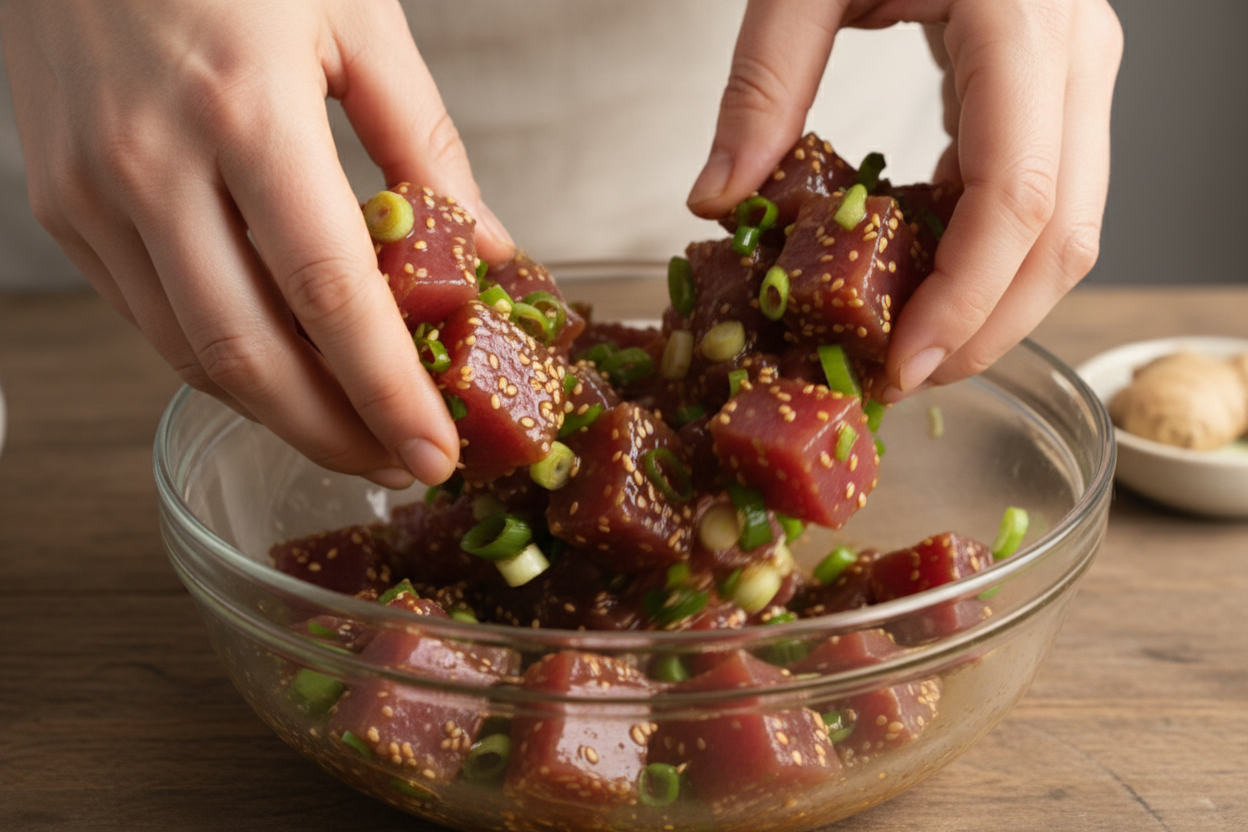
- Combine: Pour the prepared marinade over the cubed tuna. Add the thinly sliced green onions and toasted sesame seeds to the bowl. Gently toss everything together using a spatula or your hands (wearing gloves is recommended) until the tuna is evenly coated.
- Marinate: Cover the bowl with plastic wrap and refrigerate for at least 15-30 minutes. This allows the flavors to meld beautifully without over-marinating the delicate fish. Avoid marinating for longer than an hour, as the soy sauce can start to “cook” the raw tuna, changing its texture.
- Prepare Your Base: While the tuna marinates, prepare your base. Fluffy, slightly warm sushi rice is traditional and provides a wonderful contrast. If using, cook according to package directions. For a healthier or lighter option, prepare brown rice, quinoa, or simply wash and dry mixed leafy greens.
- Assemble Your Bowl: Once everything is ready, it’s time to build your masterpiece. Spoon a generous portion of your chosen base into a serving bowl.
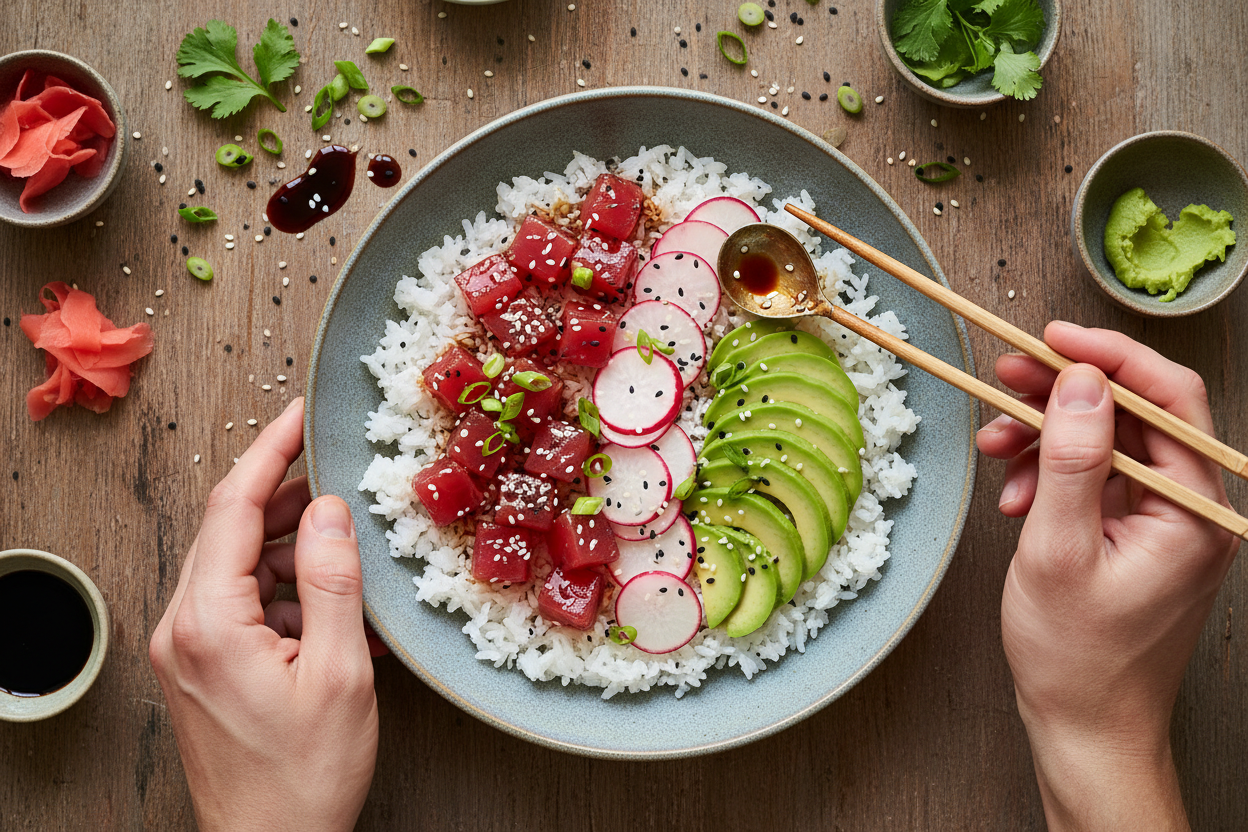
- Add Tuna and Toppings: Neatly arrange the marinated tuna over the base. Now, get creative with your toppings! Add sliced avocado, crunchy cucumber, vibrant edamame, thinly sliced radishes, or a sprinkle of crispy fried onions for extra texture. Finish with a dash of furikake, if desired.
- Serve Immediately: This easy poke bowl is best enjoyed fresh. Serve and savor every bite of your delicious creation!
Customizing Your Bowl: Variations and Toppings
One of the joys of making a homemade poke bowl is the endless possibility for customization. Here are a few popular variations and topping ideas to inspire your culinary creativity:
Spicy Tuna Poke
For those who love a bit of heat, transforming your classic poke into a spicy version is incredibly simple. After marinating your tuna, gently fold in a tablespoon or two of Japanese mayonnaise (like Kewpie) and a generous squirt of Sriracha sauce. Adjust the Sriracha to your preferred spice level. This creates a creamy, fiery coating that clings beautifully to the tuna, offering a truly satisfying kick.
Low-Carb & Grain-Free Bases
If you’re looking to cut down on carbohydrates or prefer a lighter meal, swapping out traditional white rice is an excellent option. Cauliflower rice, lightly steamed and seasoned, makes a fantastic low-carb base that mimics the texture of rice without the carbs. Alternatively, a bed of crisp mixed leafy greens (like spring mix, spinach, or shredded lettuce) provides a refreshing and nutrient-dense foundation for your poke.
Extra Crunch and Fresh Veggies
Texture is key in a balanced poke bowl. Add an extra layer of crunch and freshness with a variety of vegetables:
- Sliced Radishes: Offer a peppery bite and a beautiful crimson hue.
- Edamame: Steamed and shelled, they add a sweet, slightly nutty flavor and a pop of green.
- Cucumbers: Thinly sliced or diced, they bring a cool, refreshing crispness.
- Crispy Fried Onions: A sprinkling of these adds an irresistible savory crunch.
- Other popular additions include mango for sweetness, seaweed salad for umami, or pickled ginger for a zesty contrast.
Tips for Storing and Serving Raw Tuna
Because you’re working with raw fish, proper storage and serving are paramount for both safety and enjoyment. Here are some key tips:
Always prioritize freshness and consume your homemade poke bowl the same day it is prepared for the best taste and safety.
- Chilling is Critical: Keep your sushi-grade tuna thoroughly chilled at all times. From the moment you purchase it until you’re ready to cube it, ensure it stays cold. Once marinated, return it to the refrigerator immediately.
- Marinade Time: Stick to the recommended 15-30 minute marinating time. While it might be tempting to let it sit longer for deeper flavor, the acid in the marinade (soy sauce and rice vinegar) can start to “cook” the delicate tuna, altering its texture and firmness.
- Serve Immediately: For optimal freshness, texture, and food safety, poke bowls are best consumed shortly after assembly. Raw fish is highly perishable, and prolonged exposure to room temperature should be avoided.
- Leftovers (Use Caution): While technically possible to store leftover marinated tuna in an airtight container in the refrigerator for up to 24 hours, its quality will significantly diminish. The texture will become softer, and the flavors might become too strong. It’s truly a dish best enjoyed fresh.
Frequently Asked Questions
Here are answers to some common questions about making and enjoying your own poke bowls:
Q: Can I use a gluten-free alternative for soy sauce?
A: Absolutely! Tamari is an excellent gluten-free alternative to traditional soy sauce and can be used in the exact same quantity. It offers a very similar flavor profile, ensuring your easy poke bowl remains delicious for everyone.
Q: Can I make the poke ahead of time?
A: It’s best to prepare and serve poke bowls fresh. While you can cube the tuna and whisk together the marinade ingredients a few hours in advance, do not combine them until about 15-30 minutes before serving. This prevents the fish from “cooking” in the marinade and ensures the best texture.
Q: What if I don’t have all the ingredients for the marinade?
A: The core ingredients for a classic shoyu ahi poke are soy sauce, sesame oil, and green onions. If you’re missing ginger or rice vinegar, you can still make a delicious bowl, though it might lack a bit of complexity. Feel free to experiment with what you have, ensuring you maintain a good balance of salty and savory flavors.
There you have it – everything you need to create a stunning and delicious Ahi Tuna Poke Bowl right in your own kitchen. We hope this guide inspires you to embrace the vibrant flavors of Hawaii and enjoy this healthy, satisfying meal.
Want more delicious recipes, cooking tips, and behind-the-scenes glimpses? Follow us on Facebook! You’ll find a community of food lovers just like you. Find us here: https://www.facebook.com/profile.php?id=61568538666337
Tasty Ahi Tuna Poke Bowl
Ingredients
- 1 lb Sushi-grade ahi tuna cut into 1/2-inch cubes
- 2 cups White rice cooked
- 3 tbsp Soy sauce or tamari for gluten-free
- 1 tbsp Sesame oil toasted
- 1 tbsp Rice vinegar
- 1/4 cup Green onions thinly sliced
- 1 tbsp Sesame seeds toasted
- 3 Radishes thinly sliced
- 1 Avocado sliced
Instructions
- Cook the white rice according to package instructions and let it cool slightly.
- In a medium mixing bowl, whisk together the soy sauce, sesame oil, and rice vinegar to create the poke marinade.
- Add the cubed ahi tuna, sliced green onions, and sesame seeds to the marinade. Toss gently to combine, then cover and refrigerate for 15 to 30 minutes.
- Divide the warm cooked rice evenly among serving bowls.
- Top the rice with the marinated ahi tuna, sliced radishes, and sliced avocado.
- Garnish with additional sesame seeds and green onions, and serve immediately.
For more daily recipes and tips, follow us on Facebook!
Click here to join our community!