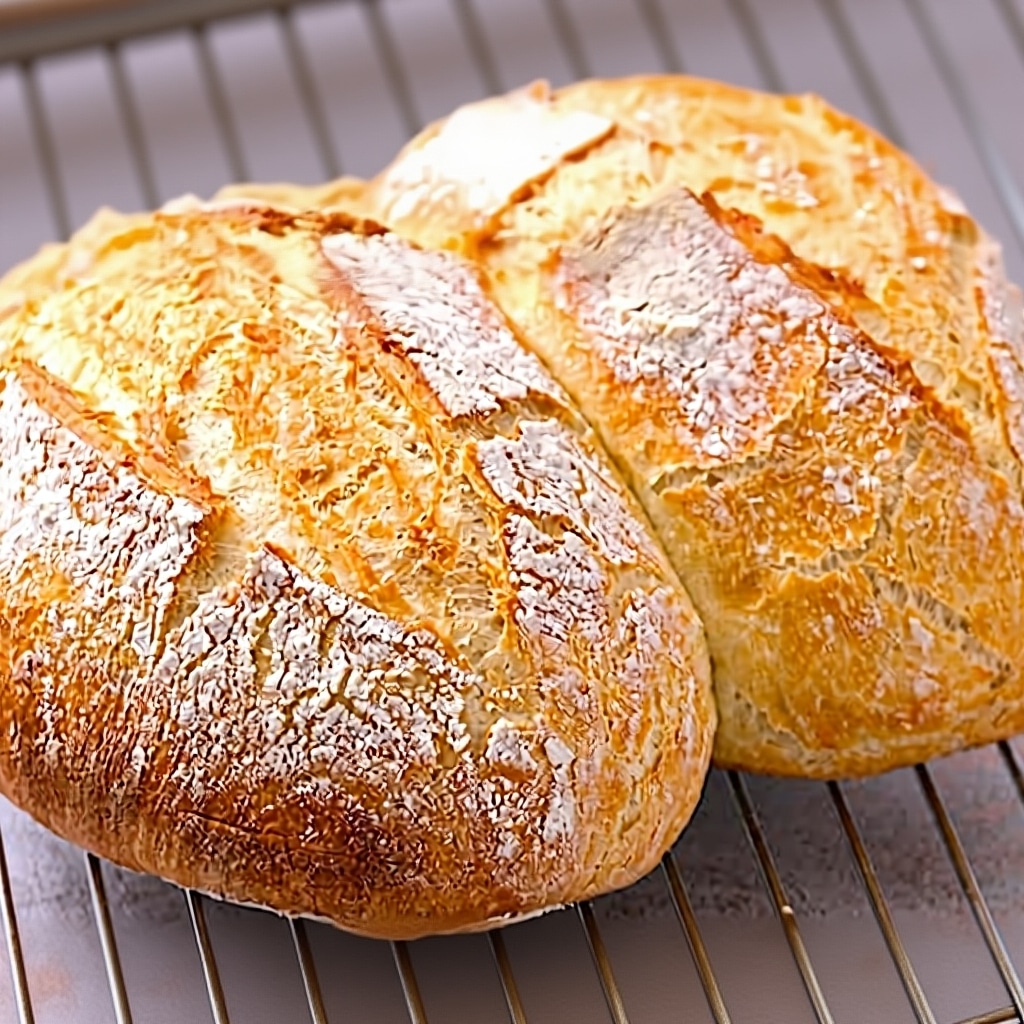
Imagine a loaf of bread, fresh from your oven, with a crackling, golden crust and a soft, airy interior. Sounds like something from a fancy bakery, right? What if we told you that you could achieve this culinary masterpiece right in your own kitchen, with minimal effort and absolutely no kneading? Welcome to the magic of No-Knead Homemade Bread, a game-changer for anyone who loves the aroma and taste of freshly baked bread but dreads the arm workout. This revolutionary method makes baking incredibly accessible, turning even novice bakers into bread-making superstars. Forget complicated techniques; this easy artisan bread recipe is all about time, simple ingredients, and a little bit of oven science.
Why This No-Knead Method Works
The brilliance of this no-knead technique lies in its clever utilization of time and natural processes. Instead of vigorous kneading, we let nature do the heavy lifting, resulting in a bread that’s not just easy, but remarkably delicious.
The core principle at play here is long fermentation. By allowing the dough to rise slowly over many hours, typically overnight, the yeast has ample time to break down starches and develop complex flavors. This extended rest also allows the gluten network to form naturally. Unlike traditional methods where kneading manually stretches and aligns gluten strands, this slow, wet fermentation allows the gluten proteins to hydrate and link up on their own, creating a strong, elastic structure without any physical intervention from you. This process is key to the bread’s incredible texture and chewy crumb, making it perfect for beginner bread baking.
Another secret weapon in achieving that bakery-quality crust is the Dutch oven. Baking your no-knead homemade bread in a preheated Dutch oven creates a steamy environment similar to a professional baker’s oven. When the cold dough hits the hot pot, the moisture in the dough rapidly turns into steam, which is then trapped inside the Dutch oven. This trapped steam keeps the surface of the dough soft and pliable for the first part of the bake, allowing the loaf to expand fully without forming a crust too early. Once you remove the lid, the direct dry heat then crisps up the softened exterior, resulting in that incredibly crusty white bread that’s the hallmark of true artisan loaves. This method is far superior to baking on an open tray, which often yields a less dramatic crust.
In essence, the combination of extended, wet fermentation for gluten development and the steamy environment of the Dutch oven for crust formation are the twin pillars that elevate this simple 4 ingredient bread recipe into something truly spectacular.
Essential Ingredients & Equipment
One of the many joys of baking no-knead homemade bread is its simplicity. You don’t need a pantry full of exotic ingredients or a kitchen full of specialized gadgets. The beauty truly lies in the basics.
The Four Core Ingredients
- Flour: While this recipe works beautifully with standard all-purpose flour, using bread flour will yield an even chewier crumb and a slightly stronger gluten structure due to its higher protein content. Experiment to find your preference!
- Water: This is where precise measurement and temperature come in. Use lukewarm water (around 105-115°F or 40-46°C). Water that’s too hot can kill the yeast, and water that’s too cold will slow down fermentation significantly. It’s the catalyst that brings your yeast to life and hydrates your flour.
- Yeast: For this overnight bread fermentation method, either instant yeast or active dry yeast will work. Instant yeast can be mixed directly with the dry ingredients, while active dry yeast usually needs to be “proofed” in warm water first (though many modern active dry yeasts can also be added directly). The yeast is responsible for producing the carbon dioxide that makes your bread rise and develops much of its flavor.
- Salt: Often overlooked, salt is crucial not just for flavor, but also for controlling the yeast’s activity and strengthening the gluten network. Don’t skip it!
Required Tools
While the ingredients are minimal, a few essential tools will ensure your no-knead journey is a smooth one:
- The Dutch Oven (Cast Iron or Enamel): This is non-negotiable for achieving that perfect crust. A heavy-bottomed cast iron bread pot, whether bare cast iron or enameled, is ideal. Its ability to retain and distribute heat evenly, and trap steam, is what elevates this Dutch oven bread recipe. A 5 to 7-quart size is typically perfect for a single loaf.
- Parchment Paper: A baker’s best friend! This makes transferring the sticky dough into a screaming hot Dutch oven safe and easy, and prevents sticking.
- Mixing Bowls and Plastic Wrap: You’ll need a large bowl for mixing your dough and then covering it tightly with plastic wrap (or a damp kitchen towel) for its long, slow rise.
- A Kitchen Scale (Optional but Recommended): For accuracy, especially with flour and water, a scale ensures consistent results every time.
Step-by-Step Instructions
Here’s how to bring your no-knead homemade bread to life, step by simple step. This is a process, not a sprint, and patience is your secret ingredient!
-
The Shaggy Dough Mix
In a large mixing bowl, combine your flour, salt, and yeast. Whisk them together briefly to ensure even distribution. Then, pour in the lukewarm water. Using a sturdy spatula or a wooden spoon, mix until just combined. You’re looking for a “shaggy” dough—it will be sticky, somewhat wet, and lumpy, with no dry spots of flour remaining. Do not overmix; just get it together. Cover the bowl tightly with plastic wrap or a damp kitchen towel and let it rest at room temperature ( ideally around 70°F/21°C) for a minimum of 12 hours, and up to 18-20 hours. This is where the magic of overnight bread fermentation happens.
-
The Overnight Rise
After its long rest, your dough should have transformed. Visual cues for successful fermentation include a significantly increased volume (it might have doubled or even tripled), a bubbly surface, and a web-like appearance when you peek underneath. It will also smell wonderfully yeasty and slightly tangy. This is a sign that the yeast has been hard at work, developing flavor and gluten structure. The longer the rise (within reason), the more complex the flavor will be. Resist the urge to punch it down!
-
Shaping and Proofing
Lightly flour a clean work surface. Gently scrape the dough out of the bowl onto the floured surface. Because it’s a wet dough, it will be sticky, so flour your hands as well. Using a dough scraper or your floured hands, gently fold the edges of the dough towards the center a few times, shaping it into a loose ball. The goal here is to create some surface tension without deflating all the air. Place the dough seam-side down onto a piece of parchment paper large enough to lift the dough later. Lightly flour the top of the dough, cover it loosely with plastic wrap or a kitchen towel, and let it rest for another 30-60 minutes while your oven and Dutch oven preheat.
-
The Hot Pot Bake
About 30 minutes before the second proofing is complete, place your empty Dutch oven (with its lid) into your oven and preheat to a very hot 450-475°F (232-246°C). Let it preheat for at least 30 minutes to ensure the pot is screaming hot. Safety tip: Always use oven mitts when handling the hot cast iron. Carefully remove the preheated Dutch oven from the oven. Using the parchment paper as a sling, gently lower the dough into the hot pot. You can score the top of the dough with a sharp knife or razor blade if you like, though it’s not strictly necessary. Cover the Dutch oven with its lid and return it to the oven.
Bake lid-on for 30 minutes. This phase traps the steam, allowing the bread to expand fully and creating that perfect tender crust. After 30 minutes, remove the lid and continue baking lid-off for another 15-25 minutes, or until the crust is deeply golden brown and sounds hollow when tapped. The internal temperature should be around 200-210°F (93-99°C). Carefully remove the loaf from the Dutch oven (using the parchment paper again) and transfer it to a wire rack to cool completely before slicing. This cooling time is crucial for the internal structure to set.
Troubleshooting Common Issues
Even with an easy artisan bread recipe, a few common pitfalls can occur. Don’t worry, they’re usually easy to fix!
- Dense Crumb: If your bread feels heavy and dense, it could be under-proofed (didn’t rise long enough in either stage) or the water wasn’t warm enough for the yeast. Ensure your dough has doubled in volume after the first rise and has a good amount of bubbles.
- Gummy Interior: A gummy or wet interior often means the bread wasn’t baked long enough. Invest in an instant-read thermometer to check the internal temperature (200-210°F is ideal). It could also be that you sliced it too early before it had a chance to cool and set.
- Burnt Bottom Crust: This is a common issue with cast iron bread. If your Dutch oven heats very intensely from the bottom, try placing a baking sheet on the rack below your Dutch oven during the last 15-20 minutes of baking. This acts as a heat shield.
Flavor Variations
Once you’ve mastered the basic no-knead homemade bread, the possibilities for flavor variations are endless! Here are a few favorites to get you started:
- Rosemary and Sea Salt: Add 1-2 tablespoons of fresh chopped rosemary and a generous pinch of flaky sea salt to the dough mix.
- Roasted Garlic: Roast a whole head of garlic until soft, squeeze out the cloves, and mix them into the dough before the first rise.
- Jalapeño Cheddar: Fold in 1/2 cup shredded sharp cheddar cheese and 1-2 finely diced (and deseeded) jalapeños during the final shaping stage.
- Cranberry Walnut: For a sweeter, rustic loaf, add 1/2 cup dried cranberries and 1/2 cup chopped walnuts to the dough during the initial mix.
Storage and Freezing Tips
To keep your crusty white bread delicious for longer, proper storage is key.
For immediate consumption, store your loaf at room temperature, cut-side down on a cutting board, or loosely wrapped in a clean kitchen towel. Avoid airtight containers for the first day or two, as they can soften the crust. The crust will naturally soften over time, but this method helps retain some crispness. Fresh no-knead homemade bread is best enjoyed within 2-3 days.
For longer storage, freezing is an excellent option. You can freeze a whole, cooled loaf by wrapping it tightly in plastic wrap, then in foil. For convenience, slice the cooled loaf first, then freeze individual slices in an airtight freezer bag. This allows you to pull out just what you need. Frozen bread can last for up to 2-3 months.
To reheat, if frozen whole, thaw at room temperature, then refresh in a 350°F (175°C) oven for 10-15 minutes. For individual slices, toast them directly from frozen or thaw and warm in a toaster oven.
Frequently Asked Questions (FAQ)
Here are some common questions about baking with yeast and making this incredible bread:
Q: Can I use whole wheat flour for no-knead bread?
A: Yes, you can! While the texture will be denser, you can substitute up to 50% of the all-purpose flour with whole wheat flour. You might need to add a touch more water as whole wheat flour absorbs more liquid.
Q: Why is my dough not rising?
A: The most common culprits are inactive yeast (check the expiration date!) or water that was too hot or too cold. Ensure your water is lukewarm and your yeast is fresh. Room temperature also plays a role; a colder room will significantly slow down the rise.
Q: Do I really need a Dutch oven?
A: For the best results – that truly crusty white bread and airy crumb – a Dutch oven is highly recommended because of its ability to trap steam. While you can bake on a baking sheet, the results won’t be as dramatic.
Q: How long does the “overnight” rise actually take?
A: The ideal range for the overnight bread fermentation is 12-18 hours at a cool room temperature (around 68-72°F or 20-22°C). In warmer environments, it might be ready in 8-10 hours, and in colder ones, it could take up to 20 hours. Look for the visual cues of a bubbly, expanded dough.
Q: Can I use less salt?
A: While you can adjust salt slightly to taste, salt is essential for flavor, controlling yeast activity, and strengthening the gluten structure. Reducing it too much can result in a bland loaf with a less stable texture.
There you have it – your comprehensive guide to baking the most satisfying, easy artisan bread imaginable. This no-knead homemade bread recipe is truly a revelation, proving that gourmet results don’t require complex techniques. Grab your flour, water, yeast, and salt, and get ready to impress yourself and everyone lucky enough to share a slice!
For more delicious recipes and baking tips, make sure to follow us on Facebook: https://www.facebook.com/profile.php?id=61568538666337. We can’t wait to see your bread-making triumphs!
No-Knead Homemade Bread (Dutch Oven Method)
Ingredients
- 3 cups All-purpose flour or bread flour Plus extra for dusting
- 1 1/2 cups Warm water Approx. 100°F (38°C)
- 1 1/4 tsp Salt Fine sea salt or kosher salt
- 1/4 tsp Instant yeast Or active dry yeast
Instructions
- Whisk flour, salt, and yeast together in a large mixing bowl until combined.
- Pour in the warm water and stir with a wooden spoon or spatula until a shaggy, sticky dough forms and no dry flour remains.
- Cover the bowl tightly with plastic wrap or a clean kitchen towel and let it rest at room temperature for 12 to 18 hours until the dough is bubbly and doubled in size.
- Place a Dutch oven (with lid) into the oven and preheat to 450°F (230°C) for 30 minutes.
- Turn the sticky dough out onto a generously floured surface. Briefly fold the corners inward 4-6 times to create a ball shape.
- Place the dough ball onto a large sheet of parchment paper and cover lightly with a towel while the oven finishes preheating.
- Carefully remove the hot Dutch oven from the oven, lift the dough using the parchment paper edges, and lower it into the pot.
- Cover with the hot lid and bake for 30 minutes.
- Remove the lid and bake for another 10 to 15 minutes until the crust is deep golden brown.
- Remove bread from the pot and cool on a wire rack for at least 30 minutes before slicing.
For more daily recipes and tips, follow us on Facebook!
Click here to join our community!