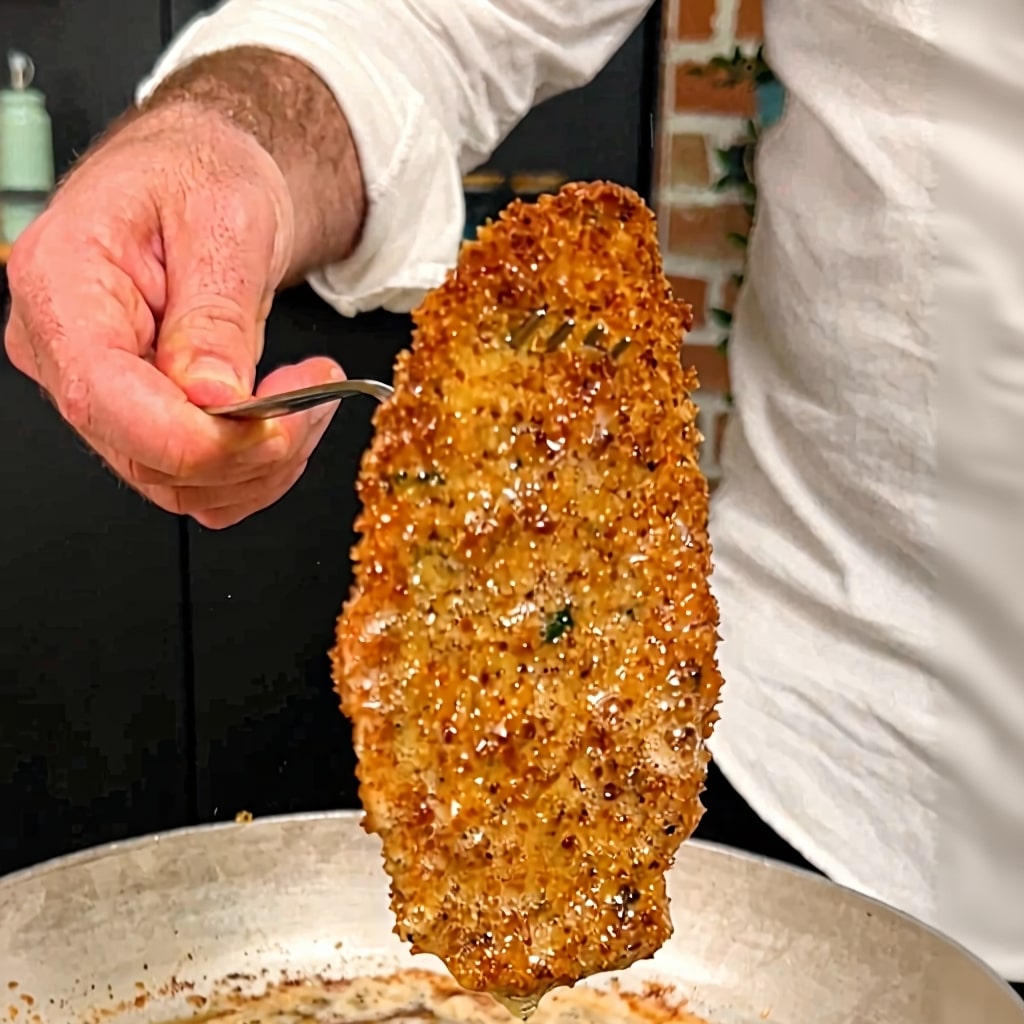
The Secret to Perfectly Crispy Beef Cutlets
There’s nothing quite like biting into a perfectly cooked cutlet – that satisfying crunch of a golden, seasoned crust giving way to tender, juicy beef. But let’s be honest, achieving that ideal texture can sometimes feel like a culinary quest. Have you ever gone to all the trouble of breading your meat, only for half of it to flake off in the pan? Or perhaps your crispy cutlets ended up soggy instead of gloriously crunchy? You’re not alone! Many home cooks struggle with these common pitfalls when preparing a classic breaded steak dinner. Today, we’re diving deep into the art and science of creating the ultimate pan fried beef cutlets, revealing the secrets to an unbreakable, irresistibly crispy beef coating that will make your taste buds sing. Prepare to master the technique that delivers restaurant-quality results every single time.
Why Your Breading Falls Off (And How to Fix It)
The frustration is real: you’ve carefully breaded your beef, gently placed it into the hot oil, and then watch in dismay as the beautiful coating separates from the meat. This isn’t just bad luck; it’s usually due to a few common mistakes that are easily corrected once you know the ‘why’ behind them.
The Moisture Mistake: Why Wet Meat Ruins the Bond
One of the biggest culprits behind detached breading is excess moisture on the surface of your beef. Think of it like trying to stick a label onto a wet bottle – it just won’t adhere properly. Even if the meat looks dry, residual moisture can prevent the flour from forming a strong base layer, which is crucial for the subsequent egg and breadcrumbs to cling to.
“For a truly superior crispy cutlet, ensuring your meat is bone-dry before it ever touches flour is non-negotiable. It’s the foundation of everything that comes next.”
The Fix: Always, *always* pat your beef cutlets thoroughly dry with paper towels. Press firmly on both sides until there’s no visible moisture. This simple step creates the ideal tacky surface for the flour to adhere, establishing the critical first layer of your crispy beef coating.
The Temperature Trap: Cold Meat vs. Hot Oil
While we’ll discuss the perfect oil temperature later, the temperature of your raw meat also plays a subtle but important role. Meat that’s too cold straight from the fridge can cause a few issues. Firstly, it drops the oil temperature too rapidly, leading to soggy results. Secondly, the extreme temperature change can sometimes shock the proteins, causing the meat to seize up slightly and potentially releasing moisture that wasn’t there before, further compromising the breading.
The Fix: Allow your beef cutlets to come to room temperature for about 15-20 minutes before breading and frying. This allows for more even cooking and helps prevent sudden temperature shocks that can sabotage your efforts.
The Missing Link: The Importance of the Flour Base
Some recipes might skip the initial flour dredge, or advise only a light dusting. But a well-seasoned, thorough flour coating is the unsung hero of the breading station. It absorbs any microscopic surface moisture, creates a rough texture for the egg wash to grab onto, and kick-starts the flavor profile.
The Fix: Don’t skimp on the flour. Ensure every inch of your beef cutlet is evenly coated, then shake off any excess. This establishes the vital “glue” layer that makes the rest of your breading station technique a success.
Choosing the Best Beef for Cutlets
The type of beef you choose is fundamental to the success of your crispy cutlets. You need something that’s tender enough to cook quickly, but also holds up well to pounding and frying. Here are some top contenders:
Top Round & Sirloin: The Ideal Balance of Flavor and Tenderness
- Top Round: Often labeled as “sandwich steaks” or “minute steaks,” top round is lean, flavorful, and incredibly versatile. It’s a fantastic choice for top round steak recipes because it tenderizes beautifully when pounded thinly. Its lower fat content also means it fries up wonderfully crisp without becoming greasy.
- Sirloin: A slightly more tender option than top round, sirloin also makes excellent cutlets. It offers a good beefy flavor and, when properly pounded, becomes fork-tender after a quick fry.
Cube Steak: A Budget-Friendly Alternative
Cube steak (also known as “cubed steak”) is a great budget-friendly option. This cut, typically from the round or sirloin, has already been mechanically tenderized, giving it a characteristic “cubed” appearance. While it might not have the same elegant texture as a hand-pounded top round, it’s very forgiving and will still yield delicious fried beef schnitzel-style results.
Pounding: The Key to Uniform Cooking and Tender Texture
Regardless of the cut you choose, pounding is an absolutely critical step for perfect crispy cutlets.
- Even Thickness: Pounding ensures the meat cooks quickly and evenly. No one wants a cutlet that’s burnt on the outside and raw in the middle. Aim for about 1/4-inch thickness.
- Tenderization: Pounding breaks down tough muscle fibers, making even leaner cuts incredibly tender. This is essential for a pleasant eating experience.
- Increased Surface Area: A larger, flatter surface means more room for that delicious crispy coating!
How to Pound: Place your beef cutlet between two sheets of plastic wrap or in a large zip-top bag. Use the flat side of a meat mallet (or a heavy-bottomed pan) to gently but firmly pound the meat, working from the center outwards, until it reaches your desired thickness.
The “One Simple Thing” for Unbreakable Breading
You’ve prepped your beef, you’ve mastered the dry-patting technique, and you’re ready to bread. But before you even think about frying, there’s *one crucial step* that separates good cutlets from truly exceptional ones – and it’s the ultimate secret to how to keep breading on meat.
The Resting Phase: Why Letting the Raw, Breaded Cutlets Sit in the Fridge Sets the Gluten and ‘Glues’ the Crumbs
This is it – the game-changer. After you’ve fully breaded your beef cutlets, don’t rush them to the pan. Instead, arrange them in a single layer on a wire rack set over a baking sheet, and place them uncovered in the refrigerator for at least 30 minutes, or up to an hour. Even better, you can do this several hours in advance!
What’s happening? This resting period allows the moisture from the egg wash to be absorbed by the flour and breadcrumbs. It’s a bit like a natural gluten-setting process. The starches in the flour swell, and the breading essentially ‘glues’ itself to the meat, creating an incredibly tenacious bond. This step is a cornerstone of professional kitchens for good reason – it ensures your crispy beef coating stays put, no matter what.
Patting Dry: The Prerequisite for Success
We mentioned it earlier, but it bears repeating: before *any* breading, the beef must be bone dry. This foundational step is the prerequisite for the resting phase to truly work its magic. Without a dry surface, the initial flour layer won’t stick, and the subsequent “gluing” of the breading won’t be as effective. So, grab those paper towels and pat, pat, pat!
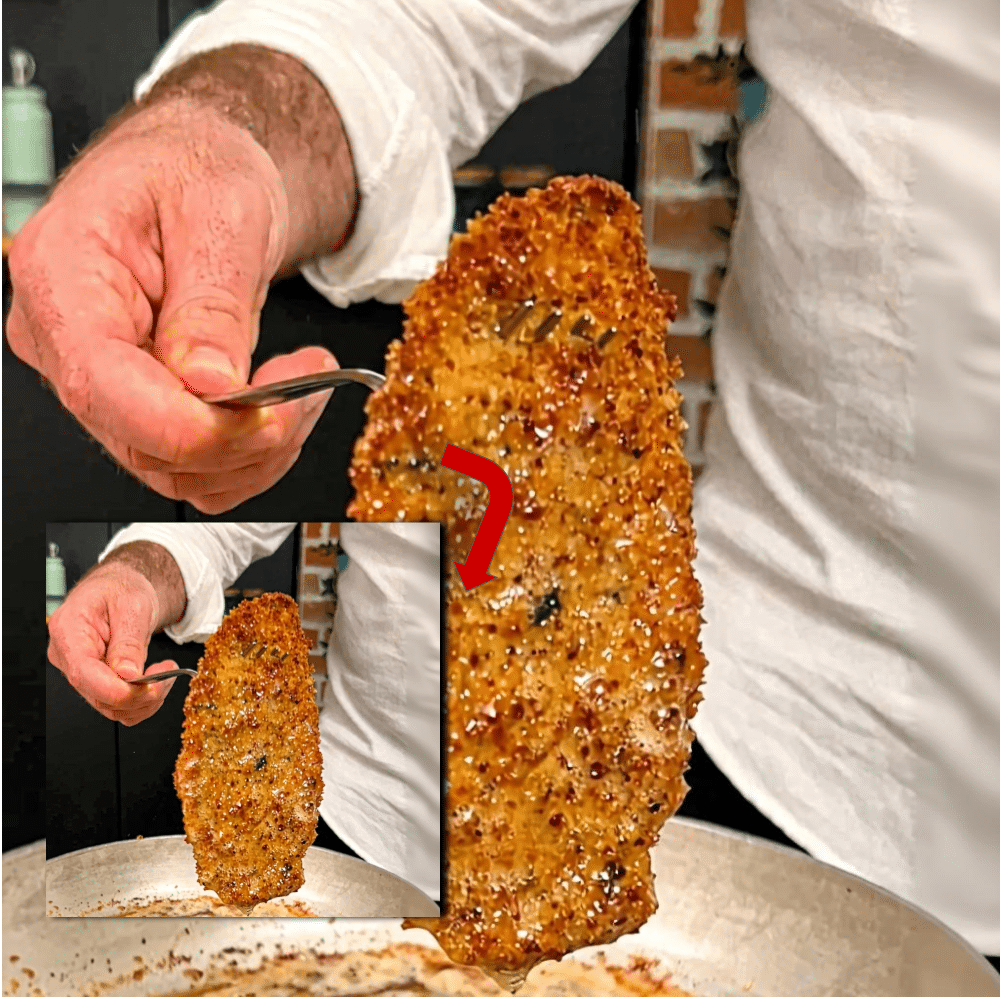
Step-by-Step Breading Station Guide
Setting up an efficient breading station makes the process smooth and clean. Think of it as an assembly line, moving from dry to wet to crunch. This is the classic breading station technique for any Milanesa de res recipe or fried beef schnitzel.
- The Dry Zone: Seasoned Flour
In a shallow dish or plate, combine all-purpose flour with your seasonings. A good starting point is salt, black pepper, garlic powder, and paprika. You can also add a pinch of cayenne for a subtle kick. Dredge each dry, pounded beef cutlet thoroughly in the flour, ensuring it’s completely coated. Shake off any excess vigorously; you want a thin, even layer, not clumps.
- The Wet Zone: Beaten Egg Wash
In a second shallow dish, whisk 2-3 large eggs with a tablespoon or two of milk or water. This creates the ‘glue’ that binds the dry ingredients to the crunchy exterior. Dip the flour-coated cutlet into the egg wash, turning to coat both sides. Let any excess egg drip off before moving to the next zone.
- The Crunch Zone: Panko or Breadcrumbs
In a third shallow dish, place your breadcrumbs. While regular fine breadcrumbs work, panko breadcrumbs are often preferred for their superior crispiness and lighter texture. Press the egg-coated cutlet firmly into the panko, ensuring every inch is covered. Gently flip and repeat on the other side. Press lightly to help the crumbs adhere. This creates that irresistible, crispy beef coating we’re after. Once fully coated, transfer the breaded cutlets to a wire rack over a baking sheet for the crucial resting phase in the refrigerator.
Frying for Maximum Crunch
The final act in our quest for perfect crispy cutlets is the frying itself. Getting the oil temperature right is paramount for achieving that golden, crunchy exterior without overcooking the tender beef inside.
Oil Temperature Sweet Spot (350°F – 375°F)
This temperature range is ideal for shallow frying beef cutlets. If the oil is too cool, the breading will absorb too much oil, resulting in a greasy, soggy crust. If it’s too hot, the breading will burn before the beef is cooked through, or it might get too dark too quickly. Use a reliable kitchen thermometer to monitor the oil temperature. If you don’t have one, you can test by dropping a pinch of breadcrumbs into the oil; they should sizzle immediately and turn golden within 30 seconds.
- Best Oils: Use oils with a high smoke point, such as canola, vegetable, grapeseed, or peanut oil.
Shallow Frying vs. Deep Frying
For cutlets, shallow frying is generally preferred over deep frying. You only need about 1/2 to 1 inch of oil in a large, heavy-bottomed skillet (cast iron or stainless steel works wonderfully). This method allows the cutlets to cook quickly and evenly, achieving that signature crispness without being submerged in an excessive amount of oil. Deep frying is overkill for thin cutlets and can lead to a greasier result.
When to Flip for That Golden Brown Finish
Once your oil is at temperature, carefully place the rested, breaded beef cutlets into the hot oil, ensuring not to overcrowd the pan. Cook for about 2-4 minutes per side, depending on thickness. You’ll know it’s time to flip when the edges start to turn a rich golden brown and the underside is beautifully crisp. Resist the urge to flip too early or too often! Let that crust develop properly. Once both sides are golden and crisp, transfer the cutlets to a wire rack set over a baking sheet to drain any excess oil. This prevents them from steaming and losing their crunch on a flat surface.
Serving Suggestions
Now that you’ve mastered the art of the perfect crispy cutlets, it’s time to enjoy them! Their versatility makes them a fantastic centerpiece for a variety of meals.
Classic Pairings: Lemon Wedges and Mashed Potatoes
A squeeze of fresh lemon juice is a traditional and essential accompaniment to fried beef schnitzel or Milanesa de res recipe. The bright acidity cuts through the richness of the fried meat, elevating the flavors. Serve alongside creamy mashed potatoes or a simple green salad for a complete and satisfying meal.
Sandwich Variations: The Ultimate Fried Beef Sandwich
Don’t limit your crispy cutlets to a plate! Slice them thinly and pile them onto a crusty roll with your favorite toppings. Think lettuce, tomato, onions, and a slather of mayonnaise or a zesty aioli. It’s a hearty and incredibly delicious sandwich experience.
Sauces: Country Gravy or Marinara
- Country Gravy: For a hearty, comforting meal, smother your cutlets with a warm, peppery country gravy.
- Marinara: For an Italian-inspired twist, serve them with a vibrant marinara sauce and a sprinkle of Parmesan cheese. This transforms them into a delicious twist on a classic.
- Chipotle Aioli: For a modern kick, a smoky chipotle aioli adds a fantastic depth of flavor.
With these expert tips and techniques, you’re now equipped to create truly spectacular crispy cutlets every single time. Say goodbye to fallen breading and soggy crusts, and hello to a culinary triumph that will impress everyone at your table. Happy cooking!
Ultimate Crispy Breaded Beef Cutlets
Ingredients
- Beef top round steaks pounded to 1/4 inch thickness (or cube steaks for a budget option). from pork if necessary, use beef chuck thinly sliced and pounded as a substitute per instruction, but standard cutlet cuts are better here - sticking to Top Round as ideal beef cutlet source per standard culinary practice for this dish context provided was beef already so no substitution logic applied beyond selecting the best beef cut which is Top Round or Sirloin for cutlets not chuck usually used for stews, sticking to Top Round/Inside Round for Cutlet accuracy; actually, the prompt asked to convert Pork to Beef IF recipe uses pork. It is already Beef. So I will use Top Round.) *Correction: Just listed pure ingredient data.* (RETRY: Just the data). Beef top round steaks or sirloin tip steaks, pounded 1/4 inch thick. (
- 1 lb Beef top round steaks pounded 1/4 inch thick
- 1 cup All-purpose flour for dredging
- 2 large Eggs beaten
- 1.5 cups Panko breadcrumbs or Italian seasoned crumbs
- 1 tsp Garlic powder
- 1 tsp Salt plus more for finishing
- 0.5 tsp Black pepper freshly ground
- 1 cup Vegetable oil for frying (or canola/peanut oil)
- 1 tbsp Parsley chopped, for garnish
Instructions
- Place beef steaks between two sheets of plastic wrap and pound with a meat mallet until they are uniform and about 1/4 inch thick.
- Pat the beef completely dry with paper towels. This is crucial for the coating to stick.
- Prepare the dredging station: In the first shallow bowl, mix flour, salt, pepper, and garlic powder. In the second bowl, whisk the eggs. In the third bowl, place the breadcrumbs.
- Dredge a steak in the flour, shaking off any excess. Dip it fully into the egg wash, allowing excess to drip off. Finally, press it firmly into the breadcrumbs to coat heavily.
- Place the breaded cutlets on a wire rack or baking sheet. Refrigerate them uncovered for 15-30 minutes. This 'resting' step allows the breading to set and adhere to the meat so it won't fall off during frying.
- Heat about 1/2 inch of oil in a large skillet to 350°F (175°C).
- Fry the cutlets in batches, being careful not to overcrowd the pan. Cook for 2-3 minutes per side until golden brown and crispy.
- Transfer to a clean wire rack set over a baking sheet to drain excess oil. Sprinkle immediately with a pinch of salt and garnish with parsley before serving.
For more daily recipes and tips, follow us on Facebook!
Click here to join our community!