
Ah, the trusty cookie sheet. It’s seen countless batches of chocolate chip cookies, roasted vegetables, and crispy sheet pan dinners. It’s a workhorse in every kitchen, a true culinary companion. But let’s be honest, after years of faithful service, your beloved baking sheets might be looking less-than-sparkling. We’re talking about that stubborn, baked-on grease, those mysterious dark spots, and that general air of grimy exhaustion. It’s a common kitchen problem that often leads to frustration and the temptation to simply toss them out and buy new ones.
You’re not alone if you’ve wondered, “How do I clean baking sheets that look beyond hope?” or thought about the effort involved in
The Science of Stubborn Stains: Why Do Cookie Sheets Get So Grimy?
Before we dive into the cleaning magic, let’s understand the adversary: the grime. That dark, sticky residue on your baking pans isn’t just burnt food; it’s often a result of a process called polymerization. When fats and oils (from butter, cooking sprays, or food drippings) are exposed to high heat over and over again, they undergo a chemical change. They break down and then bond together, forming a tough, plastic-like coating that adheres tenaciously to the pan’s surface.
This
The Magic 2-Ingredient DIY Oven Cookie Sheet Cleaner
Ready for the secret weapon? This powerful DIY Oven Cookie Sheet Cleaner is not only incredibly effective but also uses common, non-toxic household ingredients. Say goodbye to harsh chemicals and hello to sparkling clean pans!
What You’ll Need
- ¼ cup Baking Soda (Sodium Bicarbonate)
- Hydrogen Peroxide (3% solution, standard household type)
- A small bowl
- A non-abrasive sponge or cloth (or a soft scrub brush)
Step-by-Step Cleaning Instructions
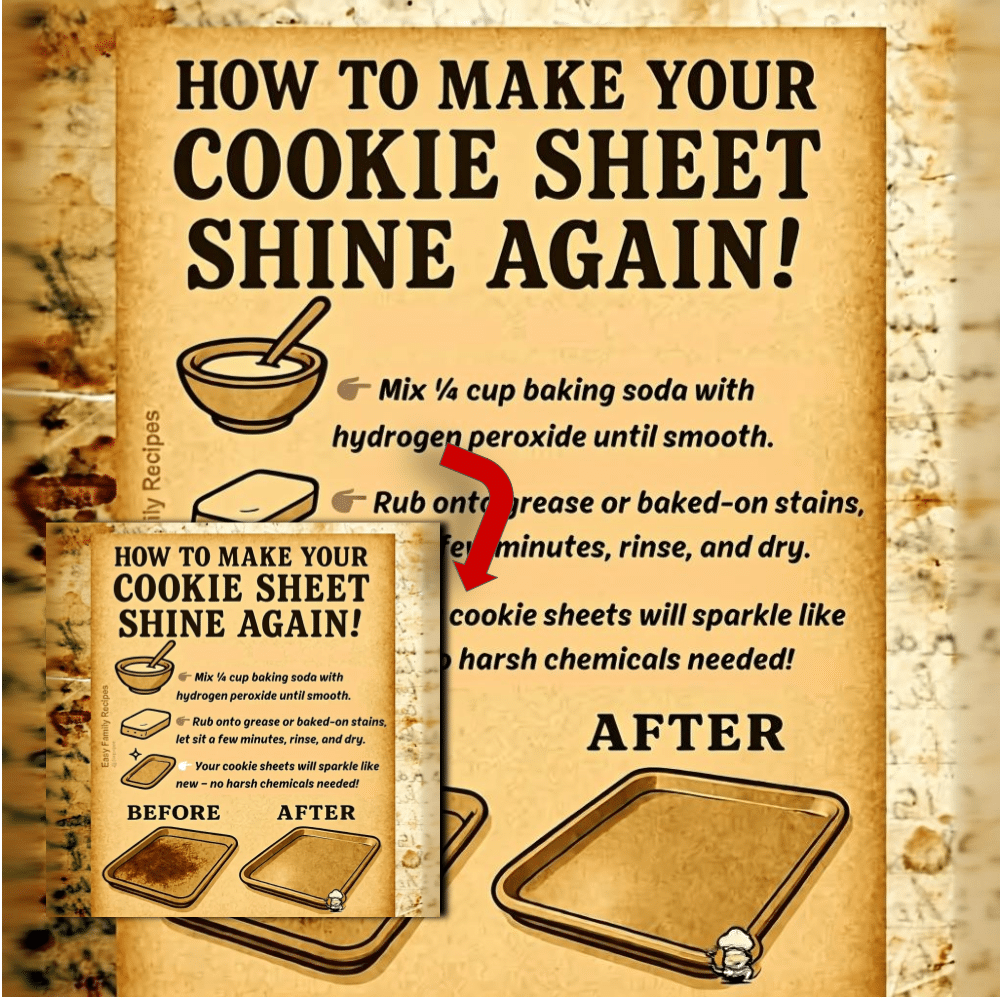
- Create the Paste: In your small bowl, mix the baking soda with just enough hydrogen peroxide to form a thick, spreadable paste. Think consistency similar to toothpaste – not too runny, not too dry.
- Apply to the Pan: Using your fingers, a spatula, or the back of a spoon, spread a generous layer of the paste over all the stained, discolored, and
greasy baking pan areas of your cool cookie sheet. Don’t be shy; cover the grime completely! - Let it Sit: This is where the magic happens. Allow the paste to sit and work its wonders for at least 30 minutes for light stains. For very tough,
baked-on grease or dark discoloration, you can let it sit for several hours, or even overnight. The longer it sits, the more it breaks down the stubborn stains. - Scrub and Wipe: After the waiting game, use a non-abrasive sponge, a soft scrub brush, or even a
DIY pan scraper (a plastic spatula works) to gently scrub the pan. You’ll literally feel the grime lifting off! As you scrub, the paste will turn brownish as it picks up the dissolved gunk. Wipe away the paste and loosened residue with a damp cloth or paper towels. - Rinse and Dry: Rinse the cookie sheet thoroughly with warm water and a little dish soap to remove any remaining residue. Dry it completely by hand or air dry before storing to prevent water spots or rust.
Why This Combination Works So Well
This incredible
4 More Powerful DIY Methods to Make Your Pans Sparkle
While our primary DIY Oven Cookie Sheet Cleaner is a superstar, sometimes you might be out of an ingredient, or facing a different type of stain. Here are more powerful
Method 2: The Fizzy Power of Baking Soda & Vinegar
For general grease and light discoloration, the classic combination of
Method 3: Cream of Tartar for Tough Discoloration
If you’re dealing with a discolored aluminum pan, this method is for you.
Method 4: The Dish Soap & Dryer Sheet Hack
This viral cleaning hack might sound strange, but it works surprisingly well for loosening
Method 5: Banishing Rust with Salt & Lemon
Sometimes, moisture can lead to unsightly rust spots, especially on uncoated pans. To
How to Clean Different Types of Cookie Sheets (Without Ruining Them)
Knowing your pan’s material is key to effective and safe cleaning. A general DIY Oven Cookie Sheet Cleaner might not be suitable for every surface.
Aluminum and Stainless Steel Pans
These are the workhorses of the kitchen and are generally quite durable. Most of the DIY methods, including the primary baking soda and hydrogen peroxide paste, are safe for these materials. For stainless steel, you can even use a product like
Non-Stick Cookie Sheets
CRITICAL WARNING: Non-stick coatings are delicate. Never use harsh abrasives like steel wool, scouring pads, or aggressive metal scrapers on these pans. Doing so will permanently scratch and ruin the non-stick surface, making food stick and potentially releasing harmful chemicals. For
Uncoated Carbon Steel & Cast Iron Pans
These materials require special care due to their seasoning – a layer of polymerized oil that creates a natural non-stick surface. Harsh detergents and long soaks can strip this seasoning, leading to rust. For a deep clean, avoid traditional dish soap if possible. Instead, scrub with coarse salt and a little oil (or a chain mail scrubber for tough spots), rinse quickly, and then thoroughly dry the pan on the stovetop over low heat. Always re-season your pan with a thin layer of oil after a deep clean to maintain its protective coating.
Prevention is Better Than a Cure: Keeping Your Cookie Sheets Clean
The best way to keep your pans sparkling is to prevent the stubborn buildup in the first place! Incorporate these simple habits into your routine:
- Use a Barrier: Always line your pans with parchment paper, aluminum foil, or a silicone baking mat (like Silpat). This creates a protective layer, making cleanup a breeze and saving your pan from direct contact with sticky foods and oils.
- Wash Promptly: Don’t let grease, sugar, or food debris sit on the pan after baking. As soon as the pan is cool enough to handle, wash it. The longer residue sits, the harder it is to remove.
- Avoid Metal Utensils: Use silicone, wood, or plastic utensils when handling food on your pans. Metal utensils can scratch the surface, creating tiny crevices where grime can accumulate and become even harder to clean.
- Dry Thoroughly: Moisture is the enemy of metal, especially iron and carbon steel. After washing, dry your pans completely by hand with a towel, or place them in a warm, turned-off oven for a few minutes to ensure all moisture evaporates. This helps prevent rust and water spots.
Frequently Asked Questions (FAQ)
Is it safe to use oven cleaner on cookie sheets?
No, it’s generally not recommended to use
How do you get black stains and sticky residue off cookie sheets?
The black stains and
Can I use steel wool on a baking sheet?
You should only consider using steel wool as a last resort and exclusively on durable, uncoated pans like heavy-duty stainless steel or cast iron (followed by re-seasoning). Never use steel wool on non-stick or aluminum pans, as it will permanently scratch, pit, and ruin their surfaces, making them less effective and potentially unsafe.
Why did my aluminum baking sheet turn dark in the dishwasher?
Aluminum pans often turn dark or become discolored in the dishwasher due to a chemical reaction called oxidation. Harsh dishwasher detergents, especially those with strong alkalinity, react with the aluminum, causing it to oxidize and create a dull, dark, or gray film. It’s always best practice to hand-wash aluminum pans to preserve their appearance and integrity.
Can I just put my cookie sheet in the dishwasher?
It depends on the specific pan. Always check the manufacturer’s instructions. Many pans, especially basic aluminum ones, will discolor or warp in the dishwasher due to harsh detergents and high heat. Non-stick coatings can also degrade over time with repeated machine washing. While some modern, high-quality baking sheets are dishwasher safe, hand-washing is almost always the better option for longevity and appearance.
Shiny Pans, Happy Baking
Don’t let those grimy pans get you down any longer! With a simple DIY Oven Cookie Sheet Cleaner, you can rescue your beloved baking sheets from the brink. You’ll not only save money by avoiding replacements but also keep harsh chemicals out of your kitchen. Armed with these
For more daily recipes and tips, follow us on Facebook!
Click here to join our community!