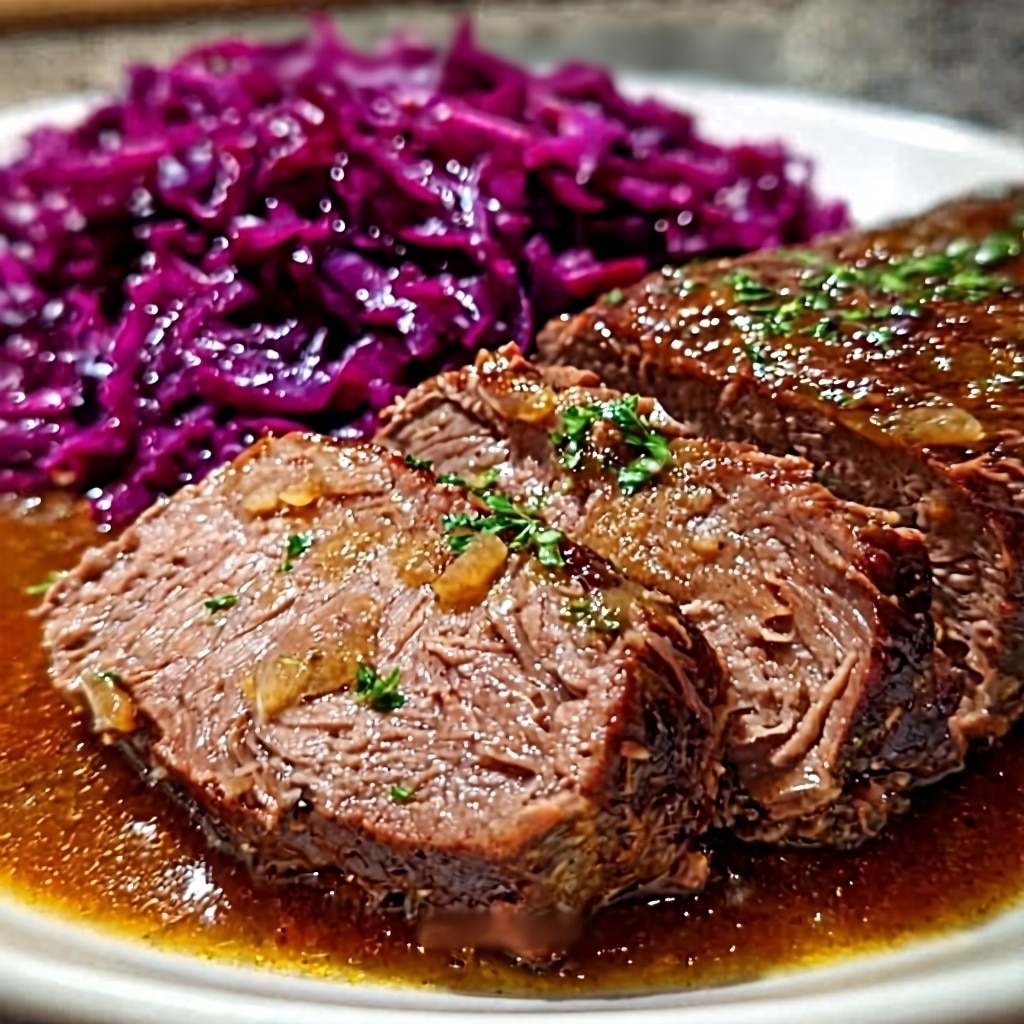
What is Sauerbraten Pot Roast? The Ultimate German Comfort Food
Imagine a pot roast so incredibly tender it practically melts in your mouth, infused with a complex, unforgettable flavor that’s both tangy and subtly sweet. That, my friends, is the magic of Sauerbraten Pot Roast. Directly translating to “sour roast,” this iconic German dish is a true testament to culinary patience and tradition, holding a cherished place in hearts and on tables across Germany.
Unlike a typical American pot roast, the distinguishing characteristic of authentic German sauerbraten recipe lies in its multi-day marination. This isn’t just about adding flavor; it’s a transformative process that tenderizes tougher cuts of beef, creating a deeply savory, aromatic, and uniquely piquant profile. The result is a tender, fall-apart beef roast bathed in a rich, sweet and sour gravy – a genuine taste of German comfort food that’s perfect for any occasion, especially as one of those delightful Oktoberfest recipes.
The Rich History of Sauerbraten: From Ancient Rome to Your Dinner Table
The roots of Sauerbraten stretch back centuries, with some legends even attributing its inspiration to none other than Julius Caesar. The story goes that Roman legions preserved meat in wine, a practice that eventually migrated north and evolved within German culinary traditions. Over time, the wine-based preservation method transitioned into using vinegar and other aromatic spices, giving rise to the distinctive traditional sauerbraten we know today.
Regional variations abound, with the most famous perhaps being Rheinischer Sauerbraten, which often incorporates raisins into its signature gingersnap gravy. This historical journey from necessity to delicacy adds a beautiful layer to this German pot roast recipe, making it more than just a meal – it’s a piece of living history.
Why This Sauerbraten Pot Roast Recipe is the Best You’ll Ever Make
There are countless recipes for Sauerbraten Pot Roast, but this version stands out for its unwavering commitment to authentic flavor while offering clear, achievable steps. We’ve honed this recipe to ensure every bite delivers that perfect balance of sweet and sour, with meat that’s unbelievably tender thanks to a meticulously crafted, long-marinated beef roast.
What makes our recipe superior? It’s designed for success, whether you’re a seasoned chef or a home cook looking to explore classic German comfort food. We break down the intimidating multi-day process into manageable stages, providing detailed instructions that guarantee a show-stopping meal. Expect a rich, complex gravy that perfectly complements the succulent beef, making this an authentic German sauerbraten recipe you’ll return to again and again.
Choosing the Perfect Cut: What is the Best Meat for Sauerbraten?
Selecting the right cut of beef is fundamental to achieving the ultimate Sauerbraten Pot Roast. Given the long marination and slow braising, you want a cut that benefits from these processes.
Best Cuts for Tenderness
For a truly melt-in-your-mouth Sauerbraten Pot Roast, focus on tougher, leaner cuts rich in connective tissue. The extended acidic marinade, combined with slow cooking, works wonders to break down these tissues, transforming them into succulent gelatin. Our top recommendations for the best cut of beef for sauerbraten include:
- Beef Bottom Round: Lean and flavorful, it becomes incredibly tender when slowly braised.
- Rump Roast: Similar to bottom round, it’s a classic choice for a robustly flavored, fall-apart roast.
- Chuck Roast: While fattier, its abundant connective tissue makes it an excellent candidate, yielding a very juicy final product. This is a forgiving cut if you’re new to making this marinated beef roast.
Any of these cuts, when subjected to the proper preparation of this beef round roast recipe, will yield spectacular results.
Cuts to Avoid
Resist the temptation to use expensive, already-tender cuts for your Sauerbraten. Cuts like tenderloin, ribeye, or sirloin are not suited for this dish. They lack the necessary connective tissue and fat to withstand the long cooking process and can become dry, stringy, and lack the deep, complex flavor developed in tougher cuts.
The Heart of the Flavor: Crafting the Perfect Sauerbraten Marinade
The marinade is the soul of Sauerbraten Pot Roast. It’s not merely a flavoring agent; it’s the critical component that tenderizes the beef and infuses it with that iconic tangy-sweet profile. Without a proper sauerbraten marinade recipe, you simply don’t have true sauerbraten.
Marinade Ingredients Explained
Each ingredient in the marinade plays a vital role in creating the complex flavor of this German pot roast recipe:
- The Acid: Red wine vinegar is traditional and highly recommended, providing a deep, fruity tang. Apple cider vinegar can be used for a slightly milder fruitiness, or a combination of both for a balanced flavor. This is what gives the “sour” in sauerbraten its punch.
- The Aromatics: Sliced onions, carrots, and celery add a foundational sweetness and savory depth that permeates the beef.
- The Spices: A blend of whole spices such as juniper berries (essential for an authentic foresty note), black peppercorns, cloves, bay leaves, and a touch of mustard seeds creates a warm, earthy, and aromatic bouquet that is truly characteristic of a traditional sauerbraten.
- The Liquid: Red wine (a dry, robust variety) adds another layer of fruity acidity and depth, balanced with water or beef broth to ensure the roast is fully submerged.
The Science of Marination
Understanding how long to marinate sauerbraten is crucial. The magic happens over 3 to 5 days (and up to 7, but no longer) in the refrigerator. During this period, the acid in the vinegar and wine works to break down the tough muscle fibers and connective tissues in your chosen cut of beef. This process is what guarantees the fall-apart tenderness that defines a perfect Sauerbraten Pot Roast.
This extended soak is truly non-negotiable for achieving both the desired texture and the deeply infused, tangy flavor that makes this marinated beef roast so special. It’s patience rewarded.
Step-by-Step Guide to Authentic Sauerbraten Pot Roast
Ready to embark on the journey of making an authentic Sauerbraten Pot Roast? Follow these steps for a truly rewarding culinary experience.
Ingredient Checklist & Kitchen Equipment
Ingredients:
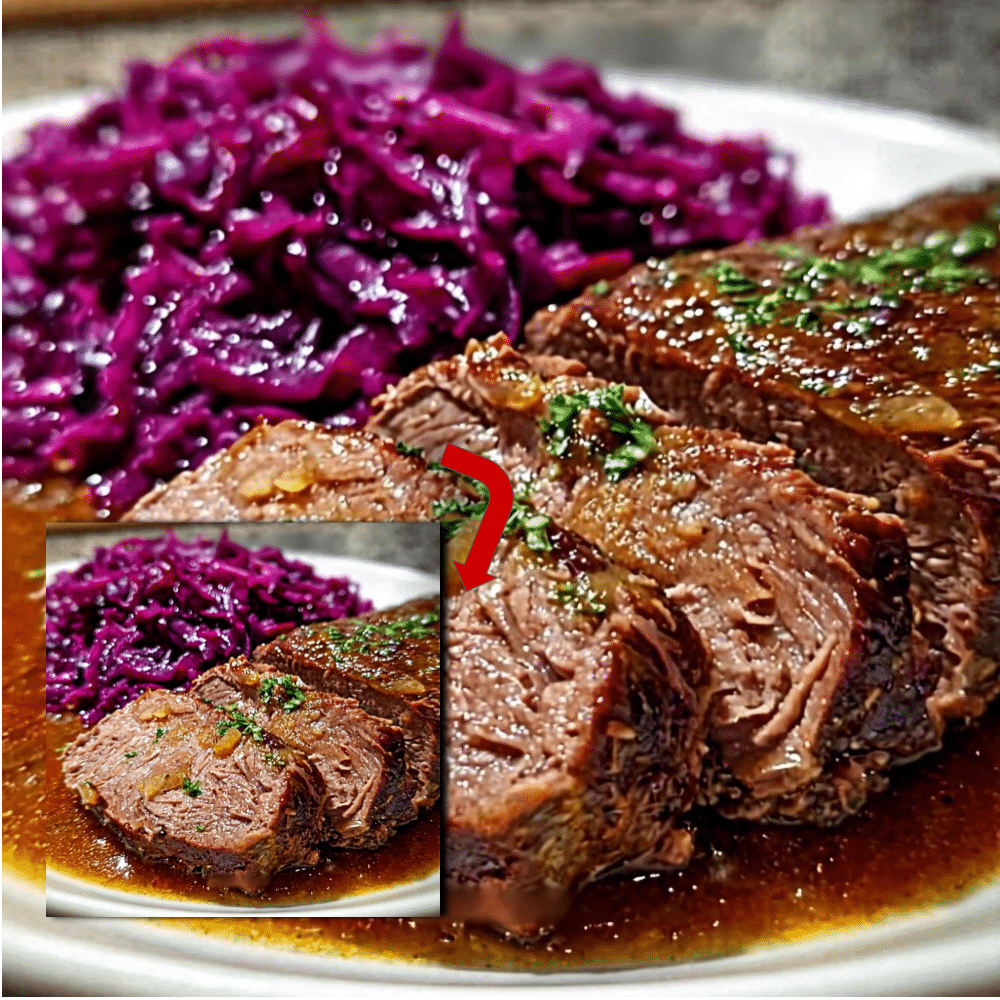
- 3-4 lb beef bottom round, rump roast, or chuck roast
- 2 cups red wine vinegar
- 1 cup dry red wine
- 1 cup water or beef broth
- 1 large onion, sliced
- 1 carrot, sliced
- 1 celery stalk, sliced
- 8-10 juniper berries
- 10-12 whole black peppercorns
- 4-5 whole cloves
- 2-3 bay leaves
- 1 tsp mustard seeds
- 2 tbsp vegetable oil (for searing)
- Salt and freshly ground black pepper
- ½ cup crushed gingersnap cookies (about 10-12 cookies)
- Optional: 2 tbsp raisins, 1-2 tbsp brown sugar, or honey (for gravy)
Equipment:
- Large non-reactive bowl (glass, ceramic, or food-grade plastic) or large zip-top bag
- Heavy-bottomed Dutch oven pot roast or slow cooker / Crock Pot
- Tongs
- Fine-mesh strainer
- Wooden spoon or whisk
Part 1: The Multi-Day Marinade
- Prepare the Marinade: In your non-reactive bowl, combine red wine vinegar, red wine, water/broth, sliced onion, carrot, celery, juniper berries, peppercorns, cloves, bay leaves, and mustard seeds.
- Add the Beef: Place the beef roast into the marinade, ensuring it’s fully submerged. If not, add a little more water/broth.
- Marinate: Cover the bowl tightly or seal the zip-top bag. Refrigerate for 3 to 5 days (up to 7 days max). Turn the meat daily to ensure even marination.
Part 2: Searing for a Deep, Rich Flavor
On cooking day, remove the beef from the marinade. Pat it completely dry with paper towels – this is crucial for a good sear. Reserve the marinade and vegetables.
- Sear the Beef: Heat vegetable oil in your Dutch oven over medium-high heat. Season the beef generously with salt and pepper. Sear the roast on all sides until deep golden brown. This Maillard reaction creates incredible depth of flavor. Remove the seared beef and set aside.
Part 3: The Slow Braise to Perfection
Now it’s time to slowly braise your Sauerbraten Pot Roast until it’s fork-tender.
Dutch Oven / Stovetop Method:
- Sauté Aromatics: Strain the reserved marinade into a separate bowl, keeping the liquid and discarding the spices. Sauté the marinated vegetables from the marinade in the same Dutch oven for 5-7 minutes until softened.
- Combine and Braise: Return the seared beef to the Dutch oven, nestling it among the sautéed vegetables. Pour the strained marinade liquid over the beef. Bring to a gentle simmer, then cover tightly and transfer to a preheated oven at 300°F (150°C). Cook for 3-4 hours, or until the beef is fall-apart tender.
Slow Cooker / Crock Pot Method:
For a hands-off approach, slow cooker sauerbraten is an excellent option.
- Sauté and Transfer: After searing the beef and sautéing the strained marinade vegetables in a separate pan, transfer them both to your slow cooker.
- Add Liquid: Pour the strained marinade liquid over the beef and vegetables. Ensure the beef is mostly submerged.
- Cook: Cover and cook on LOW for 6-8 hours or on HIGH for 3-4 hours, or until the beef is fork-tender.
Part 4: Creating the Iconic Gingersnap Gravy
Once the beef is tender, carefully remove it from the pot and set aside to rest, loosely covered. Now, for the grand finale: the gingersnap gravy!
- Strain the Liquid: Strain all the cooking liquid and vegetables through a fine-mesh strainer into a clean saucepan. Press down on the solids to extract as much liquid as possible, then discard the solids.
- Thicken the Gravy: Bring the strained liquid to a simmer over medium heat. Whisk in the crushed gingersnap cookies. The cookies serve two purposes: they traditionally thicken the gravy and provide a sweet, spicy counterpoint to the sour marinade.
- Balance the Flavors: Continue to simmer, stirring occasionally, until the gravy thickens to your desired consistency. Taste and adjust seasonings. If you prefer a sweeter gravy, add 2 tbsp of raisins (simmer for 5-10 minutes to soften) or a touch of brown sugar or honey. The goal is a perfectly balanced sweet and sour pot roast sauce that sings.
Pro Tips for Sauerbraten Success
- Use Non-Reactive Materials: Always marinate your meat in a glass, ceramic, or food-grade plastic container. Metal can react with the acid.
- Pat Dry for Searing: For the best crust and deepest flavor, ensure your beef is thoroughly patted dry before searing.
- Taste and Adjust the Gravy: The gravy is key. Taste frequently! Adjust sweetness with sugar, honey, or more gingersnaps; balance sourness with a tiny pinch of baking soda (use sparingly); or add a touch of broth if too strong.
- Perfect Gravy Consistency: If your gravy is too thin, simmer longer to reduce. If too thick, whisk in a little beef broth or water.
- Rest the Roast: Allow the cooked Sauerbraten Pot Roast to rest for at least 15-20 minutes before slicing. This allows the juices to redistribute, ensuring maximum succulence.
What to Serve with Sauerbraten: Classic German Pairings
A true Sauerbraten Pot Roast meal isn’t complete without its traditional accompaniments. These side dishes are specifically chosen to complement the rich, sweet and sour flavors of the roast.
- Potato Dumplings (Kartoffelklöße): The quintessential pairing! These soft, fluffy dumplings are ideal for soaking up every last drop of that incredible gingersnap gravy.
- Spätzle: Another fantastic German egg noodle option, perfect for cradling the rich sauce.
- Braised Red Cabbage (Rotkohl): Its own sweet and sour profile, often with apples and spices, makes it an absolutely perfect match for red cabbage and sauerbraten.
- Boiled Potatoes or Egg Noodles: For simpler alternatives that still do justice to the gravy, classic boiled potatoes or wide egg noodles work wonderfully.
These pairings elevate your meal, bringing an authentic taste of Germany to your table.
Storing, Freezing, and Reheating Instructions
Sauerbraten Pot Roast often tastes even better the next day! For leftovers:
- Refrigeration: Store leftover sliced beef and gravy in an airtight container in the refrigerator for up to 3-4 days. Ensure the meat is covered in gravy to keep it moist.
- Freezing: Both the cooked beef and gravy freeze beautifully. Store in separate airtight, freezer-safe containers for up to 3 months. Thaw overnight in the refrigerator before reheating.
- Reheating: Gently reheat on the stovetop over low heat, adding a splash of beef broth or water if the gravy is too thick. You can also microwave individual portions, ensuring the meat is well-coated in gravy to prevent drying out.
Frequently Asked Questions (FAQ)
What does Sauerbraten Pot Roast taste like?
Sauerbraten Pot Roast offers a truly unique and complex flavor profile. It’s deeply savory and beefy, with a pronounced tang from the vinegar marinade. This tanginess is beautifully balanced by a subtle sweetness and warm, aromatic spice (often from ginger, molasses, and cloves) derived from the gingersnap gravy. The overall experience is a rich, comforting, and harmonious sweet and sour pot roast.
Why do you put gingersnaps in Sauerbraten gravy?
Gingersnaps are a traditional, ingenious ingredient in Sauerbraten gravy for two key reasons: Firstly, their starch acts as a natural thickener, giving the gravy a luscious, velvety texture. Secondly, their distinct flavor profile – a blend of ginger, cinnamon, cloves, and molasses – provides the essential sweetness and warmth that perfectly balances the sourness of the long marinade, creating the dish’s signature tangy-sweet complexity. If you’re wondering about sauerbraten without gingersnaps, you can use a cornstarch slurry to thicken and add a touch of brown sugar and ginger powder for flavor, but it won’t be quite the same traditional taste.
Can I marinate Sauerbraten for too long?
Yes, while a long marinade is essential, there is a limit. The ideal marination period for Sauerbraten Pot Roast is 3-5 days. While you can extend it to 7 days, marinating much longer (e.g., beyond 10 days) can result in the meat having a mushy or mealy texture, as the acid begins to break down the muscle fibers excessively.
Can I make Sauerbraten in less than 3 days?
Technically, you *can* cook beef in a similar braising liquid in less than 3 days, but it won’t truly be an authentic Sauerbraten Pot Roast. The extensive 3-5 day marinade is absolutely essential for two critical reasons: it’s what tenderizes the tough cut of beef to a melt-in-your-mouth consistency, and it’s what develops the deep, tangy, and complex flavor that defines the dish. A shorter marinade will result in tougher, less flavorful meat, missing the characteristic “sour roast” essence.
Is Sauerbraten supposed to be sweet?
Sauerbraten Pot Roast is renowned for its balanced sweet and sour profile, rather than being overtly sweet. The final gravy should be tangy from the vinegar marinade, but this tanginess is deliberately mellowed and contrasted by a noticeable sweetness from ingredients like gingersnaps, and sometimes raisins or a touch of sugar. The goal is a pleasant, harmonious interplay of these opposing flavors, making it a rich and satisfying dish.
Conclusion
Embracing the tradition of Sauerbraten Pot Roast is to embark on a culinary adventure that rewards patience with unparalleled flavor. From the careful selection of the best cut of beef for sauerbraten and the critical multi-day marinade to the perfect sear and the iconic gingersnap gravy, every step contributes to this magnificent German pot roast recipe. It’s a dish that warms the soul, brings people together, and truly embodies the essence of German comfort food.
Don’t be intimidated by the preparation time; the hands-on work is minimal, and the incredible results are well worth the wait. Gather your ingredients, start your marinade, and get ready to impress your family and friends with an authentic German sauerbraten recipe that will transport them straight to an Oktoberfest recipes celebration. Enjoy making and savoring this timeless classic!
For more daily recipes and tips, follow us on Facebook!
Click here to join our community!