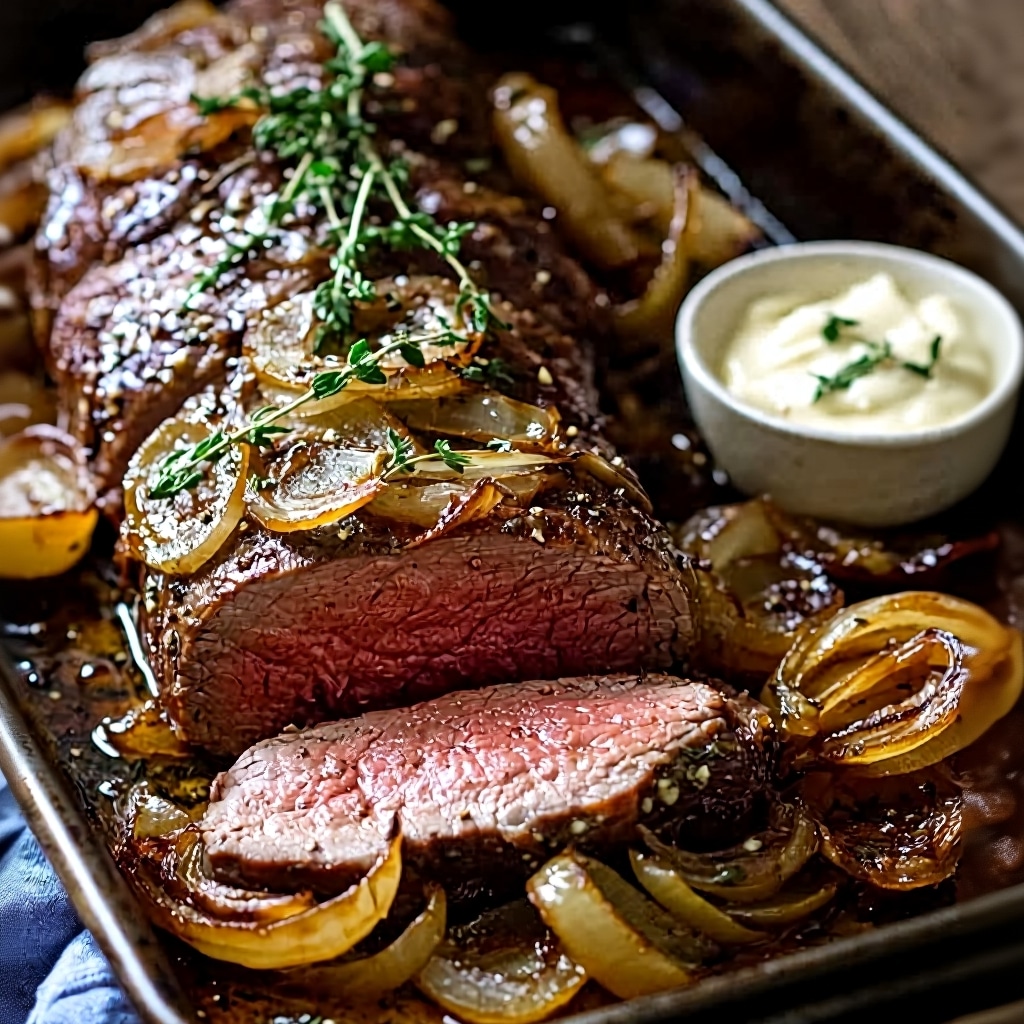
The Ultimate Roasted Beef Tenderloin with Horseradish Sauce: Your New Celebration Staple
Imagine a holiday table, gleaming with candlelight, adorned with a magnificent centerpiece that elicits gasps of delight from your guests. This isn’t just any roast; it’s the ultimate Roasted Beef Tenderloin Horseradish dish, a culinary masterpiece that promises an unforgettable dining experience. Picture the melt-in-your-mouth texture of perfectly cooked beef tenderloin, its savory depth enhanced by caramelized French onions, all crowned with the invigorating, zesty kick of a homemade creamy horseradish sauce. This isn’t just a meal; it’s a celebration.
Whether you’re planning a lavish Christmas dinner, a sophisticated New Year’s Eve feast, or any special occasion demanding a showstopper, this recipe for a whole roasted beef tenderloin will rise to the challenge. Forget the stress of complicated dishes; we’ll guide you through creating a holiday roast beef that looks incredibly impressive but is surprisingly straightforward to achieve, making it a foolproof centerpiece that will have everyone asking for the recipe.
Why This Recipe Will Impress Every Guest
What makes this specific combination so extraordinary? It begins with the star: beef tenderloin. Often referred to as filet mignon roast when served whole, this cut is renowned for its unparalleled tenderness and luxurious, buttery flavor. Its mild profile creates the perfect canvas for the bold and bright notes of our creamy horseradish sauce for beef, a pairing that balances richness with a delightful tang. Despite its elegant appearance and restaurant-quality taste, this beef tenderloin recipe is designed for the home cook. We’ll demystify how to cook beef tenderloin, ensuring even beginners can achieve a perfectly juicy and tender result, transforming your kitchen into a gourmet haven for any special occasion dinner.
Understanding the Star of the Show: The Beef Tenderloin
What Exactly is a Beef Tenderloin?
The beef tenderloin, often considered the most prized cut of beef, is a long, lean muscle that runs along the cow’s spine. Because this muscle is barely used, it remains incredibly tender, hence its name. Different sections of the tenderloin yield familiar cuts: the very tip is often used for filet mignon steaks, while the thicker center can be prepared as a Chateaubriand recipe roast. When cooked whole, it becomes a truly magnificent tenderloin roast with garlic and herbs, offering a consistent tenderness from end to end.
How to Choose the Best Beef Tenderloin at the Butcher
Selecting a quality beef tenderloin is crucial for an exceptional roast. Look for USDA Prime or Choice grades, which indicate superior marbling and tenderness. The meat should have a vibrant, deep red color and minimal connective tissue. You’ll often find tenderloins sold either whole, untrimmed, or already trimmed and tied. While untrimmed offers better value and allows you to render the fat, a trimmed and tied roast saves prep time. If buying untrimmed, ensure it has a good “silverskin” layer for easy removal, and sufficient fat on one side.
A Quick Guide to Prepping Your Tenderloin
Proper preparation ensures even cooking and maximum flavor. First, you’ll want to remove the silverskin, a tough, silvery membrane that won’t break down during cooking. Trim any excess fat, leaving just a thin layer for flavor. Next, consider tying the roast (also known as trussing). This technique ensures that the thinner “tail” end cooks at the same rate as the thicker “head” and center, resulting in a uniformly cooked roast. We’ll delve deeper into how to tie a beef tenderloin below, but for now, understand it’s a simple step for a superior outcome.
Ingredients & Equipment for Success
For the Roasted Beef Tenderloin
Gathering your ingredients for the whole roasted beef tenderloin is the first step towards culinary triumph. This combination of fresh herbs and aromatics will infuse your tenderloin with irresistible flavor.
- One whole beef tenderloin (3-5 lbs), trimmed and tied
- 2 tablespoons olive oil
- 2 teaspoons kosher salt
- 1 teaspoon coarse black pepper
- 4 sprigs fresh thyme
- 4 sprigs fresh rosemary
- 4 cloves garlic, smashed
- 1 large French onion, thinly sliced (for roasting with the beef)
- 2 tablespoons butter (for sautéing onions)
For the Creamy Horseradish Sauce
The star companion to our roast, this easy horseradish sauce comes together quickly and perfectly complements the rich beef with its sharp, creamy zest.
- 1 cup sour cream or crème fraîche
- ¼ cup prepared horseradish (adjust to taste, mild or extra-hot)
- 1 tablespoon Dijon mustard
- 2 tablespoons fresh chives, finely chopped
- 1 teaspoon fresh lemon juice
- Salt and freshly ground black pepper, to taste
Essential Kitchen Tools
Having the right equipment makes all the difference when tackling a magnificent cut like beef tenderloin, ensuring precision and ease.
- Large oven-safe skillet (cast iron recommended, 12-inch)
- Roasting pan with a rack
- Instant-read meat thermometer (absolutely essential for beef tenderloin internal temperature)
- Butcher’s twine (if your tenderloin isn’t pre-tied)
- Sharp carving knife
- Cutting board
Step-by-Step: Crafting the Perfect Roasted Beef Tenderloin Horseradish Dinner
Step 1: Bring to Room Temperature and Season Generously
For the most even cooking, remove your beef tenderloin from the refrigerator 1-2 hours before cooking. This allows the meat to relax and cook more uniformly. Pat the tenderloin thoroughly dry with paper towels; a dry surface is key for a good sear. Rub it all over with olive oil, then season aggressively with kosher salt, coarse black pepper, fresh thyme, rosemary, and smashed garlic cloves. Don’t be shy – the generous seasoning forms a flavorful crust on your tenderloin roast with garlic and herbs.
Step 2: The Perfect Sear for a Flavorful Crust
Heat your large oven-safe skillet over high heat until it’s smoking slightly. Add a tablespoon of olive oil. Carefully place the seasoned tenderloin in the hot skillet. Sear all sides for 2-3 minutes per side, including the ends, until a deep, golden-brown crust forms. This crucial step, known as the Maillard reaction, creates incredible depth of flavor and texture. Remove the tenderloin from the skillet and set aside. In the same skillet, melt the butter over medium heat, then add the thinly sliced French onions. Sauté until softened and lightly caramelized, about 8-10 minutes. These tender, savory onions will be roasted with the beef, adding another layer of flavor to your beef tenderloin with french onions.
Step 3: Roasting to Your Desired Doneness
Preheat your oven to 425°F (220°C). Place the seared tenderloin on a roasting rack set over a roasting pan (or back into the oven-safe skillet if space allows, surrounded by the caramelized French onions). Insert an instant-read meat thermometer into the thickest part of the roast, avoiding bone or fat. Roasting time will vary based on the size of your beef and desired doneness. For how to cook beef tenderloin perfectly, always rely on the internal temperature:
- Rare: Pull at 120-125°F (49-52°C)
- Medium-Rare: Pull at 130-135°F (54-57°C) – Recommended for optimal tenderness and juiciness
- Medium: Pull at 140-145°F (60-63°C)
For a 3-4 lb beef tenderloin, expect an oven roasted beef recipe cooking time of approximately 25-35 minutes for medium-rare. Remember that the temperature will rise 5-10 degrees during resting (carryover cooking), so remove it from the oven *before* it reaches your target final temperature. This is essential for achieving the perfect beef tenderloin internal temperature.
Step 4: Making the Creamy Horseradish Sauce
While your beef tenderloin is roasting, prepare the vibrant creamy horseradish sauce for beef. In a medium bowl, combine the sour cream (or crème fraîche), prepared horseradish, Dijon mustard, fresh chives, and lemon juice. Stir until well combined. Taste and season with salt and freshly ground black pepper, adjusting the amount of horseradish to your preferred level of spiciness. Some prefer a milder kick, while others crave the fiery zest. This easy horseradish sauce can be made ahead and chilled, allowing the flavors to meld beautifully.
Step 5: The Critical Resting Period
Once your beef tenderloin reaches the desired internal temperature, immediately transfer it to a clean cutting board. Tent it loosely with foil and let it rest for at least 15-20 minutes. This step is non-negotiable for a juicy, tender roast. Resting allows the muscle fibers to relax and the internal juices to redistribute evenly throughout the roast. If you cut into it too soon, those precious juices will run out, leaving you with dry meat. Patience here is key to a truly succulent Roasted Beef Tenderloin Horseradish.
Chef’s Secrets for a Flawless Tenderloin
The Reverse Sear Method: An Alternative Technique
While our traditional sear-then-roast method produces fantastic results, the reverse sear beef tenderloin method offers an incredibly even cook from edge to edge. This technique involves slow-roasting the tenderloin at a lower temperature (e.g., 250°F / 120°C) until it’s about 10-15°F below your target internal temperature. Then, you blast it in a very hot oven or sear it in a screaming hot skillet for a few minutes per side to develop that beautiful crust. This method minimizes the “grey band” and maximizes the desired medium-rare pinkness throughout. It’s a favorite among chefs for its precision.
How (and Why) to Tie a Tenderloin Roast
Tying, or trussing, your beef tenderloin is a simple but impactful technique. The tenderloin is thicker in the middle and tapers at the ends. Tying it at regular intervals (every 1-2 inches) creates a uniform cylindrical shape. This ensures that the thinner “tail” end doesn’t overcook before the thicker “head” and center reach your desired doneness, guaranteeing a consistent texture throughout the entire roast. Use butcher’s twine and simple surgeon’s knots or a series of loops. It’s a hallmark of a professional-looking, perfectly cooked roast, especially important for a whole roasted beef tenderloin.
Make-Ahead Tips for a Stress-Free Celebration
Hosting a special occasion dinner doesn’t have to be stressful. Our make ahead beef tenderloin tips can save you valuable time. You can trim, tie, and season the tenderloin up to 24 hours in advance. Cover it tightly and refrigerate. Just remember to let it come to room temperature before cooking. The creamy horseradish sauce for beef can also be prepared a day or two ahead and stored in the refrigerator, allowing its flavors to deepen. With these preparations, you’ll be able to enjoy your guests and the festive atmosphere without feeling overwhelmed.
Serving, Pairing, and Leftovers
How to Carve and Present Your Roast
After its crucial rest, it’s time to carve and present your magnificent roast. Remove the twine, then slice the tenderloin against the grain into ½ to 1-inch thick medallions using a sharp carving knife. Arrange the slices beautifully on a platter, perhaps over a bed of the caramelized French onions you roasted with it. Serve the creamy horseradish sauce generously on the side, allowing each guest to add their desired amount. The visual appeal of this Roasted Beef Tenderloin Horseradish, with its perfect pink center, is truly breathtaking.
Perfect Side Dish Pairings
Choosing the best side dishes for beef tenderloin can elevate your meal. Rich, comforting starches and vibrant vegetables create a harmonious balance. Consider classic pairings like creamy mashed potatoes, a decadent potato gratin, or simple roasted fingerling potatoes with herbs. For vegetables, roasted asparagus, creamed spinach, glazed carrots, or crispy Brussels sprouts with bacon perfectly complement the richness of the beef and the zest of the sauce. For a true holiday feast, what to serve with beef tenderloin might include an elegant green bean casserole or a wild mushroom risotto.
Wine Pairings to Elevate Your Meal
To truly elevate your Roasted Beef Tenderloin Horseradish, select a robust red wine. A classic Cabernet Sauvignon from California or Bordeaux provides the structure and dark fruit notes that stand up beautifully to the rich beef. Other excellent choices include a velvety Merlot, a peppery Syrah/Shiraz, or a complex Zinfandel. These wines will enhance the meal without overpowering the delicate flavor of the tenderloin or clashing with the piquant horseradish.
Storing and Reimagining Leftovers
Should you have any delectable leftover tenderloin (a rare occurrence!), store it wrapped tightly in plastic wrap or an airtight container in the refrigerator for up to 3 days. Reimagining leftovers is part of the fun! Thinly slice the cold beef for gourmet steak sandwiches, slathered with extra horseradish sauce and tucked into crusty rolls. Add slices to a vibrant salad with a tangy vinaigrette, or transform them into a quick and easy beef stroganoff. The possibilities are delicious and endless for this versatile holiday roast beef.
Roasted Beef Tenderloin FAQ
What temperature should beef tenderloin be cooked to?
For the most popular choice, medium-rare, aim to pull your beef tenderloin from the oven when its internal temperature reaches 130-135°F (54-57°C). Remember, it will continue to cook and rise by 5-10 degrees during its essential resting period, reaching a final temperature of 135-140°F. Always use an instant-read meat thermometer for accuracy to ensure a perfect beef tenderloin internal temperature.
Do you sear a beef tenderloin before or after roasting?
Both methods work beautifully! The traditional approach, which we’ve outlined, is to sear before roasting to create a flavorful crust via the Maillard reaction. Alternatively, the reverse sear method involves slow-roasting first and then searing at the very end. The choice depends on personal preference and desired outcome; searing before is quicker for crispness, while reverse searing often yields a more uniform edge-to-edge doneness.
How long does it take to cook a 4 lb beef tenderloin?
Cooking time for a 4 lb beef tenderloin at 425°F (220°C) typically ranges from 25-35 minutes for medium-rare. However, this is just an estimate. The exact time depends on your oven, the tenderloin’s initial temperature, and its thickness. The only reliable way to know when your how to cook beef tenderloin is ready is by using an instant-read meat thermometer to check the internal temperature, ensuring perfect doneness every time.
What is the best sauce to serve with beef tenderloin?
A creamy horseradish sauce for beef is widely considered one of the best sauces to serve with beef tenderloin. Its zesty, piquant flavor beautifully cuts through the richness of the beef, creating a balanced and exciting taste experience. Other popular choices include a classic béarnaise sauce, a rich red wine reduction, or a savory mushroom cream sauce, but our easy horseradish sauce remains a top contender for its vibrant contrast.
How do you keep beef tenderloin from drying out?
To keep beef tenderloin from drying out, follow these critical steps: do not overcook it (rely on a meat thermometer!), sear it properly to lock in juices, and most importantly, allow for a full 15-20 minute rest after cooking. The resting period is crucial as it allows the juices to redistribute throughout the roast, resulting in a succulent and tender finish. Skipping this step is the fastest way to a dry roast.
Can I prepare beef tenderloin the day before?
Yes, you can certainly prepare parts of your beef tenderloin recipe the day before. You can trim, tie, and generously season the tenderloin up to 24 hours in advance. Wrap it tightly and store it in the refrigerator. Just remember to take it out 1-2 hours before cooking to bring it to room temperature. The creamy horseradish sauce can also be made 1-2 days ahead, making your holiday roast beef preparation much smoother.
“`
For more daily recipes and tips, follow us on Facebook!
Click here to join our community!