Never Buy Self-Rising Flour Again: Your Ultimate Guide
Picture this: you’re halfway through mixing up a batch of glorious, fluffy pancakes or dreaming of tender, flaky biscuits, and then it hits you. The recipe calls for self-rising flour, and your pantry is conspicuously bare. Don’t panic! The solution isn’t a last-minute dash to the grocery store; it’s likely already nestled amongst your everyday staples. This guide is your secret weapon, revealing how to effortlessly create your own DIY self-rising flour in mere minutes. Forget store-bought – you’ll learn the perfect ratio for your own DIY self-rising flour, discover invaluable storage tips, explore its best culinary applications, and get answers to all your burning questions about this indispensable ingredient.
What Exactly Is Self-Rising Flour?
Before we dive into creating our own, let’s understand what is in self-rising flour. It’s a pre-mixed baking convenience, ingeniously combining all-purpose flour, a precise amount of a leavening agent (typically baking powder), and a touch of fine salt. Its primary purpose is to imbue baked goods with a consistent, reliable lift, guaranteeing a light, airy, and wonderfully tender texture without the fuss of measuring individual leaveners. This makes it a go-to for many quick baking projects. The key difference compared to plain all-purpose flour is precisely this pre-measured addition of baking powder and salt. While all-purpose flour is a blank canvas, DIY self-rising flour comes equipped with its own rising power and seasoning, meaning converting all-purpose flour to self-rising isn’t just a 1-to-1 swap without careful recipe adjustments.
The Top 3 Benefits of Making Your Own
Convenience and Cost-Savings
Mastering how to make self-rising flour means unparalleled convenience. You’ll never again be caught without it. Plus, it’s significantly more economical to purchase individual ingredients in bulk than pre-mixed bags of self-rising flour. This simple swap translates directly into savings for your pantry and your wallet.
Control Over Ingredients
When you create your own, you gain complete control over ingredient quality. Opt for organic, unbleached all-purpose flour, choose fine sea salt, and crucially, select aluminum-free baking powder if preferred. This customization ensures your baked goods meet your exact standards, making your DIY baking ingredients truly personal.
Freshness Guaranteed
The efficacy of baking powder, the primary leavening agent for flour, diminishes over time. Store-bought self-rising flour can lose potency. By preparing small, fresh batches of your DIY self-rising flour as needed, you guarantee active leavening, ensuring the best possible rise and texture every time.
The Perfect 3-Ingredient DIY Self-Rising Flour Recipe
Essential Ingredients & Tools
To craft perfect DIY self-rising flour, you’ll need just a few simple items. The foundation is a good quality all-purpose flour, ideally with a medium protein content (10-12%) for tender crumbs. Next, baking powder – the chemical leavening agent that creates desirable rise. Most store-bought baking powders are double-acting for consistent lift. Finally, fine salt is crucial for enhancing flavor; fine-grained salt disperses more evenly than coarse varieties. For tools, gather measuring cups/spoons, a large mixing bowl, and either a whisk or a fine-mesh sifter.
The Golden Ratio: Step-by-Step Instructions
This is the core of your self-rising flour recipe – a ratio that will change your baking game!
- Measure Flour Correctly: For accurate results, always spoon your all-purpose flour lightly into a measuring cup, then level it off with a straight edge (like a knife). Avoid scooping directly to prevent compacting.
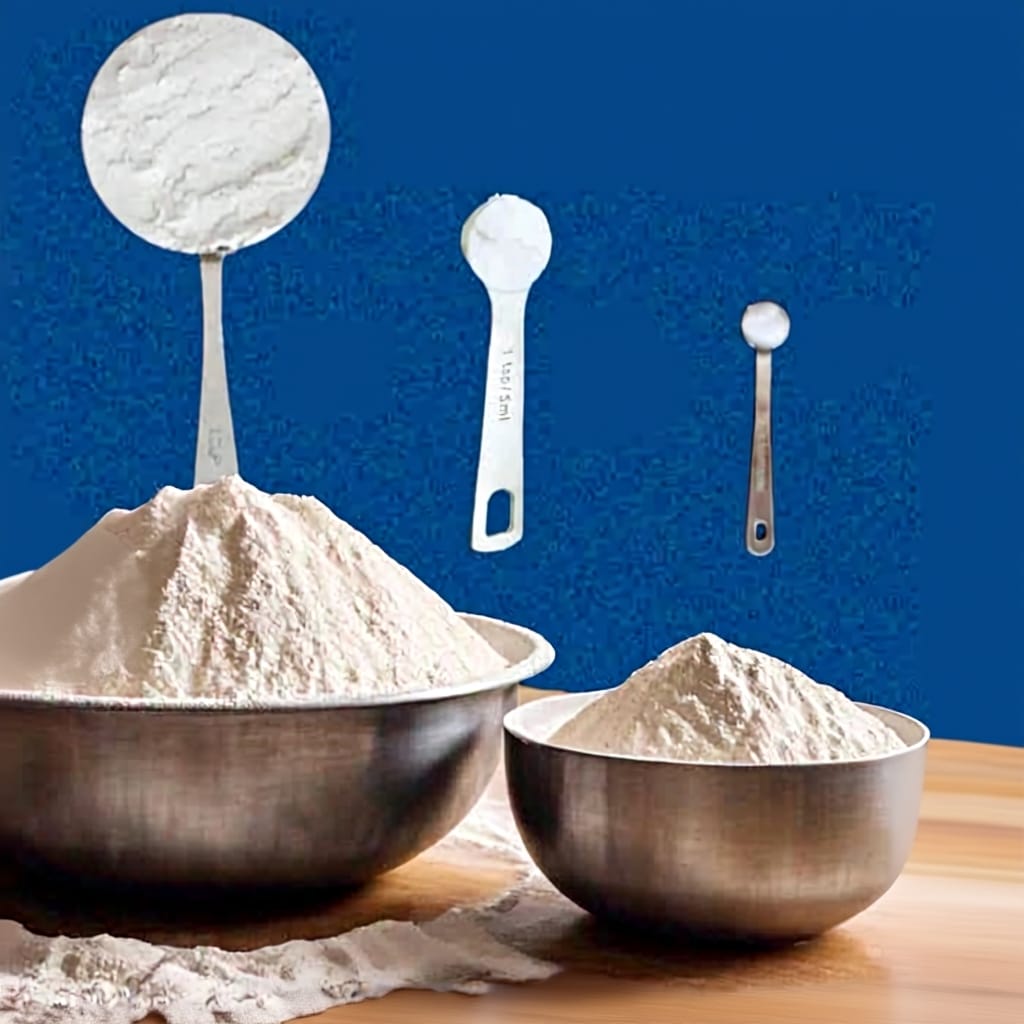
- Combine Leavening and Salt: In a large bowl, mix 1 cup of correctly measured all-purpose flour with 1 ½ teaspoons of fresh baking powder and ¼ teaspoon of fine salt.
- Whisk Thoroughly: This step is non-negotiable! Vigorously blend with a whisk for at least 30 seconds, or sift the mixture 2-3 times. This ensures perfect distribution, preventing dense pockets, uneven rise, or unexpectedly salty bites. Your homemade self-rising flour is now ready!
How to Scale the Recipe for Bulk Batches
Want to prepare more for future baking? Simply maintain the ratio!
Expert Tip: Always sift your bulk mixture after making it, and give it another quick whisk before each use to redistribute ingredients.
- For 2 cups DIY self-rising flour: 2 cups all-purpose flour + 3 teaspoons baking powder + ½ teaspoon fine salt
- For 4 cups DIY self-rising flour: 4 cups all-purpose flour + 6 teaspoons baking powder + 1 teaspoon fine salt
- For 8 cups DIY self-rising flour: 8 cups all-purpose flour + 12 teaspoons baking powder + 2 teaspoons fine salt
Proper Storage for Maximum Freshness
To ensure your homemade creation retains its leavening power, proper storage is paramount. Always choose an airtight container, such as a glass jar with a tight-fitting lid or a sturdy plastic food container. This protects your freshly made DIY self-rising flour from moisture, which can prematurely activate the baking powder, and from pantry pests. It’s critical to label your container clearly with “Homemade Self-Rising Flour” and the date it was made. While all-purpose flour has a long shelf life, the baking powder’s potency diminishes over time. For optimal results, use your storing homemade flour within 3 to 6 months. To quickly test for freshness, simply add a teaspoon of your flour mix to a small amount of hot water. If it fizzes actively, your leavening agent is still doing its job!
Common Substitutions and Variations
What If I Don’t Have Baking Powder?
If you find yourself without baking powder but have baking soda and cream of tartar, you can still create a self-rising flour substitute. For every 1 ½ teaspoons of baking powder called for, you can substitute with ½ teaspoon of cream of tartar combined with ¼ teaspoon of baking soda. Remember, baking soda needs an acid (like cream of tartar) to activate, while baking powder is a complete leavening agent on its own.
Making Gluten-Free or Whole Wheat Self-Rising Flour
For those with dietary needs, making gluten-free DIY self-rising flour is straightforward. Simply use a 1-to-1 gluten-free baking flour blend as your base and maintain the exact same ratio of baking powder and salt as our primary self-rising flour recipe. When using whole wheat DIY self-rising flour, be aware that whole wheat flour is denser and has a higher protein content, which can result in a slightly heavier final product. For a lighter texture, consider sifting your whole wheat flour multiple times before incorporating the leavening and salt, or try a 50/50 mix with all-purpose flour.
Best (and Worst) Uses for Your Homemade Flour
Your freshly made DIY self-rising flour is a versatile powerhouse for many baking endeavors. It truly shines in recipes where a tender crumb and a gentle rise are desired. Think fluffy pancake flour mix, light and airy muffins, delicate scones (perfect for a classic scone flour recipe), tender biscuits, classic Victoria sponges, and delicious quick bread flour applications like soda bread. It’s ideal for anything that benefits from a consistent, soft lift.
However, there are instances where it’s best to reach for plain all-purpose flour. Avoid using self-rising flour in yeast-leavened breads, such as sourdough, artisan loaves, or sandwich bread. These recipes rely on yeast and often precise gluten development, which the pre-added leavening and salt in homemade self-rising flour can disrupt. Similarly, be cautious using it in recipes that already specify baking soda or an additional leavening agent, as this can lead to an over-leavened product with a bitter, soapy taste.
Frequently Asked Questions (FAQ)
What’s the fastest substitute if I don’t have self-rising flour?
The quickest self-rising flour substitute is to simply add 1 ½ teaspoons of baking powder and ¼ teaspoon of fine salt to every 1 cup of all-purpose flour called for in your recipe. Whisk well to combine before using.
Is self-rising flour the same as all-purpose flour with baking soda?
No, they are not the same. Self-rising flour contains baking powder, which is a complete leavening agent requiring only moisture. Baking soda, however, requires an acidic ingredient (like buttermilk or lemon juice) to activate and provide leavening. Using baking soda without the necessary acid will not give the desired rise.
Can I use bread flour to make DIY self-rising flour?
While technically possible, it’s generally not recommended. Bread flour has a significantly higher protein content, which develops more gluten, leading to a tougher, chewier texture. This is usually undesirable for recipes like biscuits or cakes where a tender, soft crumb is preferred. Stick to all-purpose flour for the best results when making DIY self-rising flour.
Why are my biscuits made with DIY self-rising flour dense?
Dense biscuits are most often caused by two factors when using homemade self-rising flour: 1) Your baking powder is old and has lost its potency – always check its freshness. 2) The ingredients were not thoroughly mixed, leading to an uneven distribution of the leavening agent. Ensure you whisk or sift diligently.
How is UK self-raising flour different from US self-rising flour?
They are very similar in concept. US DIY self-rising flour typically uses a lower-protein all-purpose flour and always includes salt. UK self-raising flour recipe often uses a slightly different grade of plain flour and historically may or may not include salt, though many modern UK brands do. For most recipes, they can be used interchangeably, but be mindful of any additional salt in your recipe if using a UK brand that doesn’t contain it.
Conclusion: Your New Pantry Staple
You now possess the knowledge to transform your pantry into a powerhouse of convenience with DIY self-rising flour. This simple 3-ingredient blend empowers you with control, freshness, and significant cost savings. Remember the golden ratio, master the thorough mixing, and store it wisely. Go forth and bake the fluffiest pancakes, the tenderest scones, and the lightest biscuits! We’d love to hear about your baking successes – share your stories in the comments below!
For more daily recipes and tips, follow us on Facebook!
Click here to join our community!